
10 August: St Lawrence invites us to look up to the sky
Hotels with on-site observatories, city planetariums and places with low levels of light. To rediscover patches of unspoilt sky and reconnect with nature.

In the small village of Allai, with just over three hundred inhabitants in the province of Oristano, the stars have become an economic asset. The village has recently been recognised as Italia’s first ‘Village of the Stars’, a certification awarded by the Fundación Starlight of the Canary Islands Institute of Astrophysics, following a four-year process that saw the public lighting system overhauled. For millennia, the starry sky has been part of the human experience; it has guided navigators, inspired myths and religions, and marked the passage of time for agricultural civilisations. Today, it has become a resource to be protected, because to see the Milky Way – which, according to astronomers, is the minimum standard for defining a barely acceptable sky – it may be necessary to travel hundreds of kilometres. According to Daniele Gardiol, an astronomer at the National Institute of Astrophysics, over 80 per cent of Italians live under skies compromised by light pollution.
Over the last two decades, the phenomenon has grown by an average of 3 per cent a year and continues to advance unchecked, even though its consequences go far beyond simply making it difficult to see the stars. Artificial light disrupts ecosystems, interferes with birds’ migratory routes, disorients nocturnal pollinating insects such as moths, and alters the circadian rhythms of humans and animals.
More and more studies are highlighting possible effects on melatonin production and sleep quality. For this reason, light pollution is gradually moving beyond the realm of astronomers to become a fully-fledged environmental issue. ‘It’s not just about research, but about the loss of our connection with the sky. It’s important, at times, to feel small beneath the starry sky, to connect with the universe. If only we astronomers complain, however, we won’t arouse much interest. That is why astro-tourism – a niche, conscious form of travel – keeps the spotlight on projects combating excessive light pollution,” explains Gardiol. Such as the day dedicated to combating it, set for 16 February by the Italian Amateur Astronomers’ Union, and the ambitious EU-funded research projects in which Gardiol himself is involved, such as Darkersky4ce, aimed at preserving darkness in rural areas, and Prisma, a network of a hundred webcams for observing meteors across Italia. Just as the sky recedes from our daily lives, so too does the desire to reconnect with it grow, even in the city.
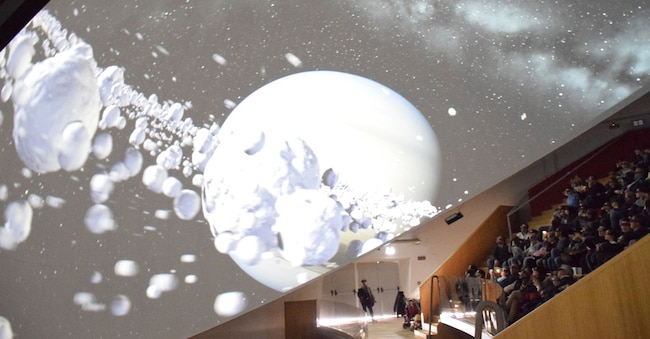
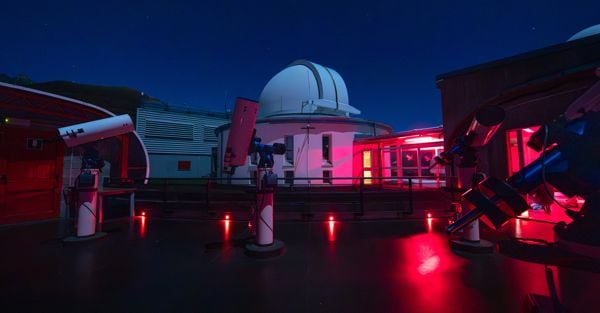
Planetariums, for example, are currently enjoying a surge in popularity. Far more than mere educational tools for schools, they are spaces where adults and families can reconnect with the cosmos – something that is becoming increasingly difficult to do in the natural world. In Milan, the Ulrico Hoepli Municipal Planetarium, opened in 1930 – the oldest in Italia – is one of the main centres for popularising astronomy. In Rome, the Planetarium and the Astronomical Museum offer immersive shows for observing constellations, planets and celestial phenomena at any time of year. In Naples, the Città della Scienza Planetarium, with its dome measuring twenty metres in diameter, is now the largest and most technologically advanced in the country. Seeking out darkness has also become a reason to travel, not only for astronomy enthusiasts but for an ever-wider range of people drawn to a slow, contemplative and authentic experience. The global astro-tourism market is growing at a rate of between 10 and 15 per cent a year; in Italia, enthusiasts are heading to the Aosta Valley Astronomical Observatory and the Abruzzo Observatory at Campo Imperatore, on the Gran Sasso, or to Isnello in Sicily, at the GAL Hassin centre. Abroad, the top destinations are the Atacama Desert in Chile, Namibia, the Canary Islands, Lapland and Iceland. This trend is also transforming the high-end hospitality sector.
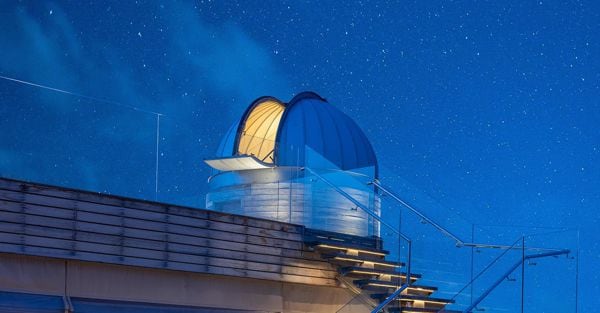
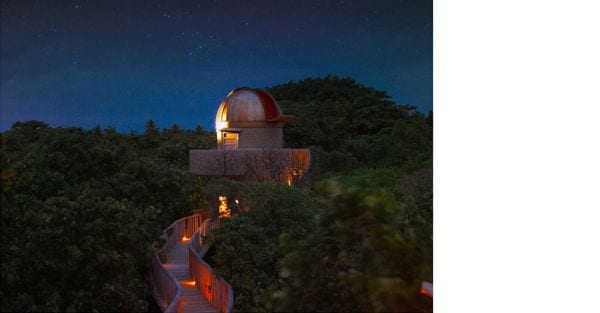
For years, luxury has been synonymous with privacy, tranquillity, unspoilt landscapes and wellbeing. Today, it also offers darkness. In the Maldives, on the Baa Atoll, the Soneva Fushi resort has its own on-site observatory for stargazing and a team of resident astronomers. Not far away, the Anantara Kihavah has built one of the most advanced hotel-based observatories in the Indian Ocean. In Namibia, andBeyond Sossusvlei Desert Lodge allows guests to observe the Milky Way directly from their beds, through large openings in the roof of the suites. In Chile’s Atacama Desert, Nayara Alto Atacama organises stargazing sessions in one of the places with the clearest skies on the planet. For astronomers, the solution does not seem particularly complex, if one were to put it into practice. ‘Less light, but better quality. Redesign the lighting systems on quiet roads, with sensors that switch them on only when needed. Technologies that also save energy,’ adds the astronomer. To protect nocturnal animals and reclaim patches of sky from the glare, so that they can be enjoyed even near cities. Because, as Gardiol concludes, ‘reclaiming the sky means reclaiming ourselves. After all, we are nothing but stardust.’

