
12 years after the earthquake in Emilia, construction sites still open
30% of public works still to be started. The earthquake caused 28 deaths, 300 injured, 45,000 displaced persons and damage of 12.2 billion

4' min read
Key points
4' min read
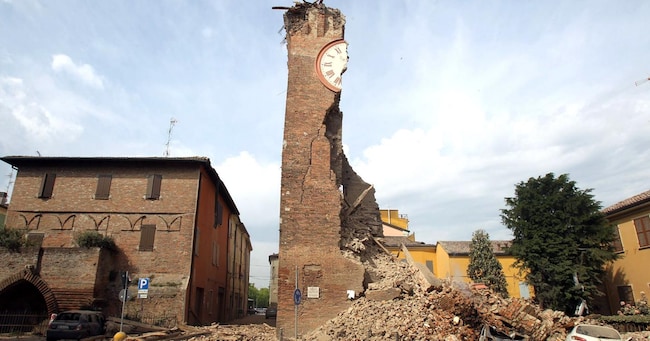
Twelve years have passed since the seismic tremors that first on 20 and then on 29 May caused 28 deaths, 300 injured, 45 thousand displaced persons and 12.2 billion euro worth of damage along the Via Emilia, with 66 thousand companies involved in one of the most productive areas of the country, so much so as to go down in history as 'the earthquake of the companies'. But reconstruction is not yet complete. Not even in the virtuous Emilia-Romagna region, presided over by administrations that have always been at the top of European rankings in terms of efficiency and the ability to spend public funds, 12 years are enough for a return to normality. "There are 700 citizens who have not yet closed their building sites or accounted for the renovation of their homes, for whose delay we are certainly not to blame. And the restoration of cultural heritage and public works with historical and architectural constraints remains to be completed, because they are complex and delicate construction sites. The bulk of the 800 million euro that we have in special accounts for outstanding works relates precisely to these interventions, we are talking about monuments such as the cathedral and castle of Ferrara, churches such as those of Mirandola, San Felice sul Panaro, and Finale Emilia, and theatres," explains Enrico Cocchi, director general of the Emilia-Romagna Region's Reconstruction Agency.
The Region: the return to normality has already taken place
It is by delving into the folds of the accounts and numbers of the post-summer restart that one understands why the word 'end' has not yet appeared in the credits of the reconstruction and why, despite delays and shortcomings, the model put in place in 2012 by the then President of the Region Vasco Errani (who also became the Government's extraordinary commissioner for reconstruction, a position carried on until now by Stefano Bonaccini) to make up for the absence of national standards to follow should be treasured. "Normal living conditions were guaranteed quickly, both in the first phase of the emergency and in the restart of all public services to people and businesses: first and foremost the schools, all of which reopened in September of that year. Suffice it to say that of the 40,000 people put on extraordinary Cig for the earthquake, there was no longer anyone on shock absorbers at the end of 2014; in 2015 we closed the extraordinary reception centres and in 2017 dismantled all 750 temporary housing units for displaced families. And the businesses affected by the earthquake, which at the time were worth about 2% of the national GDP, now weigh in at 2.5%," are the figures that Cocchi rattles off to explain the priorities followed by viale Aldo Moro in designing the restart.
The numbers of damages and refreshments
."Between the initial damage estimate, just over EUR 12 billion, and the closure of the accounts (date to be defined, ed.) we will have a minimal variance. We have saved one billion on reimbursements to companies, because between own resources and insurance, the coverage has been greater than expected, but the residential area has cost more, also because there has been the impact of the expensive materials. On the whole, we have managed State resources for 7.7 billion euro," says the head of the Agency for Reconstruction, of which 6.12 billion (80 per cent) has already been paid out, the rest are authorised works yet to be paid for and sums for operations. To which must be added the 730 million euro contracted during the emergency phase by the commissioner, which are listed separately'.
Enterprises are in the lead in terms of work progress. Only EUR 100 million remain to be paid out to productive activities, a dozen construction sites in all: out of EUR 1.9 billion in contributions granted, EUR 1.88 billion have already been paid out and 97% of the 3,357 authorised projects have been completed. The reconstruction of private homes, on the other hand, is a little further behind: out of 3.16 billion in planned relief, 2.9 billion (92%) have been liquidated. Public works and cultural heritage are even further behind: out of 1,669 authorised projects (of which 1,591 with total expenditure covered, the Region has EUR 1.52 billion available for this chapter), there are 734 construction sites completed, 457 underway, but the remaining 30% still need to be tackled.
The Emilia model for reconstruction: "everyone answers at home"
."The now well-known superbonus mechanism, whereby the State provides the contribution through tax credits, we structured it in Emilia to restart after the earthquake, just as the anti-mafia guidelines are ours," explains Cocchi. With the substantial difference that in Emilia it was the public sector that took care of the preliminary investigation, calculation of the economic value and congruity of the prices of the reconstruction sites, left instead to the private sector in the superbonus, with an explosion of price lists and workmanship. In the earthquake crater (60 municipalities between Modena, Reggio Emilia, Bologna and Ferrara), "every mayor who issues housing permits assesses and responds to the economic congruity of the works, while we as a Region have taken care of the companies' paperwork. An organisational model,' explains Cocchi, 'whereby each administrator answers 'in his own house''. Municipal technicians accustomed to managing five million euro worth of works in a year found themselves managing ten times the ordinary amount, yet there were few procedural and technical-administrative errors, and neither an investigation nor a condemnation came from Europe'. The government commissioner had the support of an extra structure of 1,200 temporary staff made available by the municipalities, Fintecna, Invitalia and regional in-house companies (well-trained personnel in the field, most of whom were then hired on a permanent basis by the administrations; today about fifty technicians are still in service) and as president of the region he worked as a trait d'union between the central bodies and the local authorities. An organisation that has not been replicated for the post-flood restart: it will be the times and results of this second emergency-reconstruction that will decide the most efficient model.


