
2 June: yesterday's vote and today's thorns
Three essays recount the conquest of the women's vote, from its pre-1946 roots, and the journey to the present day: the balance is bitter sweet and suffers from the lack of responses on labour and the gender gap

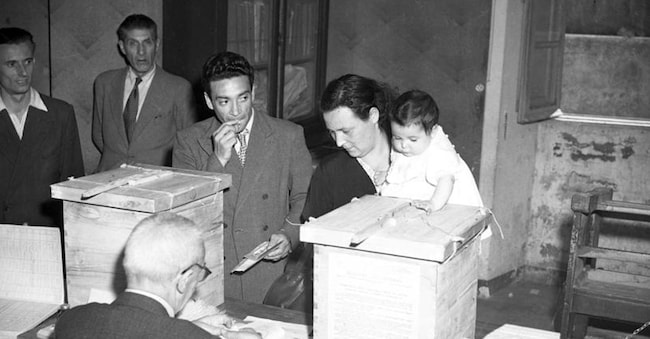
He was mocked for his proposals that were considered bizarre, he died in poverty after his three bills for the right of women to vote and for the recognition of their legal capacity had remained a dead letter: MP Salvatore Morelli (1824 - 1880), originally from Carovigno in the province of Brindisi, was one of the few men to have spoken out for suffrage that was truly universal. A vision too modern, in the second half of the 19th century, to be understood.
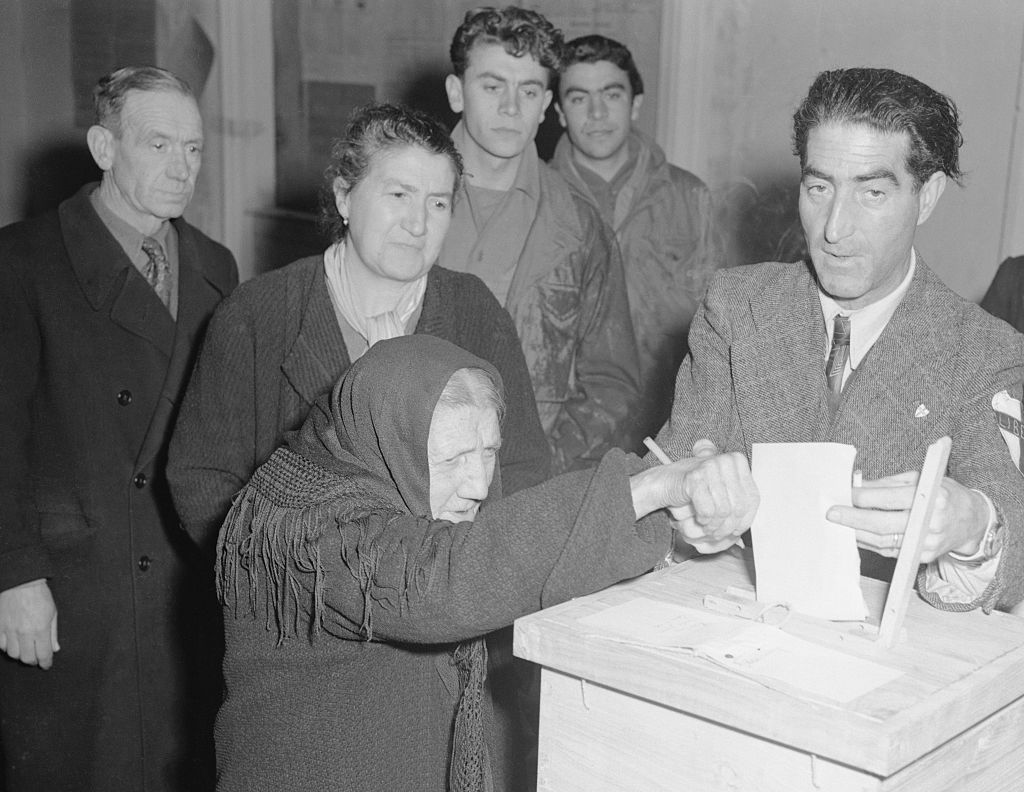
It is precisely for this reason that he deserves to be remembered, alongside the women contemptuously referred to as 'morelliste', and Mario Avagliano and Marco Palmieri do well to cite him in their timely work on the history of the women's vote, one of the books published to celebrate the 80th anniversary of 2 June 1946. It is important to start from those first pioneering attempts in order to understand once again how long, tiring, exasperating the struggle for an achievement that only arrived in 1945 was. Alongside names that are in the pantheon of women's battles such as Teresa Labriola, Anna Maria Mozzoni, Anna Kuliscioff, and with them the courageous exponents of the pro-suffrage committees of the early 20th century, the voice of the republican Roberto Mirabelli emerges ("woman has economic, civil, intellectual, moral, religious reasons in the State and - directly or indirectly - participates in all the battles of life. And why, therefore, should she be banned from voting, which is the most powerful means of asserting her reasons?"). A voice, too, too avant-garde to be heard, and rejected with disdain by Giolitti.
The book follows the women's congresses, petitions, newspaper articles and divisions of that season: what emerges is a lively ferment destined, however, not to reap results. And when in the First post-war period the momentum seems to increase - if we look at some signs such as the abolition of marital authorisation (1919) and the passage of the Chamber of Deputies in the autumn of 1919, which seems to be able to seize the target - the darkness of relentless fascism will soon stifle all efforts and progress, repressing dissent with arrests and sentences to confinement (see Lina Merlin and Camilla Ravera), relegating women to the role of wives and mothers. In the Resistance, women did not remain inactive, they organised themselves and showed the activism and tenacity of the emancipationists of the early 20th century in the field: the pages of this volume portray their courage and determination. The same tenacity guided many of them in the crucial months between 1944 and 1945, within the national pro-voting committee. The right to decide one's own destiny by going to the polls could no longer be postponed, even the leaders of the two major post-war parties, Alcide De Gasperi and Palmiro Togliatti, were aware of this. After the dress rehearsal of the spring administrative elections, twenty-one candidates will be elected to the Constituent Assembly (each, with their own history and experience, representing the demands of all Italians) who will leave their mark on the Charter: the Mothers, alongside the Fathers.
Two other books released for the 80th anniversary of the Republic look back, after the (more concise) account of this long phase, to the present day. Francesco Clementi, in his Cittadine a metà, does so by reflecting on the implications of the strides made in recent decades and by posing the problem we are all facing - here and now -: the challenge to democracy thrown down by algorithms. The author dwells on the so-called 'affirmative action' for the benefit of women provided for by a law of '91 (with the aim of 'closing de facto gaps, not just prohibiting explicit discrimination'). It recalls the constitutional reform of Article 51 of the Charter (2003) in which the commitment to promote equal opportunities is also explicitly stated 'with appropriate measures'. An idea that had already emerged in the reform of Title V, in the passage requiring regional laws to "remove every obstacle that prevents the full equality of men and women". These are calls for the concreteness and effectiveness of the Constitution's cardinal principle, also reinforced by Constitutional Court rulings. The point is, the author sharply observes, that 'effective participation requires not only rules of entry, but also guarantees of permanence and security, because the presence of women cannot be built without an environment that recognises legitimacy and protects the exercise of the mandate'. A reflection that calls into question the power of algorithms and the potential damage of digital systems that, if not governed with rigour, are capable of undermining the democratic process and amplifying gender distortions.
Finally, Marianna Aprile, in her The Promise, asks the question: "Are the girls all right?". Since that 1946, unimaginable goals have been achieved: just think of two women leaders, one at the head of the government, the other at the head of the main opposition party. But perhaps these are more individual than collective achievements, and the process of improving conditions for women in our country remains largely unfinished. This is certified by the data on female employment, the gender pay gap, the decreasing birth rate (due to the lack of services and support, including economic support for mothers), and violence. Issues on which policy responses are not up to the mark, simply because they have not been - and are not - a priority on the governments' agenda. Added to this, Aprile notes, is the steady decline in female electoral participation as well as in the representation of women in parliament, which stands at 33 per cent. The reality is that women are neither an electorate of reference nor recipients of an organic political proposal. This implies that the younger, better educated, better integrated in the world of work, more involved in associationism, have 'started to do their own thing', trying to influence their space for action as they can. For the author, however, what appears to be a failure is actually a 'form of resistance and almost silent maintenance of the fundamentals. (...) A way of being ready when, and it will happen, someone has the courage to make new promises and the strength to keep them'. Let's just hope we don't have to wait another 80 years.


