Rector Francesco Billari speaks

‘Bocconi to invest 200 million in young people and research’

110 million raised since 2021, with a target of 200 by 2030. “Universities are a bulwark of democracy.” The academic year gets underway today

4' min read

Translated by AI
Versione italiana

4' min read

Translated by AI
Versione italiana

‘For us, these are crucial resources; after all, Bocconi was founded in 1902 precisely on this basis, thanks to a donation that made it possible to establish the university: in fact, we are continuing this kind of endeavour in a contemporary way.’

Francesco Billari, Rector of Bocconi University – which has 14,000 students, one in three of whom receives some form of financial support – can indeed look back with satisfaction on the results achieved in this area, for a university which, between 2021 and 2025, has managed to raise 110 million in philanthropic donations from over 6,700 donors, a figure to which a further 20 million in philanthropic commitments since the start of 2026 has been added. Almost 50 per cent of these resources are directed towards student support, including tuition fee waivers, scholarships and other forms of assistance. Eighty per cent of these initiatives have focused on social mobility, with the aim of making Bocconi increasingly accessible to those with merit and ability, regardless of their initial economic circumstances.

Loading...

“As a non-profit organisation,” explains Billari on the day of the opening ceremony for the 2026/2027 academic year, “without philanthropy we would have far fewer opportunities to support students, invest in research and improve the campus. It is no coincidence that all the world’s leading universities devote considerable attention to fundraising: the target for 2030 is to reach 200 million.”

How can private individuals be persuaded to donate?

I believe it is essential to give people a first-hand understanding of what is being funded and the impact of what they do. Whether it be scholarships for young people, workshops, university chairs or even research centres. These are not resources vaguely channelled into some fund, but visible, concrete and properly accounted-for activities.
In light of changes in the external environment, how is your research changing?

It is becoming increasingly interdisciplinary, and, more generally, we are at the forefront of development across a range of fields, not just in artificial intelligence. For example, we are establishing a department of cognitive sciences, a research centre on the impact assessment of public policies in partnership with the Invernizzi Foundation, and a chair dedicated to entrepreneurship thanks to the Merloni Foundation. Whilst in the past we traditionally trained mainly managers and consultants, we are now increasingly turning our attention to new businesses and start-ups as well.

What role should universities aspire to play today in the country’s cultural development?

It will have to take on an increasingly central role, as is in fact already happening. Although, in relative terms, we lag behind other countries, it is a fact that enrolment figures have reached record levels, both in Italia and across the rest of the world. Of course, there is still a long way to go, especially when we consider that in China, on average, 70 per cent of 24-year-olds hold a degree.

As authoritarian tendencies grow around the world, what is the relationship between universities and democracy?

Loading...

They act as a bulwark, with their ability to hone critical thinking, which makes people more aware and less inclined to accept simplistic slogans. Piero Calamandrei, one of the fathers of the Constitution, rightly argued that democracy is built right here, in the classrooms. That is why it is good that universities play a central role, and it is no coincidence that those who do not value democracy often attack schools and universities in particular these days. This is precisely why philanthropy is so important: it is a way of enabling everyone to study and access the best opportunities.

Looking at the situation of young people in Italia, there are two key issues: on the one hand, the demographic winter, which is leading to a fall in the birth rate; on the other, emigration. Which of these concerns you most?

When it comes to demographics, we need to put long-term policy measures in place, as these trends are not easily reversed. The 355,000 babies born in 2025 roughly correspond to the number of new university entrants. This means that, to maintain these figures, in 18–19 years’ time 100 per cent of these newborns would have to go on to university – a percentage that is impossible to achieve. That is why we must also focus on attracting young people from abroad. I am not so much concerned about our young people’s experiences abroad – which are, in fact, fundamental to their personal development – but rather by the fact that, in many cases, they do not return. And in any case, the outflow is not being offset by the inflow.

Can Italian universities play a positive role in this regard as well?

Certainly. And in fact, the countries that attract the most young people with higher education qualifications – I’m thinking of the United States, Germany or France – are those that have major companies and place great emphasis on graduates. The university must become a means of making the country more attractive. The Bocconi model can be scaled up, effectively creating an international environment without the need to seek it abroad: for the first year of our three-year degree programmes, almost two-thirds of applications come from abroad. Similarly, almost half of our new lecturers come from abroad. Often, when it comes to the ‘brain drain’, these are Italians returning from an experience abroad, and this is another reason why we are pleased with the results.


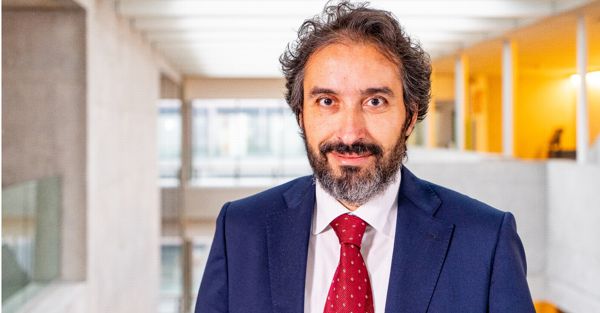
Francesco Billari

Rettore dell’Università Luigi Bocconi

Copyright reserved ©
Loading...

Brand connect

Loading...

Newsletter

Notizie e approfondimenti sugli avvenimenti politici, economici e finanziari.

Iscriviti