
Housing: 20,000 letters sent to owners of properties not registered with the Land Registry
Artificial intelligence is being used to analyse aerial photographs and identify irregularities. The mapping of anomalies across the country is almost complete: it will be finalised in 2026

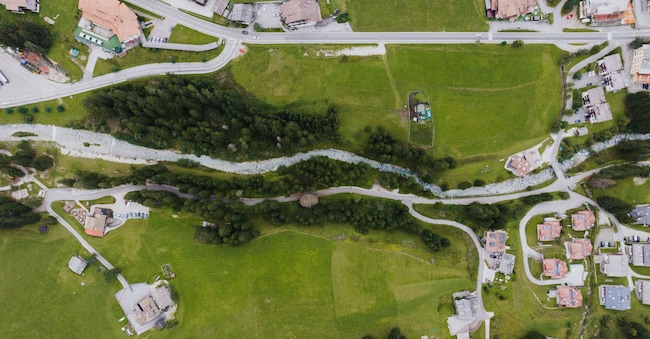
Twenty thousand compliance letters have already been sent or are due to be sent within a few weeks, and in any case by the end of 2026. The aim is to encourage taxpayers to declare to the land registry the existence of buildings not listed in the property registers. The Public Finance Policy Document devotes considerable attention to the task of mapping properties that are currently not in order. This work has been ongoing behind the scenes for months (see *Il Sole 24 Ore* of 22 January). However, it is now beginning to yield its first concrete results.
Mapping the territory
The aim is to update the land registry records by including all those properties or parts of properties that have not been declared to the tax authorities: think of undeclared storeys, the construction of outbuildings not recorded in public registers (such as storage rooms or garages), the building of extensions not listed in the land registry records, and even entirely unauthorised properties. To uncover these situations, work is underway – including with the aid of artificial intelligence – through the photo-interpretation of so-called ‘orthophotos’. In other words, the land registry maps are superimposed onto the aerial images made available by the Agency for Agricultural Subsidies. This reveals anomalies, which the tax authorities then analyse in detail. The work is already nearing completion within the space of a few months: according to the Dpfp, it has been completed across 95 provinces and has already begun in a further four. 96 per cent of the national territory is already covered, and by the end of the year the survey of the entire country will be complete.
Inadequate pensions
In short, the tax authorities already have in their possession the raw data that will lead to a long series of audits and inspections. As was the case with the building grants, the process will begin with the most obvious cases of irregularity: the first 20,000 letters concern properties that have not been declared at all. Meanwhile, work is also progressing on the other strand of letters and checks: that relating to land registry irregularities concerning properties undergoing renovation under the building grant scheme. On this front, in the second quarter of 2026, letters urging cadastral compliance were sent out for around 21,600 properties that had undergone ‘energy efficiency or structural improvement works, financed in whole or in part by public funds since 2019’.
Voluntary regularisations
This campaign has been ongoing since the start of 2025. And, in addition to the regularisations directly linked to the letters, it has also produced a ‘halo effect’. Many taxpayers, having learnt of the wave of upcoming checks, have voluntarily regularised their position. Thus, during 2025, voluntary declarations of changes to the land registry were submitted “for a total of approximately 70,000 properties – for which building tax relief had been claimed”. This represented a 25 per cent increase compared with the previous year.


