
From 20 to 22 October, a discussion on the electrification of the economy will take place at NetZero

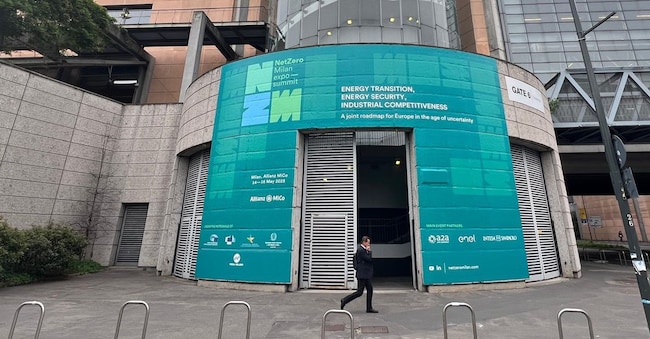
The cost of energy, how to maintain industrial competitiveness and how to tackle the green transition. These are the key issues underpinning the second edition of NetZero Milan, Fiera Milano’s event dedicated to the electrification of the economy. It will take place from 20 to 22 October 2026 at Allianz MiCo, featuring more than 140 speakers and 15 themed conferences. “We want to provide tools. We’re speaking to industries, entrepreneurs and energy managers to understand how to navigate an extremely complex energy landscape,” says Sara Quotti Tubi, Head of Energy and Transportation Exhibitions at Fiera Milano.
The discussion will focus on renewables, batteries and investment: “Transition, yes, but without our industries losing their competitiveness,” continues Quotti Tubi. At the event’s launch, he explains that companies have asked to retain the approach taken in the first edition: “They’ve asked us to continue with the economic analyses and to discuss new technologies in practical terms, to understand not only the initial investment required, but also the final outcomes of those investments.”
Gas continues to weigh on the electricity market
In the global context, the crisis in the Strait of Hormuz continues to affect energy supplies. The consequences are felt by all countries because ‘the price of oil is global’, points out Matteo Villa, a researcher at ISPI. ‘A series of developments have mitigated the initial impact of the crisis’ – referring to the release of oil reserves by the United States, China and, to a lesser extent, Europe – whilst ‘now that we have used up the buffer available to us, we must begin to ask ourselves how we can get out of this’.
In the gas market, the problems are similar and this vulnerability is passed on to energy costs: “Electricity and gas prices show an almost perfect correlation,” observes Virginia Canazza, a partner at the consultancy firm Key to Energy, who goes on to highlight the difficulty of achieving so-called ‘decoupling’. According to Canazza, the growth of solar and wind power can reduce this exposure, provided it is accompanied by more efficient grids and ‘flexibility resources, particularly batteries’.

