
2026 Nobel Prize in Physics awarded to Francis Halzen (affiliated with Bergamo)
The Belgian academic, a full professor at the University of Wisconsin–Madison, who has been honoured for his research into neutrinos, is a guest on Bergamoscienza

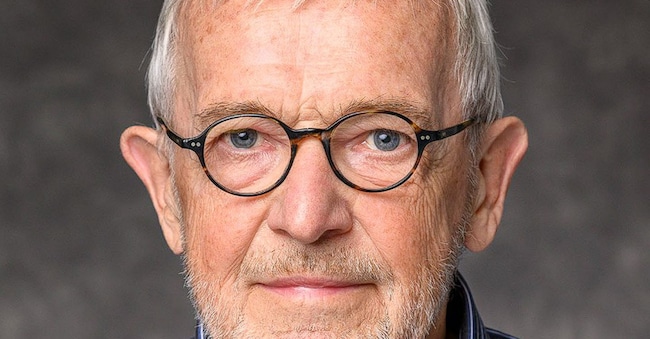
The 2026 Nobel Prize in Physics has been awarded to Fancis Halzen, an 82-year-old Belgian scientist and full professor at the University of Wisconsin-Madison, for ‘his decisive contributions to the IceCube Neutrino Observatory and the discovery of high-energy neutrinos of astrophysical origin’. IceCube is the world’s largest neutrino observatory; it is located in the Antarctic ice and, in 2018, succeeded in detecting these elusive particles that arrive from the cosmos and pass through matter without leaving a trace. Thanks to this discovery, which had been pursued worldwide for decades, Halzen’s research has laid the foundations for a completely new branch of astronomy. The announcement comes directly from the Royal Swedish Academy of Sciences, meeting in Stockholm.
The scholar was contacted by telephone by the Academy right here in Italia, in Bergamo, where he was staying to take part in Bergamoscienza. “It was a huge surprise and, of course, I wasn’t expecting it,” he said. During his telephone conversation with members of the Academy, the physicist made a point of expressing his gratitude to Italia.
Halzen “led an international team of researchers and engineers who have provided us with an extraordinary instrument. His tenacity and scientific vision have paved the way for a new kind of astronomy,” said Mark Pearce, chair of the Nobel Committee for Physics. Halzen’s research into neutrino detection at the South Pole dates back to the 1980s.
Halzen completed his entire higher education at the University of Leuven, obtaining his bachelor’s degree in 1966, his PhD in 1969 and his qualification to teach at university level in 1972. Between 1969 and 1971, he established his international reputation whilst working as a Scientific Associate at CERN in Geneva.
The decisive turning point in his career came in 1972 when he moved to the United States to join the University of Wisconsin-Madison, where he spent the following decades until he became the Hilldale and Gregory Breit Distinguished Professor. Towards the end of the 1980s, Halzen recognised the potential of using the ice at the South Pole to detect neutrinos, taking charge of the Amanda project, which in 2005 officially became the IceCube Neutrino Observatory. As the founder and scientific director of this immense detector, Halzen has received the highest international honours, including the Balzan Prize, the Pontecorvo Prize and the prestigious APS Medal for Exceptional Achievement in Research, awarded to him by the American Physical Society. This year’s prize money totals 12 million Swedish kronor (approximately 1.2 million dollars).

