
2027 Budget: Income tax, pensions and banks – all the key issues (and tensions) within the ruling coalition
As this is the last budget before the end of the parliamentary term, the main challenge facing the Government is to strike a balance between the policy of fiscal discipline (supported by the Ministry of the Economy) and proposals designed to win votes

Key points
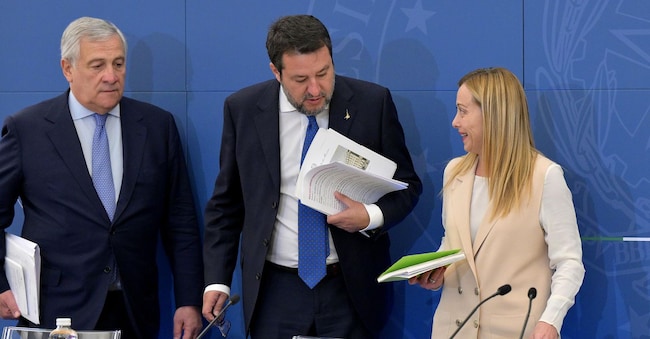
In the run-up to the 2027 Budget Bill, the debate within the ruling coalition looks set to be particularly lively. As this is the last budget before the end of the parliamentary term, the government’s main challenge is to strike a balance between the policy of fiscal discipline (supported by the Ministry of the Economy) and proposals designed to win votes.
Fratelli d’Italia: the middle class, wages and fiscal prudence
Prime Minister Giorgia Meloni’s party aims to combine prudent financial management – so as not to jeopardise the credibility it has earned in Brussels (in this regard, it is in line with the League’s Minister for the Economy Giancarlo Giorgetti) with measures designed to support families and the middle class: the key proposal is a further revision of personal income tax rates, aiming to reduce the intermediate rate to 33 per cent for incomes up to 60,000 euros. This is a point that has also always been proposed by Forza Italia. Then there is the extension of the reduced substitute tax (at 5 per cent) on pay rises resulting from the renewal of national collective agreements (CCNL) and on productivity bonuses. A key priority to be implemented by the end of the parliamentary term is to achieve the objective of strengthening and refinancing support for families to combat the demographic winter.
The League: pensions, contributions from banks and tax amnesty
Matteo Salvini’s League is focusing its efforts on pensions and tax relief, with measures that also aim to win back support from both its government allies and Roberto Vannacci. In response to the automatic adjustment of age requirements in line with life expectancy (+3 months from 2027), the League aims to mitigate the impact by introducing early retirement at 64 and reintroducing early retirement under the Quota 41 scheme. There is also a proposal for a one-off levy or contribution to be paid by major banking and financial institutions (according to Salvini, the top 10 Italian banks will have to contribute 5 per cent of their profits for three years) to raise funds for social security and social welfare measures. A long-standing key demand is the call to extend the deadlines for the instalment repayment of tax debts, by relaunching the ‘rottamazione-quinquies’ scheme currently in place.
Forza Italia: minimum pensions, VAT-registered self-employed workers and business-friendly tax policies
Forza Italia, under the leadership of Antonio Tajani, remains focused on safeguards for pensioners, the self-employed and businesses. The long-standing aim of raising minimum benefits to between 700 and 800 euros a month will be put forward once again. Added to this is the call for incentives and tax simplifications for the self-employed, including the extension of the incremental flat tax. As regards a levy to be imposed on banks, tensions with the League are already looming, given their firm rejection of any proposal for extraordinary taxation on credit institutions or bank profits. There are also proposals to abolish or reduce local and minor taxes (such as the car tax) and to introduce schemes such as healthcare cashback.


