
“Investments and projects totalling 257 million and covering over 500 MW have been put on hold”

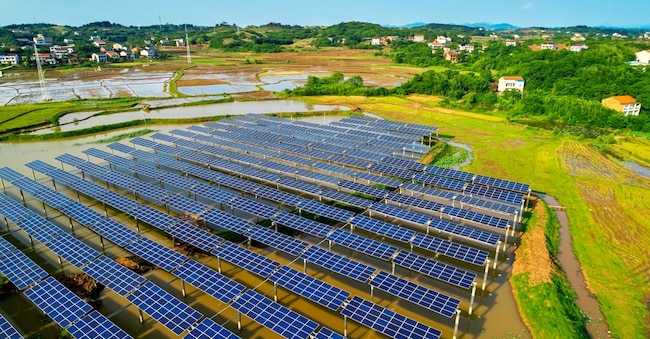
All on hold. Projects totalling 511.1 MW and investments of 257 million euros. Innovo Renewables is grappling with the regulatory uncertainty in Sardinia, having submitted new applications across the region, from north to south, to bring six projects to fruition. “Today we can say that our projects are all on hold,” begins Rodolfo Bigolin, CEO of Innovo Renewables, “because the various regulatory changes have brought our projects to a standstill.” This situation risks causing losses for the company, which had also been active in Sardinia in 2017 in the renewable energy sector, “working on the construction of a plant that was subsequently sold off”.
“To date, we have invested around 10 million euros in land rights (which we continue to pay for), projects and everything else we need,” adds Bigolin – “It’s clear that if, in the end, we don’t get everything up and running and start producing energy, it will become a problem for our company, which employs over 100 people.”
Then there is the regulatory aspect. ‘Various projects have been held up by changes in the regulations,’ he adds. ‘Specifically, the Palmas Arborea project – where we plan to build a 120 MW agrivoltaic plant with an investment of 120 million – has been put on hold and referred to the Council of Ministers. We started in 2023 and we’re still at this stage. Yet it’s a special project with significant benefits for the whole region.” The entrepreneur makes no secret of his concern for the future: “It’s been four years since we signed the contracts for the land rights. If the project – let’s take Palmas as an example – is approved by the Council of Ministers, it will take between two and three years to be completed, because we need to factor in the time required for the single authorisation, the other procedures and the two years of construction.”
Not to mention the company’s other projects: Ottana, ‘where the inter-agency consultation has been stalled for over 15 months due to regional legislation (the moratorium and mini-moratorium). The authorisation process began in August 2024’, Porto Torres ‘where the decision-making inter-agency meeting took place on 29 April 2026 and a decision is pending’, and Carbonia, where ‘the authorisation process began in October 2023’. And then there are Bonorva and Gonnesa, projects that have to contend with ‘the regulatory framework’.
That is not all. The manager also refers to national legislation. ‘Despite the rulings of the administrative courts and the Constitutional Court on the previous regional regulatory framework,’ he emphasises, ‘ the region is still granted broad discretion in defining a local regulatory framework that could conflict with national legislation and impose stricter limits than those intended by the national legislature, resulting in ongoing uncertainty regarding the development and implementation of new renewable energy projects.” And then there is the future outlook: “Regulatory uncertainty is the key issue for investment, as there is a risk linked to project development costs (both direct costs and those relating to the human resources employed in development), because without certainty regarding authorisation, these costs risk turning into losses, but there is also a risk associated with the costs of constructing the plant which, in the absence of a clear regulatory framework and authorised timelines, become impossible to plan for.”

