
'257 million investments and projects of over 500 MW blocked'

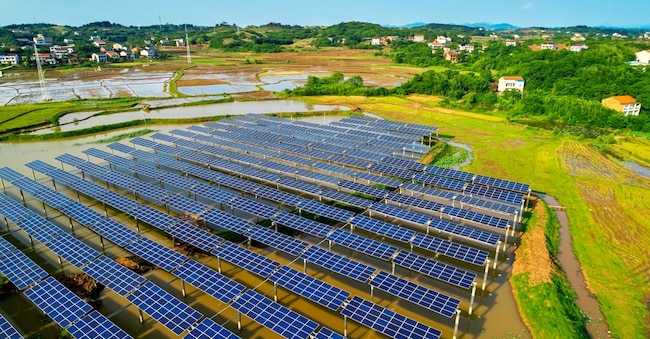
All hanging. Projects for 511.1 MW and investments of 257 million euro. Coming to terms with the regulatory uncertainty in Sardinia is Innovo Renewables, which in the region, from north to south, has submitted new applications to ground six projects. "Today we can say that our projects are all on hold," began Rodolfo Bigolin, CEO of Innovo Renewables, "because with the various regulatory changes our projects have come to a halt. A situation that risks causing losses to the company, which in Sardinia, again in the field of renewables, had also worked in 2017 'in the construction of a plant that was then sold'.
"To date, we have invested around EUR 10 million between land rights (which we continue to pay for), projects and everything else that is needed," adds Bigolin. "It is clear that if everything is not eventually put on the ground and we start producing energy, it becomes a problem for our company, which has over 100 employees.
Then there is the regulatory aspect. 'The various projects have been blocked in the various regulatory changes,' he adds. 'Specifically, the Palmas Arborea plant, where we want to build a 120 MW agri-voltaic plant with an investment of 120 million, has been blocked and sent back to the Council of Ministers. We started in 2023 and we are still like this. Yet it is a special project with an important spin-off for the entire area,' he says. The entrepreneur does not hide his concern for the future: 'Four years have passed since we signed the contracts for the land rights. If the project, let's take Palmas, passes the council of ministers, it will take between two and three years before it is realised, because you have to add up the time for the single authorisation, the other procedures, and the two years for construction'.
Not forgetting the company's other projects: Ottana 'with services conference blocked for over 15 months due to regional laws (moratorium and minimoratorium). The authorisation process was started in August 2024', Porto Torres 'with decisive services conference held on 29 April 2026 and awaiting a ruling', Carbonia with 'authorisation process started in October 2023'. And then Bonorva and Gonnesa, projects that have to come to terms with 'the regulatory framework'.
That is not all. The manager also looks at the national regulation. "Despite the pronouncements of the administrative justice and the constitutional court on the previous regional regulatory framework," he emphasises, "the region continues to be given wide discretion in defining a local regulatory framework that could conflict with the national rule and provide for greater limits than the will of the national legislature, resulting in continued uncertainty for the development and implementation of new renewable projects. And then the future horizon: "Regulatory uncertainty is the pivotal problem for investments as there is a risk linked to the development costs of the project (both direct and of the human resources employed for the development), because without authorisation certainty they risk turning into losses, but there is also a risk linked to the costs associated with the construction of the plant which, in the absence of a certain regulatory framework and authorisation timeframe, become unprogrammable".

