
Mare: 350 billion for infrastructure in Europe by 2040
A McKinsey study forecasts investment over the next 15 years. The figure is set to rise to over one thousand billion as fleets are renewed

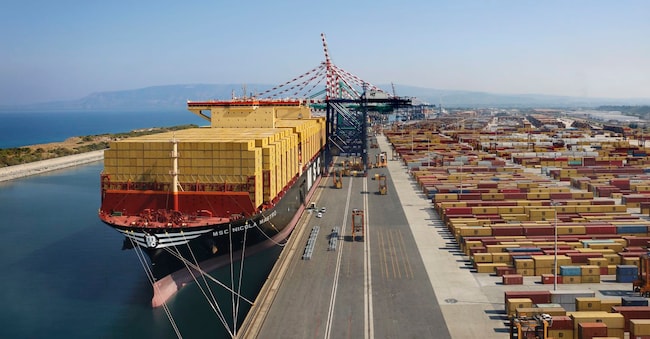
The value of the blue economy in Europe continues to grow, as does the need for investment, which depends not only on rising volumes but also on the need to modernise the sector, decarbonise and achieve the energy transition. All these factors could lead to €350 billion being invested in infrastructure over the next 15 years, and this figure could even exceed one trillion if investments in fleets are included. This is according to a study by McKinsey, which will be presented today at the Blue Economy Summit & Trade Show, running until 19 November in Genoa – an event bringing together institutions, experts and businesses to explore the trends, challenges and opportunities that will shape the future of the maritime industry.
“We started,” explains Filippo Gozzi, a McKinsey partner who led the research, “with a broad definition of the blue economy, in line with that used by the EU to assess the scale of the sector, which encompasses maritime trade and the transport of goods by sea, but also what we have termed ‘maritime assets’, namely port infrastructure, including terminals, and investments in shipyards; it also encompasses the entire sector of transport and tourism, including cruises and ferries.”
Gozzi points out, therefore, that Europe’s blue economy infrastructure ‘would require around 350 billion euros of investment (ranging from 310 to 390 billion, ed.) cumulatively over the period 2026–2040, compared with the approximately 250 billion invested between 2011 and 2025. This growth is driven primarily by the modernisation of ports, increased capacity at shipyards and the development of naval and dual-use infrastructure. Furthermore, the European fleet is expected to require investment in newbuilds (funded by shipowners, operators and European navies, comprising cargo ships, cruise ships, ferries and military vessels, ed.) amounting to 700–900 billion euros over the same period, compared with approximately 500 billion for the period 2011–2025. This figure reflects both the growth in commercial traffic and the need to renew an ageing fleet with vessels capable of using alternative fuels, as well as naval rearmament, which will play a significant role.”
Compared with the last 15 years, says Gozzi, ‘the funding requirement amounts to around an additional 100 billion euros (60–140 billion) for European blue economy infrastructure. On top of this, a further 200–400 billion euros is required for the European fleet. This represents an incremental investment requirement, not a funding shortfall: part of it will be covered through existing channels, but the scale and speed required will make it necessary to develop new funding models’.
According to the study, there are five disruptive factors that are transforming the blue economy: artificial intelligence (with data and automation); the shortage of production capacity (long lead times and bottlenecks in ship delivery); a shortage of human capital; the fuel transition (with rising fuel costs: by 2035, according to the report, decarbonisation could cause prices to rise by 82 per cent); and geopolitical instability.


