
Supplementary welfare schemes are offered by 46 per cent of Ligurian businesses
Survey commissioned by Generali Genova. 78 per cent of businesses expect to maintain or increase their dedicated investment over the next 3–5 years

Key points
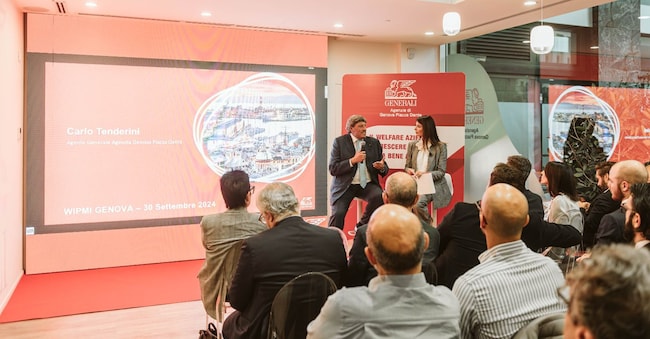
In Liguria, almost one in two companies (46 per cent) has already introduced supplementary welfare schemes going beyond the provisions of national collective agreements; and 78 per cent plan to maintain or increase their investment in these schemes over the next 3–5 years. These are the findings of the 2026 edition of ‘Officina welfare’, a survey commissioned by the Generali Genova Piazza Dante agency, in collaboration with Generali Italia’s Health & Welfare business unit. The study will be presented today during a special event dedicated to dialogue between businesses, institutions and local stakeholders.
The survey, carried out in July (using the CAWI method), involved 316 Ligurian companies, an increase of approximately 23 per cent compared with the previous edition (when there were 256). 69 per cent of the sample are based in the province of Genoa, 16 per cent in Savona, 9 per cent in Imperia and 6 per cent in La Spezia. Micro and small enterprises accounted for a total of 76 per cent of the organisations surveyed; the sectors with the highest proportion of collective agreements were retail (32 per cent), metalworking (14 per cent), the service sector (12 per cent) and tourism (8 per cent).
The proportion of welfare expenditure is rising in small, medium and large enterprises
As mentioned, 46 per cent of the companies surveyed stated that they implement supplementary measures in addition to the national collective agreement. This figure rose to 57 per cent among small businesses (+5 per cent compared with the 2025 survey), to 83 per cent among medium-sized businesses (+17 per cent) and to 80 per cent among large businesses (+12 per cent); only micro-enterprises showed a stable trend (-1 per cent). Among the companies that have adopted welfare measures, 57 per cent state that they make these available to all employees, an increase of 1 per cent compared with 2025 and 7 per cent compared with the 2024 survey.
Improving employee satisfaction and the workplace atmosphere is cited as an objective by 45 per cent of companies that have implemented welfare initiatives, representing an 11 per cent increase compared with 2025. This is followed by increased productivity (44 per cent), a desire to reward employees (39 per cent) and strengthening the company’s reputation (27 per cent).
The most widely adopted initiatives are insurance policies (44 per cent), supplementary healthcare (37 per cent) and supplementary pensions (37 per cent). Medical and social care services have reached 30 per cent, more than doubling compared with 2025, whilst financial support for workers stands at 27 per cent (up 8 per cent on 2025).


