
50 years ago the 12 months that shook England
How 365 days changed a country and the world forever. Or how despair and social tensions stifled the idea of a future just as it was being built

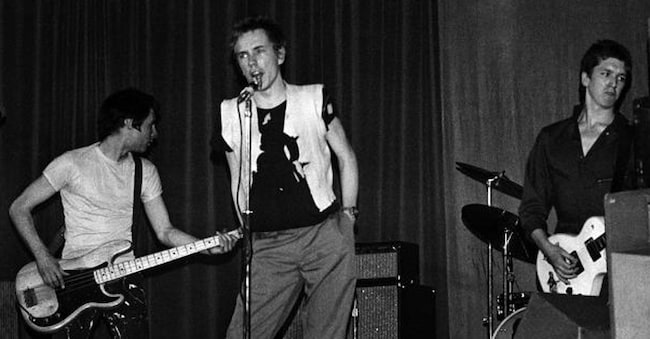
"Punk" is a word that appears in Shakespeare's play Measure for Measure, the critic Lester Bangs also used it in the early 1970s to describe the music of the Stooges and Mc5. It appears on 21 February 1976 on page 31 of the New Musical Express, when Neil Spencer describes the sound of the Sex Pistols. Reading the article, two students from Bolton go down to London to see a concert by the band and manage to get up there, to Manchester, twice in the space of a few weeks: on 4 June and 20 July. It is the Big Bang that revives the city's long dormant musical tradition. Joy Division, New Order, The Smiths, The Haçienda Club, Oasis will all arrive.
It was in 1976 that the Stiff label, founded by Dave Robinson and Jake Riviera, and Geoff Travis' Rough Trade shop were born in London: these were the first nerve centres of the independent movement. The punk festival at the 100 Club in September gathered many emerging bands, from the Clash to Siouxsie and the Banshees, on the same stage, certifying a new scene. Three months later, on a rainy Manchester afternoon, the two students who had brought the Sex Pistols to Manchester record an EP with their band, the Buzzcocks: "Spiral Scratch" is totally self-produced, recorded in a few hours, financed by a collection. The cover is a black and white polaroid, the label created by the group for the occasion.
Oscenity and Fury
Meanwhile, the UK is sinking: the economy is staggering, factories are closing, youth unemployment is high, prospects are scarce. The youngsters are still fascinated by films from the beginning of the decade such as 'A Clockwork Orange' and, in the summer of 1976, lose themselves in the nihilism of 'Taxi Driver'. In their hands they hold books by William Burroughs and J.G. Ballard, which tell of warped cities and lives on the edge. They rely on amphetamines to cope with boredom and escape despair. Commercial radio stations broadcast music distant from their everyday experience. Thus, the focus grows on what expresses anger, frustration and breaks the mould. This is exactly what the COUM Transmissions collective - about to become Throbbing Gristle - does when at the Institute of Contemporary Arts in London in October they shock everyone with their installation Prostitution. Two months later, the Sex Pistols blaspheme on live TV: the punk arrives on the front pages of British newspapers, even in the Corriere della Sera, which headlines: 'Sex Pistols quartet launches obscenities against the Queen and the well-wishers on British video'.
A moment before everything explodes
With Bowie having fled to Berlin to record 'Low' and Queen dominating the charts, images of a rapidly changing world flashed across UK televisions. The first flight of Concorde, IRA bombs, royal scandals; Labour changes to Number 10 Downing Street, Margaret Thatcher's target in the crosshairs. As if that wasn't enough, in the newspapers there was talk of the Cold War and the abnormal heatwave in the British Isles, there were articles on the Yorkshire Ripper and austerity. The soundtrack was the colourful music of Top of the Pops, broadcast on Thursday afternoons on TV. Later, late at night, John Peel would play emerging music on the radio. Twelve shattering, crucial months. Still fifty years later.

