
527 million counterfeit or non-compliant articles seized in nine months
The figure covers the period from 1 January to 30 September 2025 and relates to the activity carried out by the departments of the Yellow Flames

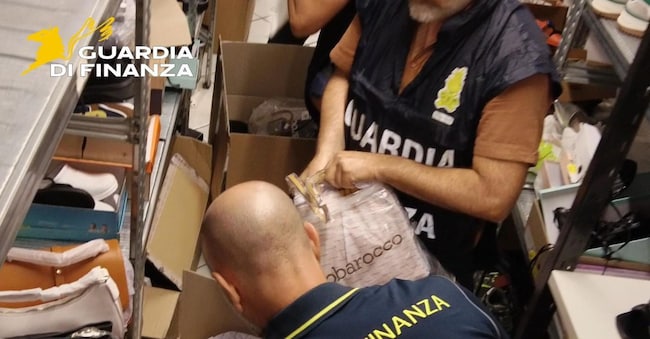
From phytopharmaceuticals to designer jumpers, from blatantly counterfeit clothing to products that do not comply with safety standards: all were seized. From 1 January to 30 September, the units of the Guardia di Finanza Corps, in 9,000 interventions, identified and seized around 527 million goods including 'counterfeit products, falsely labelled as Italian or not complying with safety standards. 3,344 perpetrators were reported'.
1,609 consumer complaints
A total of 48 million counterfeit products were seized in operations that saw 2,600 people reported. In the nine months of work, as the Guardia di Finanza wrote in a note, there were also 542 interventions to protect Italian products, with the seizure of 28 million articles falsely labelled as Italian and 90 people reported to the judicial authorities. There were also 3,696 checks on product safety, which led to the seizure of more than 450 million non-compliant articles and the reporting of 580 perpetrators. In addition, the Guardia di Finanza challenged '1,609 violations to consumers aware of the purchase of fake goods, with penalties of up to 7,000 euro introduced by law no. 206/2023'.
From Pesticides to Wine
Among the most significant results underlined by the Guardia di Finanza is the intervention in Torre Annunziata, where 'a criminal organisation dedicated to the counterfeiting and marketing of dangerous plant protection products was 'dismantled, with 9 precautionary measures and EUR 8 million seized'. In Foggia, more than 1.3 million litres of wine without traceability were 'seized, worth more than EUR 4.3 million', while in Naples, '1.4 million unsafe toys were confiscated, some of which bore counterfeit trademarks of famous cartoon characters.
Constant activity for a sector that is nonetheless growing and in many cases is underestimated. It is no coincidence that the perception of the phenomenon was also at the centre of the debates during the week against counterfeiting.
Student survey
According to the survey commissioned by the Ministry of Business and Made in Italy to Moige-Istituto Piepoli and conducted in mid-2025 on 2,123 students of first and second grade secondary schools, writes Mimit in the report on the initiatives, 'only 30% of Italian children between the ages of 11 and 17 can give a correct definition of counterfeit goods, while 33% have no perception of counterfeit goods at all'.

