
AI puts 60 per cent of jobs in Europe at risk: Italia is in the middle of the rankings
According to the report presented to EU finance ministers, Europe is more vulnerable than other regions of the world
from our correspondent Beda Romano
 Aggiungi Il Sole 24 Ore
ai preferiti su Google
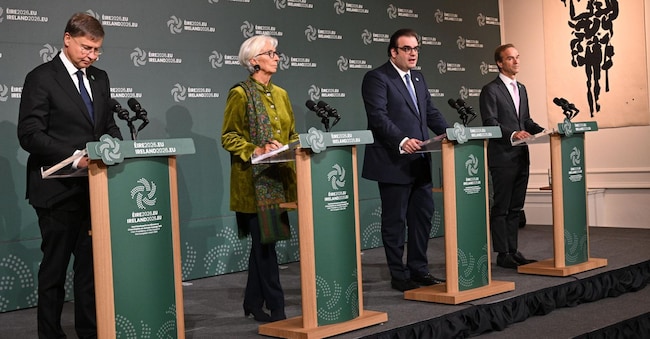
DUBLIN – The report presented yesterday by the International Monetary Fund to the European Union’s finance ministers, meeting here in Dublin, is one that takes a cautious view of the risks associated with artificial intelligence. Among other things, the international organisation explains that in Europe, 60 per cent of jobs are exposed to particular risks. In the field of artificial intelligence, Italia ranks in the middle of the table in terms of both productivity and preparedness to cope with technological change.
“Although – as the Fund warns – the potential of artificial intelligence appears considerable, the overall implications in terms of productivity, labour demand, inequality and public finances remain highly uncertain.” In this context, the international organisation continues, “it will be essential to manage both the opportunities and the risks in an agile manner, simultaneously and through coordination between different countries”. The IMF’s analysis comes at a time when doubts about the dangers of AI are also growing amongst companies in the sector.
Artificial intelligence is likely to disrupt many balances in the labour market. The IMF expects demand for skilled workers to rise, whilst more routine jobs are likely to be affected by the advent of new technologies. In terms of productivity, the countries currently benefiting most from artificial intelligence are Norway, Luxembourg and Switzerland. At the bottom of the ranking are Romania, Bulgaria and Poland.
In terms of readiness to cope with technological change, the leading countries are Denmark, the Netherlands and Estonia. Those faring worst are Bosnia and Herzegovina, Belarus and North Macedonia. As mentioned, in both areas – namely productivity growth and the level of preparedness – Italia ranks roughly in the middle of the table, but still lags behind the other major EU countries: Germany, France and Spain.
Among other things, the IMF explains that in Europe, 60 per cent of jobs are exposed to particular risks, more so than in other regions of the world – the global average is 40 per cent. However, the international organisation notes that even for those in highly exposed occupations, the impact of artificial intelligence can vary significantly. ‘Around half of highly exposed jobs are occupations in which AI can support workers and boost their productivity.’


