
60 years ago: the Czechoslovak film revolution, between the Oscars and censorship
The avant-garde movement of the 1960s challenged the communist regime and gained international recognition

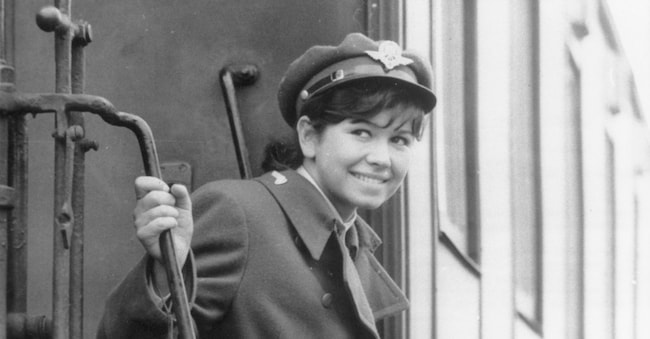
Sixty years ago, in 1966, the Nová Vlna, the Czechoslovak avant-garde film movement, sent shockwaves through the Eastern European film industry, bringing it under Hollywood’s spotlight for the first time. That year, The Shop on Main Street (1965), directed by Ján Kadár and Elmar Klos, won the Oscar for Best Foreign Language Film. Also that year, Jiří Menzel’s Closely Watched Trains was released, going on to win the Oscar in 1968. The Academy’s interest – which until then had largely focused on Italian and French films – was not limited to the thrill, in financial terms, of Western co-production offers, but also endorsed the hope of alleviating the region’s post-Second World War political, cultural and economic isolation, which had been exacerbated in 1961 by the construction of the Berlin Wall. In truth, it was precisely this state of constraint that, from the late 1950s onwards, gave rise to a certain creative freedom that stood in conflict with the reality of official culture. The first signs of renewal came from Poland with Andrzej Wajda’s 1958 masterpiece Ashes and Diamonds and with The Passenger (1964) by Andrzej Munk and Witold Lesiewicz, in which the consequences of the war served as a source of inspiration for analysing individual trauma and historical disorientation, a far cry from the optimism of socialist realism. It was here that Jerzy Skolimowski and Roman Polanski came of age: the former, a harbinger of a poetics of expressive unrestraint and incommunicability; the latter, a comic and cruel iconoclast of realist tension through existential dramas and those exploring sexual identity. Hungarian filmmakers reinterpreted their national history by giving space to the unsaid and to metaphor: the absurdity found in Miklós Jancsó is also evident in Ildikó Enyedi. But it was Czechoslovakia, above all, that bore the richest fruit, perhaps as a result of the regime’s temporary political crisis, weakened by economic depression and the diminished credibility of the state apparatus. It was, however, also the union of the silver screen with a new generation of exceptionally talented writers – Milan Kundera, Bohumil Hrabal and Ladislav Fuks – that was greeted with surprise and admiration in Western Europe. And it was a woman (the ‘quasi’ equal opportunities were a positive aspect of socialist culture), Věra Chytilová, who contributed to the birth of Nová Vlna with *A Bag of Fleas* (1962) and *The Little Daisies* (1966). The regime censored her work at home, despite her films officially participating in international festivals as state productions. For this reason, Miloš Forman, after his early films – The Ace of Spades (1964), The Loves of a Blonde and Fire, My Girl! (1967) – fled to the US immediately after the Prague Spring, where he became the cult director of One Flew Over the Cuckoo’s Nest (1975) and Amadeus (1984). But returning to Prague in 1966, The Shop on Main Street depicts the Holocaust era through the eyes of an ‘Aryanity inspector’ who befriends the Jews. Its success paved the way for the ‘race’ of Closely Watched Trains, in which Menzel uses the metaphor of a young stationmaster’s sexual liberation to analyse a wound still raw: the oppression of the Nazi regime, with its narrow-minded and zealous representatives, even in the obscure, tiny provincial station where the film is set. The light-hearted and poetic epic of the protagonist Milos (Václav Neckář), a sort of Czech Charlie Chaplin who cannot seem to lose his virginity, is intertwined with Hrabal’s imaginative language, which is very difficult to convey through images. Hovering over *The Shop* and *Trains* is the Kafkaesque humour of the Jewish-Eastern tradition, the anti-heroism of the protagonists, and the sudden death that bursts into the apparent cheerfulness of the setting without tragedy and without leaving a mark. In the case of *Trains*, ‘passive resistance’ to History occurs unwittingly on the part of an ordinary character – like Jaroslav Hašek’s Švejk – caught between polite mockery of those in power and a sorrowful homage to nature. Menzel counterbalances the text’s intellectualism with an anti-authorial lyricism. The film is on the right track, although the sexist language is somewhat jarring (it is unclear whether this is due to the translation) as are certain provocative shots and innuendos, perhaps because they are exclusively female. But this erotic exaggeration is also the key to a fierce contrast with the narrative of Soviet cinema, in which the rejection of fantasy in favour of reality would lead to a cinematic period of total denial of sensuality. *The Trains* – screened almost annually by the Bologna Film Library and recently at the small Milanese festival Cinelogos – was Menzel’s first feature film; after a brief success with *i* (*Allodole sul filo* ), which began production in 1968, he suffered the same fate as Chytilová. The film was only rehabilitated in 1990 when it won the Golden Bear at the Berlinale.
© ALL RIGHTS RESERVED


