Assets

World Monuments Fund raises 62 million for the arts

The organisation in Italy is supporting the restoration of the Golden Hall at the Poldi Pezzoli Museum and the restoration of Raphael’s Loggia in the Vatican. Italia Nostra has launched a ‘Red List’ of cultural heritage sites at risk

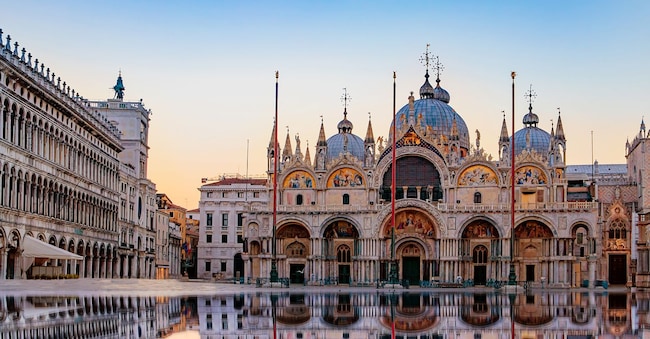
St Marks Basillica

5' min read

Translated by AI
Versione italiana

5' min read

Translated by AI
Versione italiana

Wars, economic and humanitarian crises and, of course, climate change are putting cultural heritage at risk. The World Monuments Fund (WMF) has raised $62 million for its ‘Endowment Campaign’ to mark its 60th anniversary, in less than a year, with 100 per cent of the American organisation’s Board of Trustees participating. The funds have tripled the WMF’s net endowment, which is expected to exceed $100 million by 2028, strengthening the long-term capacity of the independent New York-based organisation – dedicated to safeguarding the world’s most precious sites – to protect global cultural heritage.

The income from the endowment fund will provide the WMF with the resources to strengthen key areas – namely research, education and training in cultural heritage professions – through the Suzanne Deal Booth Institute for Cultural Heritage Preservation, programmes dedicated to developing future generations of restoration specialists; programmes relating to awareness-raising, crisis response and the WMF’s international network; and investments in field projects to protect cultural heritage around the world.

Loading...

“Cultural heritage is being destroyed by conflict, climate change, neglect and urbanisation faster than the world can respond,” explained Bénédicte de Montlaur, president and CEO of the World Monuments Fund. “This campaign provides the WMF with the long-term resources needed to act with greater urgency and ambition: the generosity of individuals, foundations and companies will help to protect these irreplaceable sites for future generations.”

Support schemes

The announcement comes as the WMF launches a five-year strategic plan to expand global support for the protection of cultural heritage and make it a global priority. The campaign was launched thanks to an initial contribution of $20 million in the form of an Endowment Challenge Grant from The Robert W. Wilson Charitable Trust. Through this strategic co-funding mechanism (matching grant), the Trust has matched every dollar raised by 50 per cent, up to a maximum of $40 million by 31 December 2027, thereby amplifying the impact of each donation.
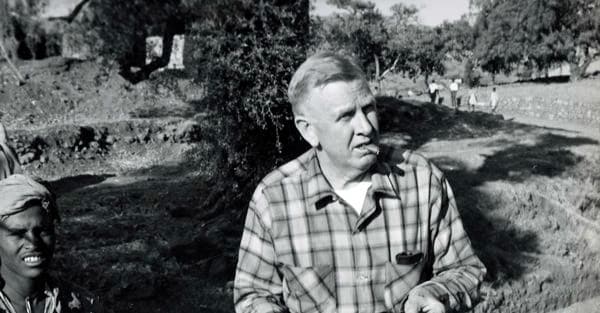
Etiopia, chiese scavate nella roccia. Il colonnello Gray al lavoro sull'impianto elettrico, 1967 circa

The WMF and Italia

The organisation has recently returned to Italia, setting up an office in Milan headed by Fiorella Ballabio and Silvia Beltrametti (who, along with her husband Jay Krehbiel, is one of the donors). Current projects include the restoration of the Salone Dorato at the Poldi Pezzoli Museum in Milan, and the five-year restoration project for the Loggia di Raffaello in the Vatican, accompanied by a training programme on the conservation of mural paintings. The entire ‘Legacy of Raphael: The Vatican and Beyond’ initiative, which encompasses the restoration of the Vatican Loggia, training activities, digital documentation, public outreach and further ongoing projects in the Vatican, has been made possible thanks to a donation of 14.275 million dollars from the Stephen A. Schwarzman Foundation. Meanwhile, the three-month restoration of the Golden Hall at the Poldi Pezzoli Museum, which began in May this year, was completed in mid-September thanks to funding of 250,000 euros.
Since 1985, the WMF in Rome has supported restoration projects such as the Galleria dei Carracci at Palazzo Farnese, the Temples of Hercules and Portunus, the Arch of Janus, Santa Maria Antiqua and the Farnese Aviaries. To date, the WMF has raised more than $23.5 million for projects in Italia, thanks to the support of the Robert W. Wilson Challenge to Conserve Our Heritage, which has contributed over $10 million and mobilised a further $14 million in co-funding, including over $6 million allocated by the Italian Ministry of Culture.

Support the reconstruction

The WMF has also secured endowment funding for some of its most crucial programmes, including a donation of $1 million from the Donald A. Pels Charitable Trust for the Crisis Response Programme, with the aim of supporting local communities in the immediate aftermath of war, climate-related disasters or other emergencies, helping them to safeguard their cultural heritage.

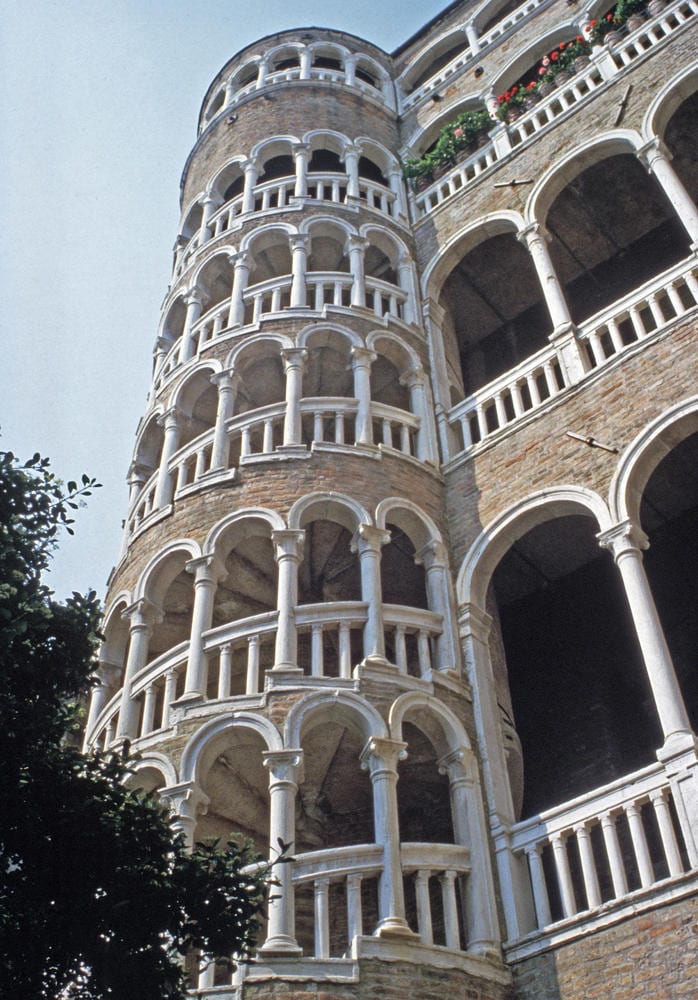
Italia, Palazzo Contarini del Bovolo. I portici a spirale, le colonne slanciate e la balaustra sinuosa poggiano su gradini in pietra d’Istria, le cui facce esterne sporgono dalla muratura esterna in mattoni. Veduta dopo il restauro., 1996

Italia Nostra: working to preserve Italy’s heritage

In Italia, there are numerous heritage sites that are in need of funding and attention. This was stated by Italia Nostra on 21 October in Rome, in the Sala Igea of the Treccani Italian Encyclopaedia Institute, during the presentation of the new Red List of cultural heritage at risk. The name risks causing some confusion, as it refers to the Red Lists that ICOM has been publishing since 2000 – lists of the categories of cultural heritage most vulnerable to illicit trafficking in specific countries or geographical areas.
Italia Nostra’s Red List, on the other hand, catalogues immovable heritage (monuments, villages, churches, villas, archaeological sites and industrial architecture) threatened by neglect, deterioration or inappropriate interventions.

Loading...

What is new is not the list itself – which the association has been compiling since 2011 using reports from members of the public – but the fact that it has been made available to the public. The records, which were previously confidential, have been fully verified and uploaded to a dedicated website (listarossa.italianostra.org), where anyone can check which properties are at risk in their local area and submit new reports by filling in a dedicated form. In this way, the List becomes a tool for participatory action.

The figures paint a telling picture of the deterioration of many Italian heritage sites. Over the past 15 years, 520 reports have been received, of which 402 have been verified. Today, 341 heritage sites are at risk; 58 have been restored and included on a ‘Green List’, whilst three have been irretrievably lost and remain documented on a ‘Black List’. It is precisely this Black List, like a memento mori, that serves as a reminder of what could not be saved and acts as a warning for future conservation efforts.

The cataloguing system adopts a classification of cultural heritage that, in simplified form, mirrors that used by the Ministry of Culture. There are 23 categories, ranging from archaeology – including industrial archaeology – to rural architecture, from places of worship to stately homes. They also include villages and historic centres, historic infrastructure such as railways, ports and sheep tracks, historic shops, theatres and cinemas, right through to agricultural, cultural, natural and urban landscapes. For each asset, its state of conservation is indicated on a six-level scale, ranging from ‘good’ to ‘ruin/irreversibly compromised’. Precise criteria also govern the transfer from one list to another. A property is added to the Green List when the causes of risk have been removed, at least in part, and conservation measures consistent with its values have been carried out. The presence of a long-term management plan, protective measures and resources allocated by the relevant authorities, as well as the return of the property for public enjoyment, are also viewed positively. Conversely, a site is placed on the Black List if it has been destroyed, lost, deteriorated beyond any possibility of restoration, or altered by inappropriate interventions to the extent that it has lost its historical and cultural value.

“Behind every record lie stories, identities, landscapes and communities that risk losing a significant part of their collective memory,” says the national president of Italia Nostra, Edoardo Croci. “Only by making these assets recognisable, accessible and meaningful to the community once again will it be possible to ensure effective and lasting protection over time.”

Copyright reserved ©
Loading...

Brand connect

Loading...

Newsletter

Notizie e approfondimenti sugli avvenimenti politici, economici e finanziari.

Iscriviti