Cost of living

School: 62 per cent of families pay additional costs

Cisf survey: private tuition, extra-curricular activities and educational resources are putting a strain on household budgets; for 10.7 per cent of households, expenditure exceeds 1,500 euros a year

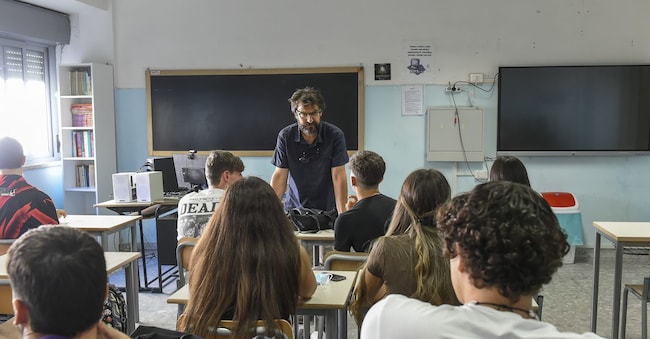
Primo giorno di scuola - Liceo Newton di Roma  IMAGOECONOMICA

3' min read

Translated by AI
Versione italiana

3' min read

Translated by AI
Versione italiana

Although school is formally free for everyone, it places a strain on household budgets with costs – sometimes unexpected – for activities and services. These include extra expenses for private tuition, remedial classes, enrichment courses or activities, and the purchase of educational tools or materials. These additional costs can sometimes cause financial hardship, affecting families across different income brackets to varying degrees. 10.7 per cent of households report having paid as much as 1,500 euros in a year to support their children’s schoolwork.

This emerges from a survey on the relationship between Italian families and schools conducted by the CISF (International Centre for Family Studies), carried out in collaboration with the company Eumetra and under the patronage of the Cariplo Foundation, based on a sample of 1,627 households.

Loading...

The results of the questionnaire are published in the CISF’s annual report, available from tomorrow in all bookshops under the title ‘Teniamo banco! Family and school facing the educational challenge’ (San Paolo publishers).

The 2026 Report begins with a snapshot of the of households: whilst 30 per cent of the sample state that ‘never’ having had any problems making make ends meet over the past year, 45.5 per cent show a certain degree of financial vulnerability financial vulnerability (divided between those who say they have ‘often’ experienced financial difficulties (12.2 per cent) and those who say ‘sometimes’ (33.3 per cent)).

In this context, the ‘school-related’ costs that every family has to bear have a significant impact, and 62.7 per cent of households with school-age children report having had to cover extra costs:
- 37.1 per cent of families have incurred expenses related to their children’s enrichment activities (languages, coding, music…);
-
32.1 per cent incurred expenses for private tuition;
- 44.3 per cent spent on the purchase of digital or educational tools.

Three types of courses which, for one in ten families, cost more than 1,500 euros a year, whilst 21.1 per cent paid just over 1,000 euros, 23.7 per cent between 500 and 1,000 euros, and 44.5 per cent up to 500 euros.

From an economic perspective, families’ attitudes towards state-recognised private schools are also significant: 50.8 per cent of those surveyed would enrol their child in a state-recognised private school if, in terms of costs, it were as affordable as state schools.

The number of certifications relating to Special Educational Needs (SEN) is also rising: 14.4 per cent of families with school-age children reported that at least one child ‘with a certified condition that has required additional educational support additional educational support (personalised measures, support, adaptations, dedicated meetings)’, with forms and manifestations of distress/difficulty that vary greatly and are formally classified in various ways (Law 104, SLDs, various difficulties).

The CISF survey examines various aspects of the relationship between school and family, but when the analysis focuses on economic factors, a further vulnerability emerges. In Italia, even today, academic success depends heavily on material circumstancesand above all on parents’ level of education.

If at least one of the two has a upper secondary qualification, it is likely that only 5 per cent of their children will drop out of education before obtaining a school-leaving certificate or a qualification. This figure rises, however, to almost 23 per cent of young people aged between 18 and 24 whose parents have at most a lower secondary school certificate (Istat, 2025).

Loading...

‘Schools could make a difference in addressing these initial inequalities, whilst today it does not fully fulfil its role as ‘great equaliser’,’ emphasises Francesco Belletti, sociologist and director of the CISF. ‘Teachers often waver between helping everyone to progress and pre-selecting the best: the two objectives become intertwined. However, in the absence of a coherent approach, schools tend to reproduce hierarchies’. In this context, 17.8 per cent (almost one in five families) even believe that schools are not only unable to level the playing field (in terms of family background and individual talent), but actually exacerbate these disparities.

The survey also reveals a significant disconnect between young people and school, which is often unable to understand their needs: a quarter of the parents interviewed in the Report ‘often’ or ‘very often’ observed a decline in motivation, social withdrawal or school-related somatisation, whilst 21 per cent tried to avoid school, with absences not justified from a medical point of view.

Copyright reserved ©
Loading...

Brand connect

Loading...

Newsletter Scuola+

La newsletter premium dedicata al mondo della scuola con approfondimenti normativi, analisi e guide operative

Abbonati