
"65 years of Ilva with the ovens off: who turned off the industry?"
Italian domestic consumption of flat-rolled products remains around 15 million tonnes; in 2023 we had to import more than 11 million tonnes

3' min read
3' min read
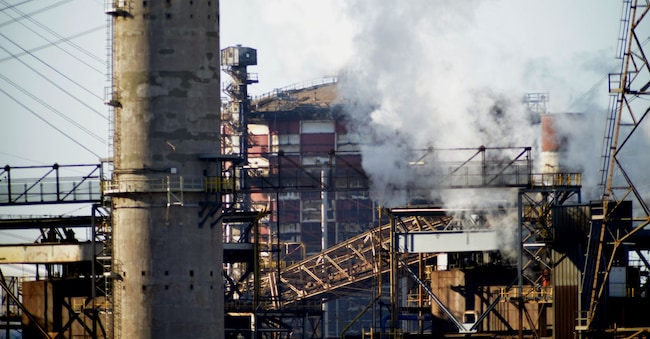
The sustainability of industry in our country is approached like an apple grower who, in order to pick them, cuts off the branch - if not the entire trunk. Just yesterday the Taranto plant turned 65 years old, of which only twenty were in private hands; for more than two-thirds of its history it was run by the state through Italsider or various extraordinary administrations. It is the first anniversary with all the blast furnaces switched off (Afo4 will be back in operation tomorrow).
Two ways to produce steel. There are only two processes: (1) blast furnace-converter integral cycle and (2) electric furnace (Eaf). In Italy, the only integral cycle steel mill is Taranto. This type of flat-rolled production is indispensable for cars, electrical appliances and construction. In Northern Italy, steel plants use the electric furnace melting process.
Italian domestic consumption of flat-rolled products remains around 15 million tonnes; in 2023 we had to import more than 11 million tonnes. During the long crisis at Ilva (now Acciaierie d'Italia), the production of flat-rolled products plummeted from 9.3 million tonnes per year in 2011 2012 - the hot-rolled area was placed under seizure on 26 July 2012 - to 4.5 million in 2019, to reach around 2 million in 2024. That collapse was paid for twice: with 'bridge loans' paid for by taxpayers and with the trade balance, weighed down by imports of the steel we once produced. The market spaces left by Ilva were occupied by northern European competitors and, above all, by the Chinese, Turks and Indians. Already in 2023, Italy was the first EU destination of Chinese steel, with 3.8 million tonnes (over a third of the EU total).
The pinwheel of failed solutions. In January 2024, the government chose extraordinary administration again, promising lightning procedures. On 20 March, the commissioners received a mandate to negotiate exclusively with the Azerbaijani consortium Baku Steel + Azerbaijan Investment Company, for a total offer of around one billion. But on 7 May, a fire at Blast Furnace 1, which was already scheduled to be extinguished and replaced with an electric furnace, led to the plant being seized 'without authority'. This further reduced production capacity and increased the cost of the refurbishment. A few days later, it leaked from Palazzo Chigi that Baku Steel was asking to halve the price, reopening the siren song of total nationalisation.
Since June, it has been back to the Italian routine: stalemate, political raises, buyers' downgrades and the risk of negotiations breaking down. In our 'war on multinationals', the politicians continue to indemnify their escape with public money: on 12 June, a further 200 million in bridging liquidity was allocated. Total loans now exceed one billion. Beyond the labels, the question is whether the government and local authorities should write the business plan or limit themselves to setting objectives - sustainability, employment, industrial redevelopment - leaving the route to the operators.

