
Waste: the 84 million burden (over two years) left by Covid
The decree approved on Tuesday 4 August by the Council of Ministers provides for the appointment of a special commissioner to dispose of over 22,000 tonnes of waste left over from the pandemic

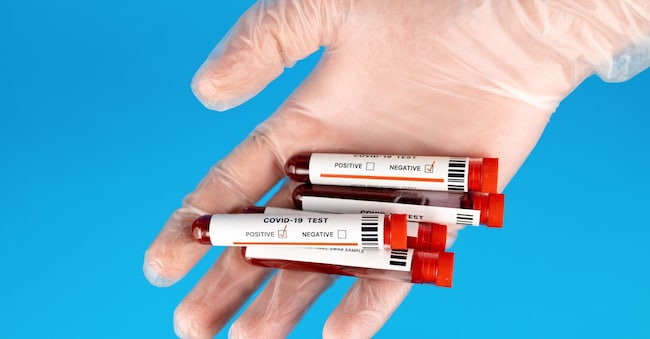
As if it had no other priorities for almost a week, Italian politics has once again become fixated on Covid-19. The hearing of former Prime Minister Giuseppe Conte before the parliamentary committee of inquiry into the handling of the health emergency – cancelled on Monday, rescheduled for Wednesday and then held on Thursday – continues to divide the government and the opposition. But the pandemic continues to have repercussions from a public health perspective too. For example, there is the issue of the vast amount of waste that has accumulated over recent years and is still awaiting disposal.
Confirmation comes from the Public Administration and Civil Protection Decree, which was approved by the Council of Ministers on Tuesday and which, following the summer recess, will begin its passage through the Senate to become law. It contains a provision, Article 4, entitled ‘Urgent provisions concerning the Regional Health Service and public health’, which provides for the appointment of a Special Commissioner tasked with addressing the environmental fallout left by the pandemic. This Commissioner must have proven experience in the leadership and management of complex organisational structures and will be responsible, by 31 March 2027, for overseeing the storage, safekeeping, handling, organisation of transport, decommissioning and disposal of materials previously acquired by the Ministry of Health.
Over 22,000 tonnes of waste to be disposed of
What is particularly striking is the sheer volume of waste involved. The technical report attached to the Decree-Law refers to 312,504 cubic metres of materials currently in storage. This corresponds – as stated in the text – to ‘approximately 22,692 tonnes, held at 16 storage facilities located throughout the country’. Fortunately, almost all of this – 98.69 per cent (face masks, coveralls, lab coats and gloves) – falls into the category of ‘non-hazardous waste’.
Roofing
The cost of the measure is by no means insignificant, given that it is estimated at 44 million euros for the current year and 40 million for the next. These funds are raised through a number of channels. The first 44 million come from three sources: 25 million from a reduction in the allocation established by the 2008 Finance Act for settlements with those harmed by infected blood transfusions, 10 million from an old expenditure authorisation contained in the 2006 Budget Act, and the remaining nine from the Fund for Urgent Needs created by the 2015 Stability Law. The second 40 million is drawn from a single source: compensation for damage caused by Covid-19 vaccinations.

