
In the new EU budget 8.6 billion for culture, media and civil society
In the new Multiannual Financial Framework, Brussels doubles the funds allocated to culture and announces AgoraEU, a programme that will build on the legacy of Creative Europe and the Citizenship, Equality, Rights and Values programme

3' min read
3' min read
The European Commission has presented its proposal for the Multiannual Financial Framework 2028-2034, the instrument that will define the Union's spending priorities over the next seven years. The document, which now opens the negotiation phase between the European Parliament and the Council, envisages a total budget of €1,984.6 billion, or 1.26% of the EU's Gross National Income, marking a significant increase compared to the current seven-year budget 2021-2027, set at €1,211 billion (1.1% of GNI). This is the most ambitious financial plan ever proposed by the Union, designed to strengthen its strategic autonomy and equip it with flexible tools to address the geopolitical and systemic challenges that will characterise the coming decade.
Culture and Creativity, Growing Endowment
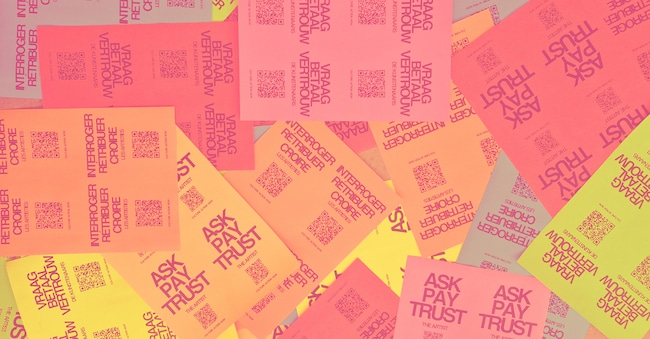
Good news for the cultural sector which, after months of uncertainty, cuts in national budgets and less than encouraging signals from Brussels, can finally breathe a sigh of relief. Alarm had also been raised by a preliminary draft of the new Creative Europe programme, so far the only instrument entirely dedicated to supporting cultural and creative industries, which had prompted hundreds of organisations and thousands of professionals to join the campaign Ask, Pay, Trust the Artist, promoted by the European network Culture Action Europe.
But, despite the concerns, the Commission has responded by doubling the overall budget allocated to culture and media, which thus rises from EUR 2.44 billion in the current programme of Creative Europe (2021-2027) to EUR 4.99 billion, bringing the share dedicated to these sectors from 0.23% to 0.25% of the total. The significant increase in resources comes in the context of the launch of AgoraEU, the new EUR 8.6 billion programme that merges the current Creative Europe and Citizens, Equality, Rights & Values (CERV), dedicated to the promotion of active citizenship, fundamental rights and the rule of law.
The reasons behind the unification, explained by the European Commission on 16 July during the official presentation of the proposal, lie in the desire to overcome the fragmentation of the funding channels and to fully integrate culture within the Union's strategic priorities. This is an operation that, according to Brussels, will not compromise the operational autonomy of the sectors involved, which will continue to benefit from a certain management and programming independence. The new AgoraEU programme will in fact have three main strands:
- EUR 1.8 billion will be allocated to Creative Europe - Culture

