Sustainability Objective

A bag that tastes like olives: reducing fashion's carbon footprint by experimenting

Bacterial cellulose, grape and banana peels, mushroom-based vegan leather. The study of materials is at the heart of the work of the Danish duo Ditte and Nicolaj Reffstrup.

by Lisa Corva
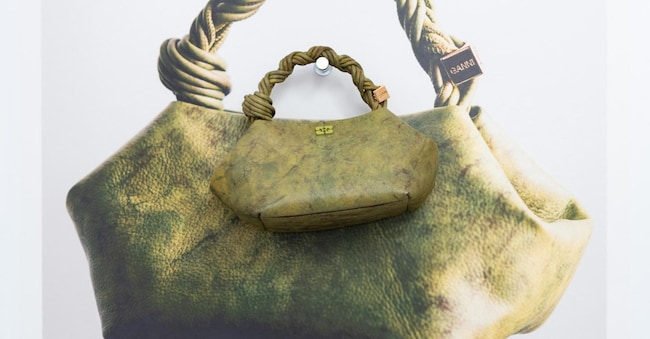
La borsa Bou Bag, un best seller di Ganni, realizzata in Celium, un ecomateriale composto da cellulosa batterica. ©Nynne Henriksen

5' min read

5' min read

A bag made from olive oil processing waste. Small, handy, colourful. But above all, environmentally sustainable. It is just one of the many green projects of Ganni, the Danish brand with 47 monobrand stores worldwide (the latest has just been opened in Bangkok). Behind it, there is a couple from Copenhagen: Nicolaj and Ditte Reffstrup.

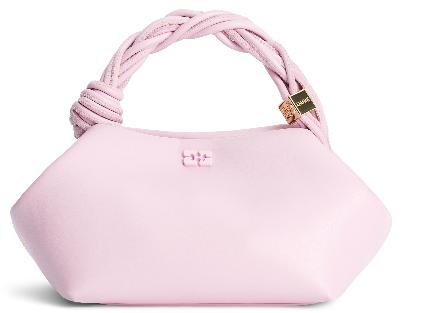
'Fashion and sustainability are two words that don't go together at the moment,' Nicolaj begins. "Fashion is newness, that is, everything that is new, always new, everything that you do not yet own. Fashion is desire. Yet change is possible, and we in fact talk more about responsibility than sustainability. From all points of view: from the carbon footprint - we plan to reduce it by 50 per cent by 2027 - to the search for new eco materials'. At Copenhagen Fashion Week, a new version of the Bou Bag, the brand's best seller, was just presented. "It is made of Oleatex, a futuristic material patented in Turkey, which uses waste from olive oil production. So totally vegan, an alternative to leather. Something about the texture reminds me of kombucha,' Ditte explains with a smile.
Loading...

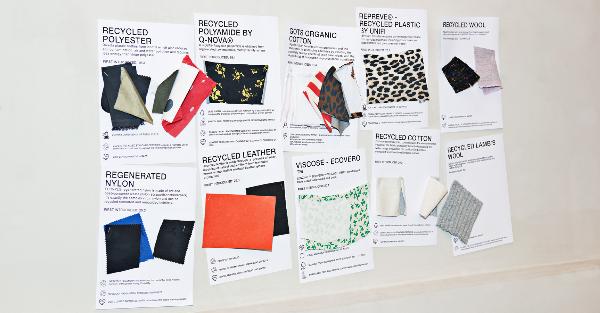
I moodboard con lo studio per nuovi materiali sostenibili da utilizzare nella produzione del brand.

The search for new fabrics is Ganni's challenge. "This year we decided not to show at Copenhagen Fashion Week, but to present our Fabrics of The Future. From 2019 we are focusing on young designers: they often do not have access to experimental materials, we support them, providing the capital and the spaces where they can imagine and create. This is how the future is invented, perhaps with a bag that comes from an olive grove'. Some experiments have seen the light of day and have been adopted in the various collections. For example, from the partnership with Mylo, which created mycelium leather, a non-skin derived from mycelium (the vegetative apparatus of mushrooms), a capsule collection of hand-decorated graffiti bags and wallets was launched, on sale in stores in Copenhagen and New York. The collaboration with Vegea, which produces a material made mainly from grape skins and waste from wine production, resulted in trainers launched in 2021.
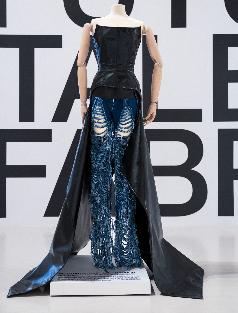
Uno dei look ideati da giovani designer emergenti con ecomateriali e proposti durante “FUTURE, TALENT, FABRICS”, la mostra realizzata da Ganni in collaborazione con la Copenhagen Fashion Week. ©Nynne Henriksen

Then there is Pyratex, a mix of organic cotton and banana peels from which jersey is made, the basis for a capsule collection of sweatshirts and sportswear. "This year we focused on Renewcell, a recycled cotton; on InResST, a recycled nylon; on Savian, or faux fur, a faux fur based on BioFluff; and on Celium non-skin, a bacterial cellulose compound." Ganni presented the young designers it collaborates with - Nicklas Skovgaard, Roege Hove, Alectra Rothschild/Masculina, Sarah Brunnhuber/Stem, Jens Ole Árnason, Sahar Jamili and Sisse Bjerre - with the new eco materials, and then gave them complete creative freedom. Jens Ole Árnason did not create clothes, but a sculpture, using Ganni's own production waste. Alectra Rothschild/Masculina instead mixed two materials: Oleatex and Circulose, recycled cotton and denim. "We know that we are not going to save the world with organic cotton: we have to find alternatives and even greener solutions, we are working on it. They may never go into production, but it is important to try, to experiment. We will also talk about this at the Global Fashion Summit, the focus of which will be on sustainability, to be held in Copenhagen in May'.
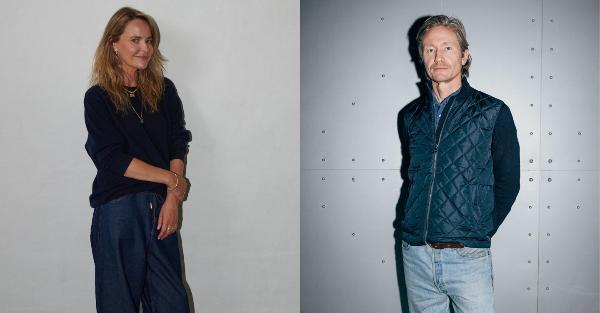
Ditte e Nicolaj Reffstrup, i fondatori di Ganni. ©Betty Krag/Alex Dobe

Nicolaj and Ditte Reffstrup entered the fashion world in 2009, when they took over Ganni, a small cashmere jumper brand. Since then, the brand has grown to become one of Denmark's biggest fashion exports, and in 2017, investment fund L Catterton (controlled by Lvmh) acquired a majority stake. Thus allowing the pair more freedom and peace of mind to explore new avenues, but also to expand: into the US, where they already have shops in New York, Miami and California. April saw the launch of a collaboration with Paloma Elsesser: a plus-size model, African-American mother and father of Chilean and Swiss descent, she is known for her campaigns on body positivity and inclusivity.
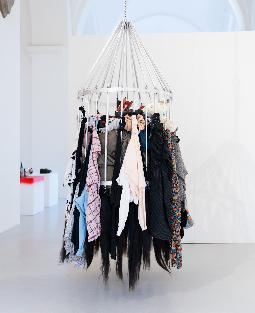
“Trapped, 2024, Aluminium, Unsaleable Ganni clothes”, la scultura realizzata dal giovane designer Sahar Jamili nell’ambito del progetto Fabrics of The Future. È stata creata rivestendola gabbia in alluminio “Insight Out” con gli scarti di produzione di Ganni. ©Nynne Henriksen

Ganni is now an international brand, but Nicolaj and Ditte Reffstrup continue to live in Copenhagen with their three children, in a house as colourful as their shops. "They were all designed by Stamuli, a Stockholm-based design studio founded by Italian Emanuele Stamuli, whom we met here in Copenhagen," says Ditte. "We involved him for the home décor: we are very social, we often invite friends, we organise parties and dinners. We wanted our shops to have the same atmosphere, places where you feel welcome, like at home. With Stamuli we succeeded, focusing on simple lines and bright colours like yellow, pink, green".

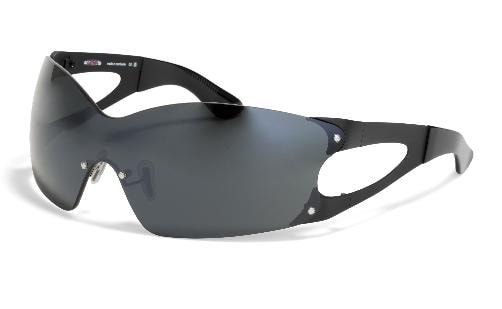
Occhiali da sole Noel in ferro, cromo, nickel, parte di una collaborazione tra Ganni e Ace & Tate lanciata a febbraio (185 €).

Speaking of friends, in Reffstrup's Copenhagen circle is one of the most interesting jewellery designers of the moment, Sophie Bille Brahe. 'Friends forever, we even did a small collection together in the past. She designed the new gift Nicolaj gave me,' says Ditte, showing three rings she wears on her fingers: they are the initials D and N, interspersed with a heart. Gold and diamonds, romantic contemporary. "I, on the other hand, would like to be able to say that I am friends with René Redzepi, Noma's multi-starred chef, but unfortunately that is not the case," jokes Nicolaj. "Although I go to dinner with him as soon as I can, and I am grateful to him because he revolutionised the Nordic culinary scene. Thanks to his inspirational drive, bistros and bakeries have sprung up, many high-end establishments. And the new restaurant, designed by Bjarke Ingels of BIG, is also beautiful: it is a culinary village, in the green, with a greenhouse and a vegetable garden'. Is Bjarke a friend? Nicolaj laughs: 'Actually yes, since we were in our twenties.

la Bou Bag nella versione creata con pelle riciclata al 100% (345 €).

Now a real star, he lives and works between Copenhagen and New York. For the Spring/Summer 2022 show, we chose one of his most famous pieces of architecture, the Amager Bakke, now known as CopenHill: a waste incineration plant with a ski slope on its roof. A symbol of the city'. Nicolaj and Ditte are proud to be Danish. "For us, Copenhagen is freedom," says Nicolaj. "You can still live here as if you were in a big village, but at the same time it is a small capital vibrant with new energy." Ditte echoes him: "Freedom for me is the pleasure of always moving around on my bike, and in summer swimming in the harbour: the water is clean and there are several public bathing establishments, with beautiful wooden platforms. For me, born in a fishing village in Jutland, water is essential. More generally, I love Denmark because it is security, solidarity, democracy'.

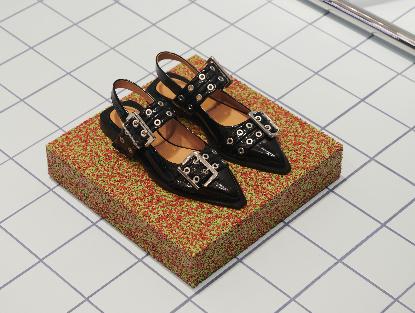
Ballerine nere con fibbia (325 €).

Speaking of democracy, this question is for fans of Borgen, the Netflix series, now in its fourth season, set in the Copenhagen Parliament (nicknamed 'Borgen' by the citizens) and starring a woman, Birgitte, a charismatic prime minister. Have you seen it? "Of course! And not only that: years ago we shared our house for a while with a friend, who had just separated, and who was a minister. He used to tell us a lot of gossip about the political protagonists: it was like having exclusive episodes of Borgen every night,' they laugh. Wouldn't it be interesting to dress up the protagonists for the next season of the series? "We never thought about it. Maybe wearing the reporter, Katrina, the one who most resembles a Ganni Girl". Who knows, maybe with a Bou Bag in Oleatex. Or made of some other strange, futuristic material, not yet invented.

TRAGUARDI GANNI .

Copyright reserved ©
Loading...
Loading...

Newsletter

Notizie e approfondimenti sugli avvenimenti politici, economici e finanziari.

Iscriviti