Great collectors

A bijou for every day: deciding the dress by the accessory

A historical collection of necklaces, brooches and fancy bracelets. Patrizia Sandretto Re Rebaudengo opens the doors of her home for a photo shoot in which she dresses her latest acquisitions, which have never been exhibited.

by Maria Luisa Frisa

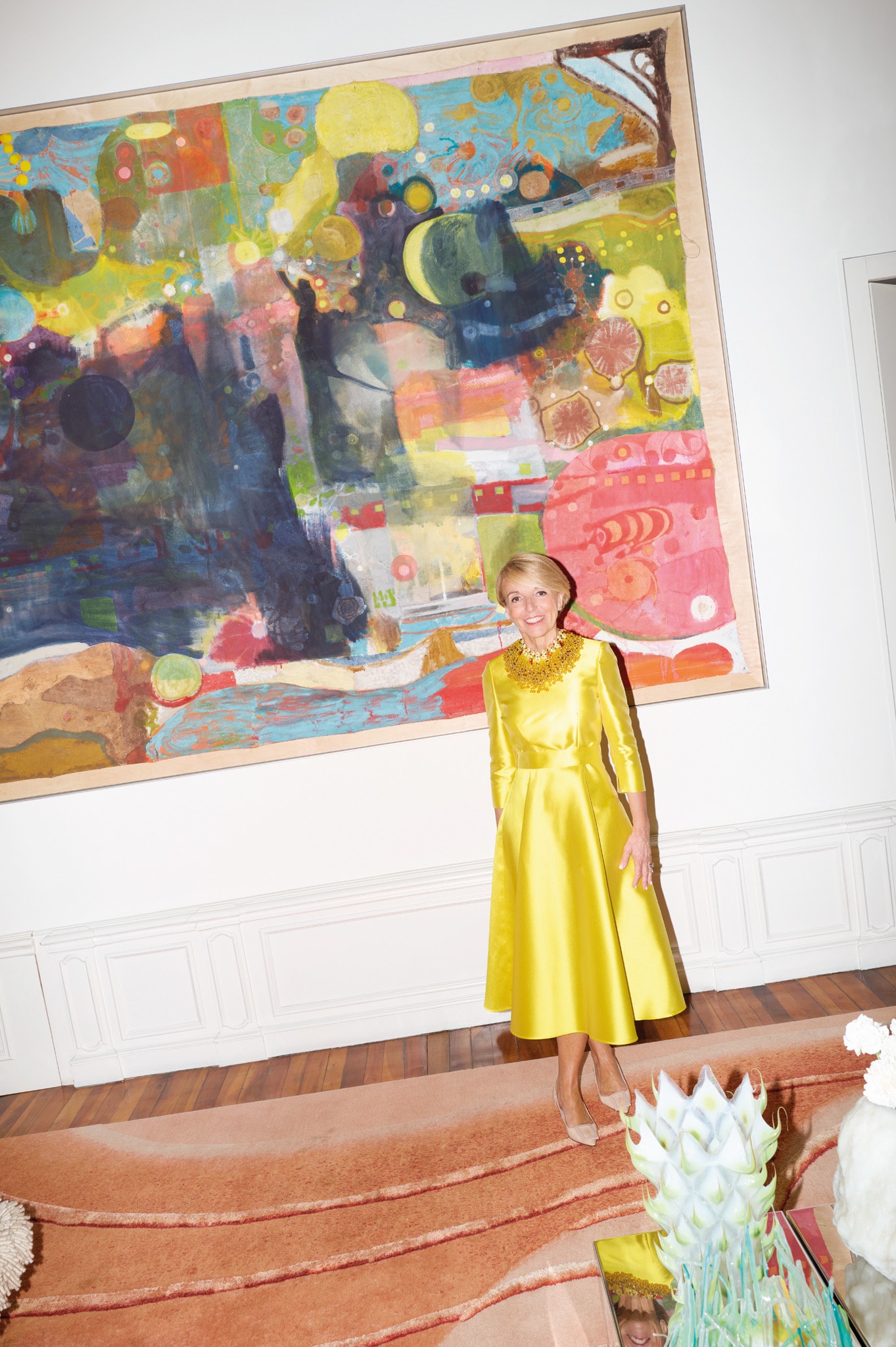
Patrizia Sandretto Re Rebaudengo davanti a“Greifbar 48” (2017), di Wolfgang Tillmans, indossa due collane di Billy Boy parte dei Surreal Bijoux dell’inizio anni Ottanta, appena entrate nella sua collezione. Per tute le immagini: foto di Simon171 con Simona Pavan , styling di Nicoletta Ferrari.

4' min read

Translated by AI
Versione italiana

4' min read

Translated by AI
Versione italiana

We could say that collections of objects respond to a particularly felt need and freedom: they have a close proximity to individual expression, to a logic under construction. Each person has his or her own way of collecting objects, in which interest, wonder, and desire merge with a more personal and private aspect: if Patrizia Sandretto told Hans Ulrich Obrist that she chooses a different bijou every day in tune with her mood and commitments, she explained to me that those objects have become her signature and that they give her security.
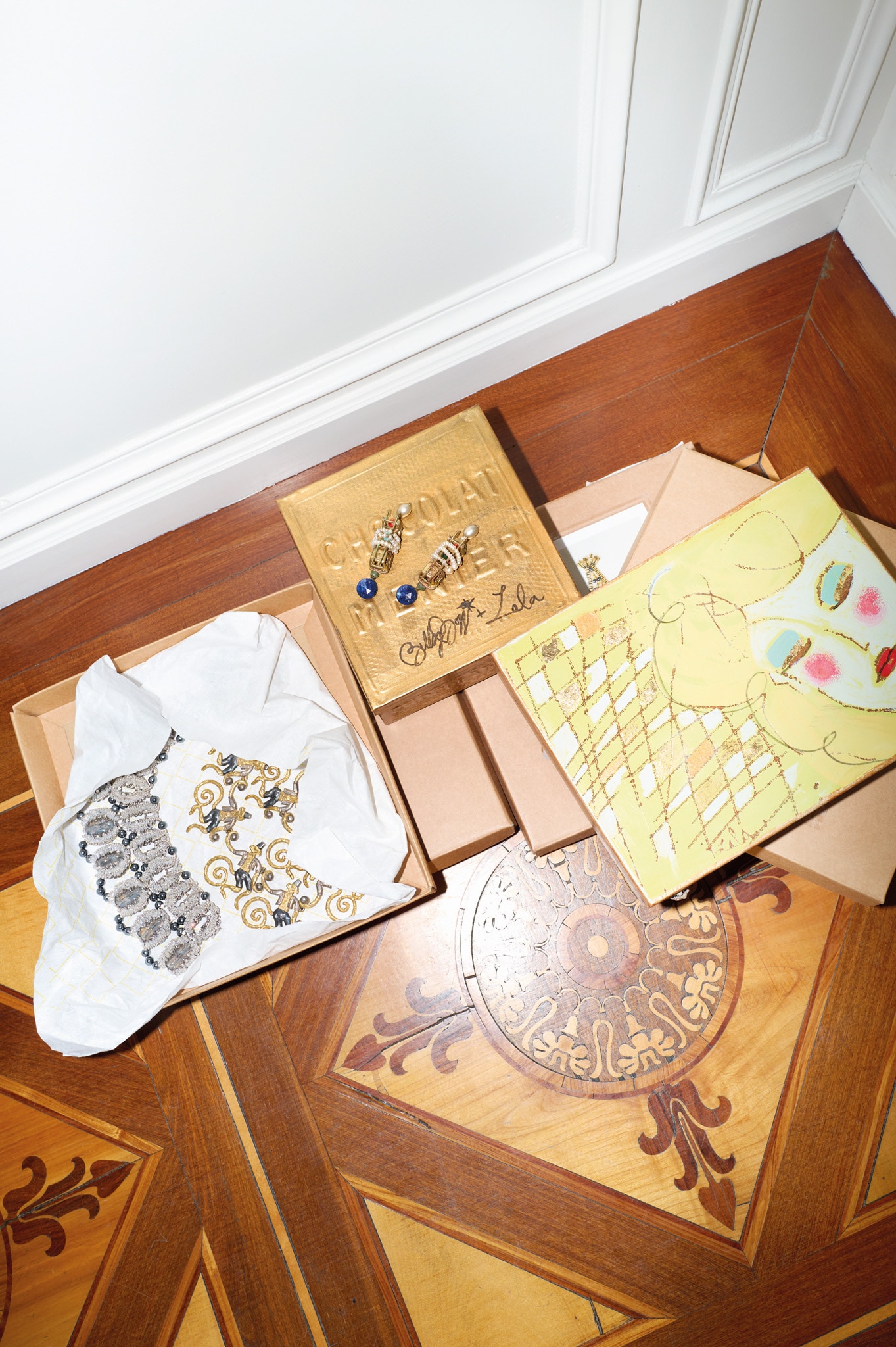
Dall’alto in senso orario, le scatole originali autografate e gli orecchini pendenti disegnati dall’artista e, nella scatola di cartone, a sinistra, un pezzo anni Settanta di William De Lillo accanto a un’altra collana di BillyBoy.

Sort of magic objects, a new kind of emblem, variable, but recognisable - even if she really does own the family crest. Since each person, by choosing what they wear, creates a narrative of themselves, these bijoux are also the magical objects that Italo Calvino talks about in his 'American lesson' on speed: 'We would say that from the moment an object appears in a narrative, it is charged with a special force, it becomes like the pole of a magnetic field, a node in a network of invisible relationships. The symbolism of an object may be more or less explicit, but it always exists. We could say that in a narrative, an object is always a magic object'.
Loading...

Patrizia Sandretto Re Rebaudengo indossa un macro collier di William De Lillo, designer belga naturalizzato americano. L’opera alle sue spalle è “The Color Blue Divorced from its Mystical Sensibility” (2023), di Justin Caguiat.

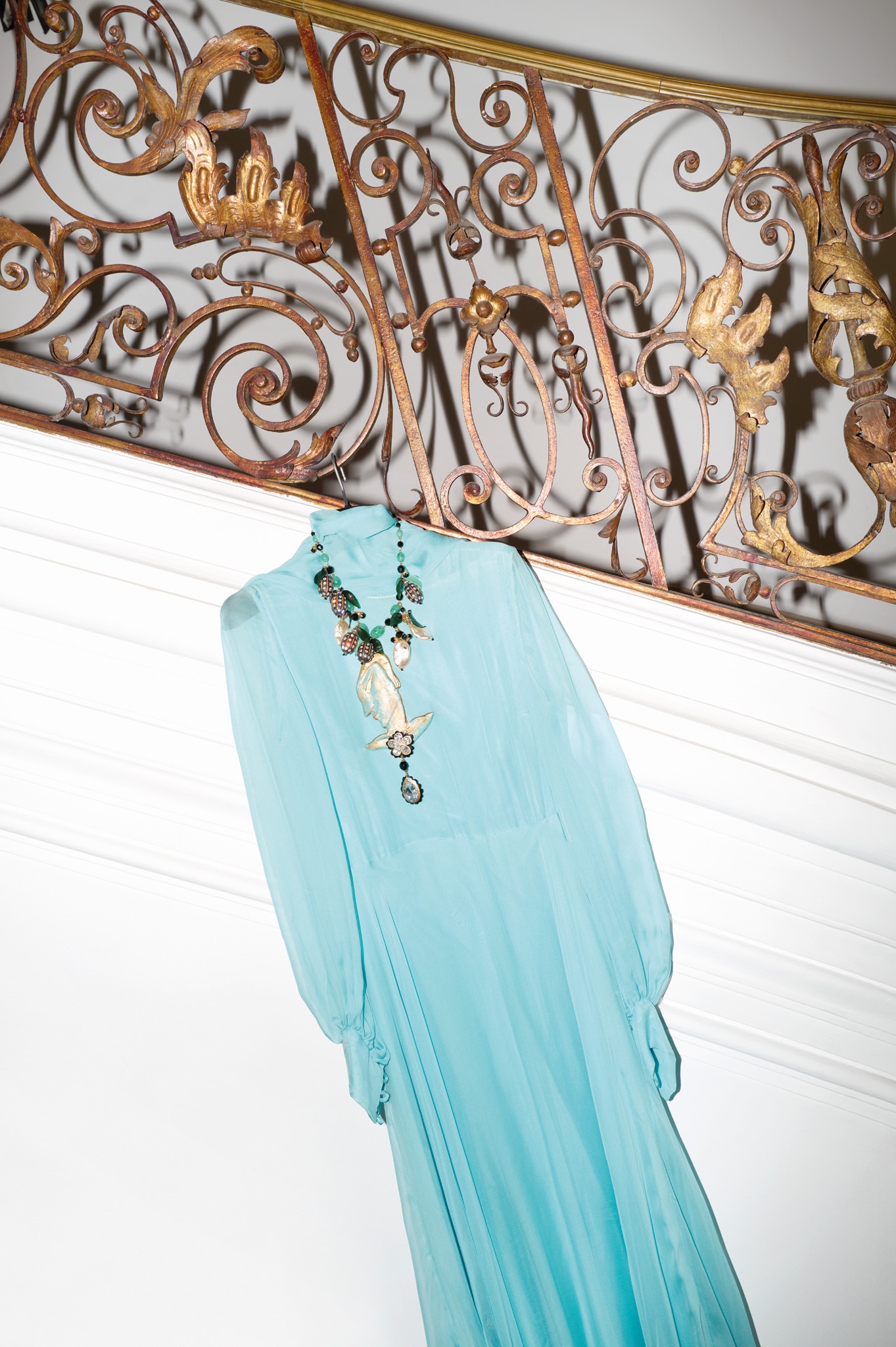
Into this perimeter of action, into this narrative space, comes the performative element. The active relationship between body, dress and accessories. While the dress becomes an imprint of the body that wears it and somehow defines its posture and movements, the necklace or brooch determines itself as the centre of its own personal and public choreography.
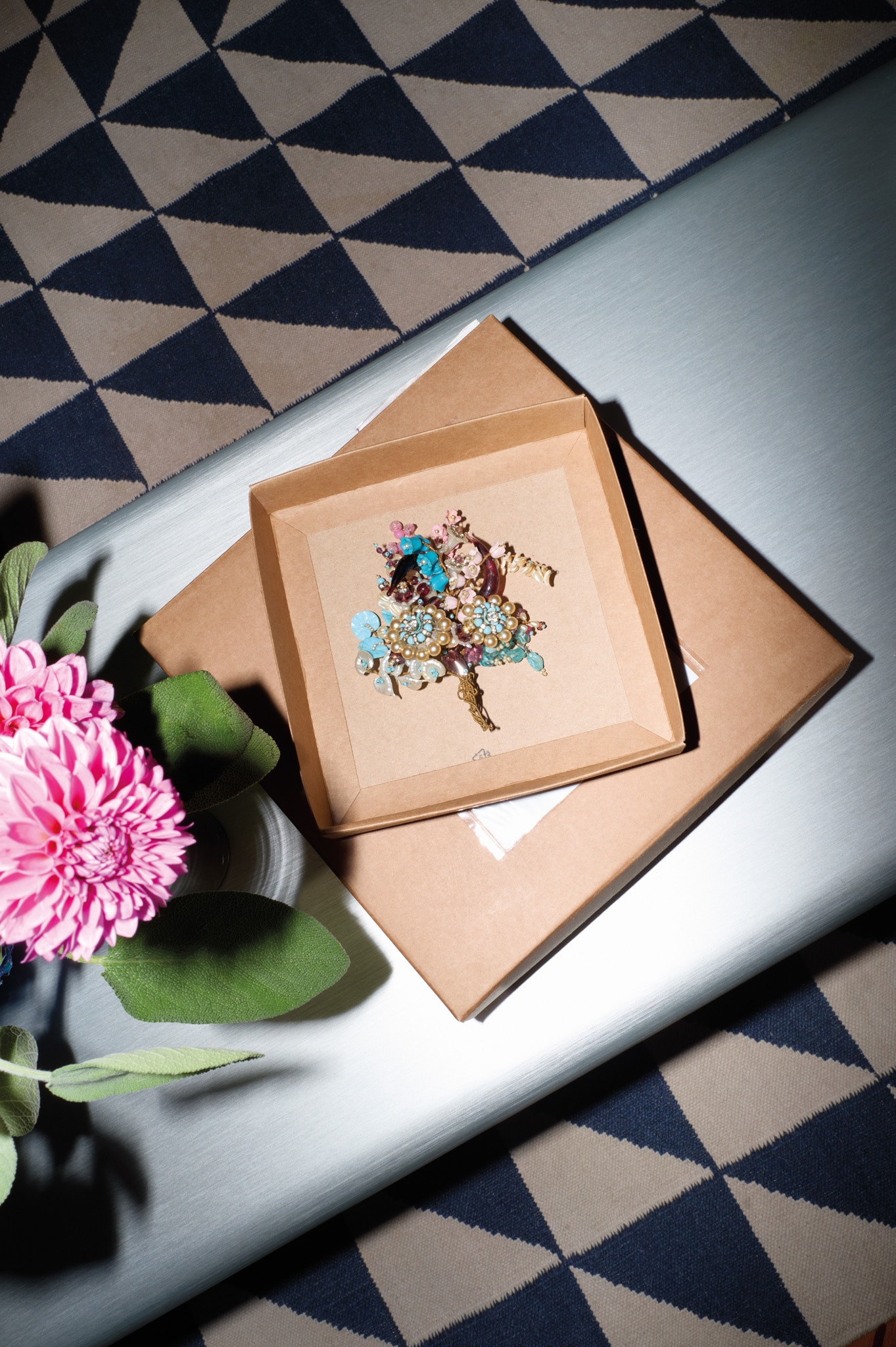
Spilla bouquet di Frank Hess per Miriam Haskell, 1935/1939.

In the many portraits of Patrizia Sandretto that we find on the web, in the photographs that show her on official occasions, the punctum, as Roland Barthes would say, is always that fancy object, highlighted by the dress which, as she has said, is most often chosen or designed according to the jewel whose surface it will become.
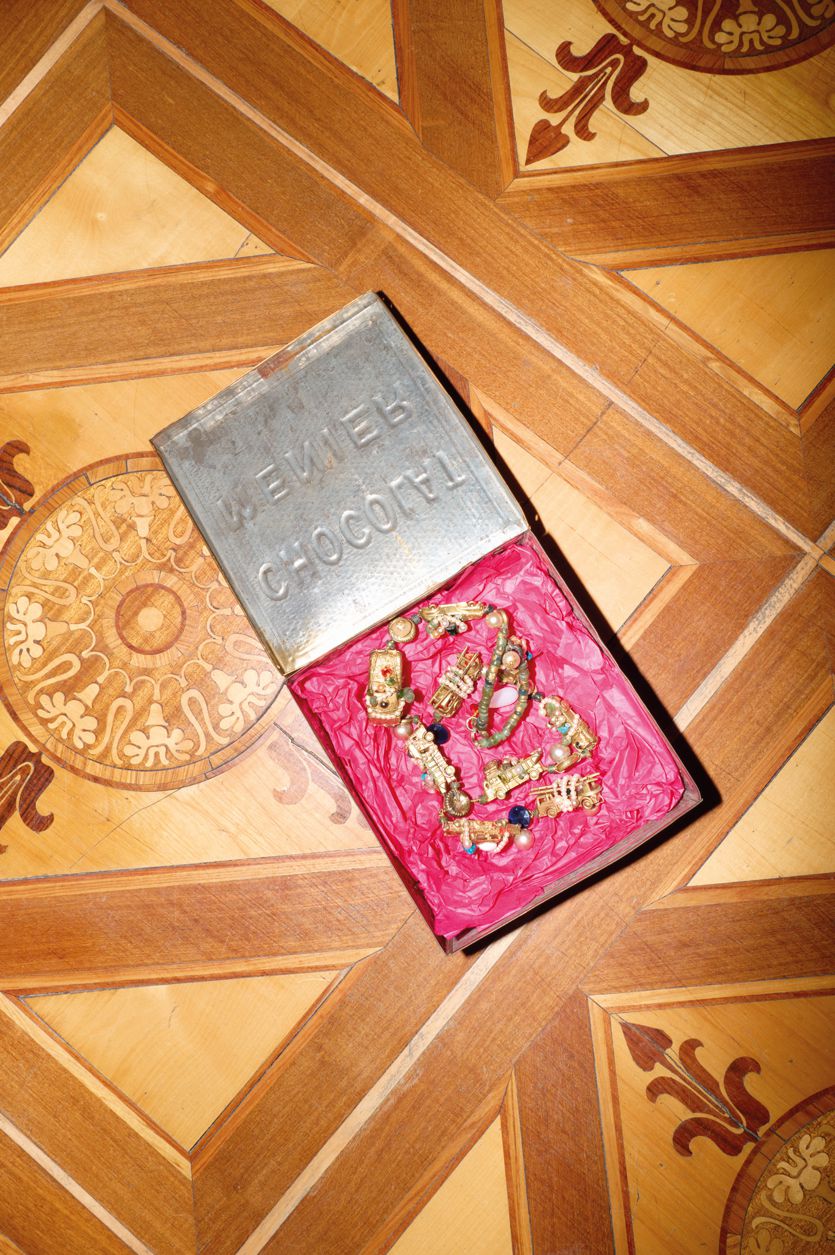
Collana a macchinine di BillyBoy nella scatola di latta originale, anni Ottanta.

Objects that date back as far as the 1930s and reflect the styles and poetics of authors whose objects have defined costume jewellery, also in the sense of expression. These include William Hobé, Joseff of Hollywood, Miriam Haskell. And then, just to name a few other authors, Robert Sorrell, Kenneth Jay Lane, Hattie Carnegie, Marcel Boucher, Robert Clark, Iradj Moini, or a label like Trifari. Patrizia Sandretto's favourite among costume jewellery designers, however, is William De Lillo, who arrived in America in 1950 from Europe, specifically Antwerp. De Lillo, a narrative, abstract, phantasmagorical author, perfectly embodies an idea of costume jewellery as an autonomous language, giving a free and always spectacular interpretation of form and function, which becomes absolute in the reinvention of naturalistic motifs. Because of their quality and authority, anonymous pieces also claim space in the collection, while fantasy jewellery from fashion brands such as Schiaparelli, Chanel, Saint Laurent and Dior are excluded by choice.
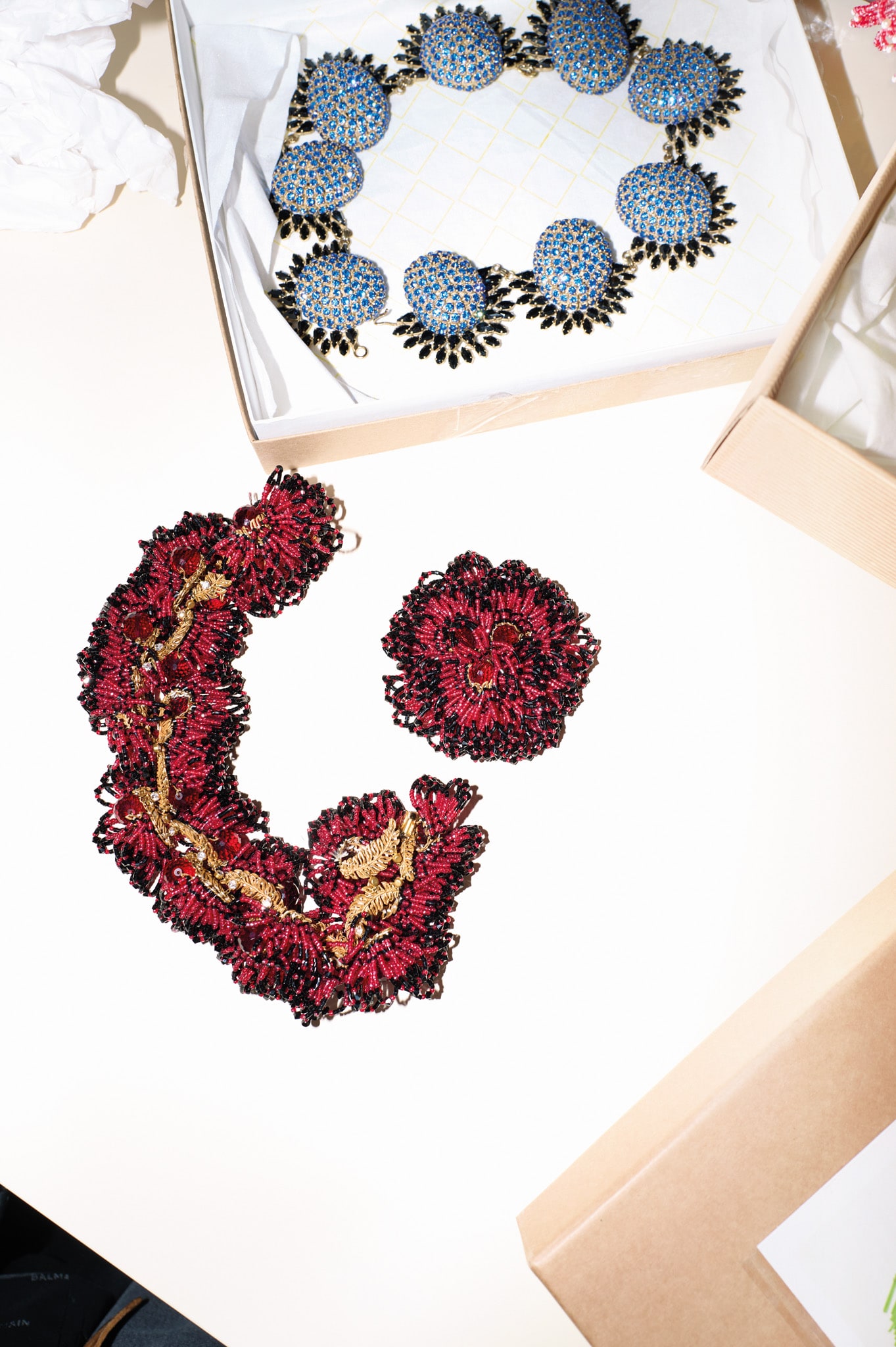
Collane di William De Lillo, una con spilla in parure

The owner-author also becomes a sort of curator every time he reactivates those pieces through his person in a network of narratives capable of focusing on the unique relationship established between objects, time and space. Thus those artefacts reveal themselves for what they are: necessary elements to declare themselves to the world, expressions of a very personal style, transcending being fashionable. One always has to quote Giorgio Agamben, who defined fashion as a threshold between "its being and its not-being-fashionable". If we move this concept into everyday experience, we realise how the pieces of American costume jewellery collected by Sandretto Re Rebaudengo are a kind of strategic devices acting in the ever-present time of fashion, reactivated each time by the gesture that selects them and brings them back to light.

Catena con macro pendenti di BillyBoy.

Patrizia Sandretto's fancy jewellery is kept close at hand, inside drawer cabinets. Of course, there are photographs and cards of all of them, which make it possible to recapitulate and reorganise the collection or compose thematic, seasonal or occasion-related moodboards.

Sandretto has also organised itself to take them on trips, as it cannot disregard the expectations of all those who know that every day they can see something different, to be amazed by the magnificence of objects whose value lies in the extraordinary savoir-faire of the craftsmen who crafted them and in the limitless imagination of those who created them.

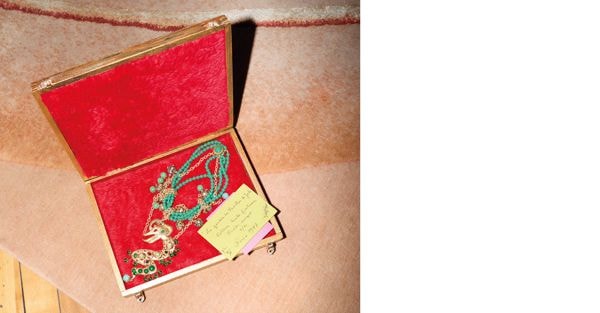
Scatola e biglietto firmato da BillyBoy per la collana pezzo unico Le Jardin du Pavillon de Jade, del 1987.

Thus, I am convinced that for Patrizia Sandretto Re Rebaudengo we cannot simplistically speak of an object collecting - a collecting of objects - generated and refined from a certain family tradition (her mother collected Meissen and Sèvres porcelain). Rather, I believe that his practice has developed into an awareness that collecting is an art form. The uniqueness inherent in his collection of American costume jewellery is in the fact that the private dimension (collecting) and the public dimension (showing, in the everydayness of acting in the world) are fused directly by his person: the choosing to compose the collection and the choosing to realise the representation of self. An aspect that is probably unique among all of Patrizia Sandretto's collecting activities.

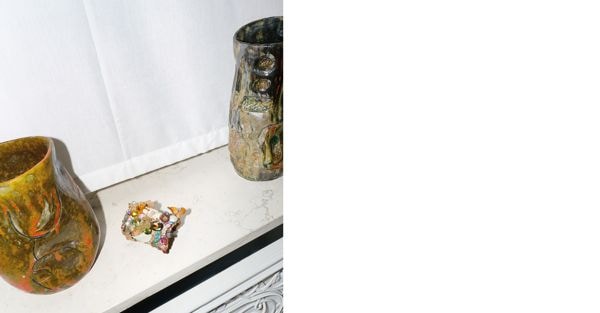
Bracciale cuff con pietre, resine e cristalli di Wendy Gell, 1988.

A collection of costume jewellery

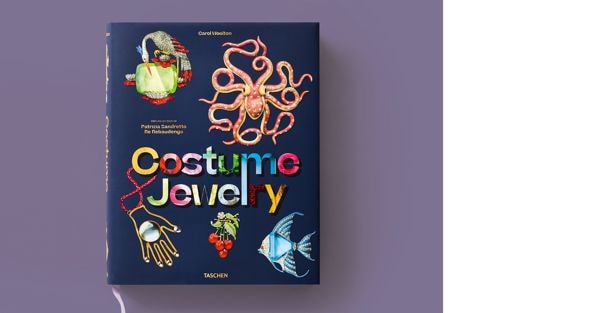
"Costume Jewelry" is the book just published by Taschen (€100) presenting almost 600 pieces from Patrizia Sandretto Re Rebaudengo's personal collection of jewellery from the 1930s to the new millennium. At the beginning of the 20th century, New York became the epicentre of glass paste jewellery design thanks to the artisans who, fleeing from Europe, brought their art to the USA. Their craftsmanship ushered in an era of bold, refined and more accessible jewellery, creating a veritable genre.

The book traces the collection with photographs by Luciano Romano and texts by Carol Woolton and Maria Luisa Frisa, fashion critic and curator, lecturer at the Iuav University of Venice, where she founded the degree course in Fashion Design and Multimedia Arts, as well as author of the article on these pages, taken from the essay in the book. In this article, HTSI asked Patrizia Sandretto to wear pieces never seen before, either in the book or at the exhibition organised in October at the Braidense National Library in Milan.

Copyright reserved ©
Loading...
Loading...

Newsletter

Notizie e approfondimenti sugli avvenimenti politici, economici e finanziari.

Iscriviti