
Boat Show: an industry worth 600 million euros
The initiative, organised by the Region in collaboration with CIPNES, which is aimed at international markets

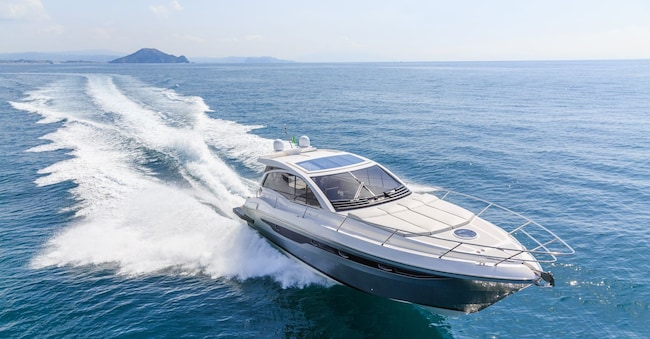
The aim is to break into new international markets by building on the current growth trend. All this as part of an initiative that brings together businesses and shipyards, superyachts and giga yachts, with a view to boosting a sector worth over 600 million euros. These are the key strengths of the Sardinia Boat Show, which brought Porto Rotondo to life for four days. This major event, now in its fifth year, featured 150 exhibitors and 200 boats. The event was promoted by the Region of Sardinia with organisational support from Cipnes, the consortium for business development in Gallura. The event, aimed at recreational sailors, crews of large yachts and industry professionals, was attended by entrepreneurs and investors. It is an ‘unmissable’ event, particularly in light of the figures recorded in north-eastern Sardinia. Between last June and September, 3,114 unique superyachts (over 24 metres) were recorded, representing a 15.8 per cent increase compared with the same period in 2024.
“The Sardinian Boat Show is not merely an exhibition showcase: it is the trade fair for Sardinia’s nautical industry, its businesses, shipyards, products and expertise ‘made in Sardinia’, which are presented in a structured manner to foreign markets,” emphasised Livio Fideli, president of CIPNES. “In 2025, Sardinian nautical companies sold boats and RIBs abroad worth around 45 million euros: a figure that confirms the high quality of our supply chain’s production and its potential for international growth,” he added. Data compiled by the CIPNES Research Centre point to growth in exports. In the first nine months of 2025, an increase of 80.8 per cent was recorded.
“The plan to internationalise Sardinia’s nautical industry, funded by the Region of Sardinia, was devised precisely with this objective in mind,” the Consortium’s president continues, “to support exports by regional businesses and attract new foreign investment to the island.” Another point is also emphasised: “Sardinia is already a major Mediterranean destination for recreational boating and superyachts,” continues Fideli. “The challenge today is to transform this prominence as a tourist destination into stable industrial development, by strengthening production, refits, technical services, innovation and skilled employment.” According to Aldo Carta, president of UniOlbia and director-general of Cipnes, “the plan to internationalise the nautical industry is of strategic importance for the entire region because it stems from a process of broad and shared institutional agreements. It is not an isolated initiative, but a regional industrial policy that brings together the regional government, businesses, the research sector and university education.” This builds on thirty years of work “which has seen the involvement of Gallura’s business community.” ‘I have seen nautical companies grow, organise themselves and progressively strengthen their production, technical and commercial capabilities,’ he adds. ‘Today, many of these businesses are ready to compete on international markets, but to make a further leap in quality they need a crucial resource: human capital.’ It is no coincidence that in Olbia, “thanks to the Universities of Cagliari and Sassari and with the support of UniOlbia, university courses have been launched that are tailored to the region’s industrial needs”. Starting with the three-year degree course in Naval Engineering at the University of Cagliari, “which is attracting enrolments not only from the rest of Sardinia but also from the rest of Italia”, and continuing with the master’s degree programme “also at the University of Cagliari, developed in collaboration with the Federico II University of Naples”.‘The competitiveness of an industrial sector does not depend solely on investment, infrastructure or promotion in foreign markets, but on skills,’ concludes Carta, ‘specialised technicians, engineers, designers, managers and young professionals capable of driving innovation in production processes and the sector’s technological evolution.’

