A cabinet of curiosities and an award to help emerging talent take flight
A passion inherited from his grandfather and a mission to support young people entering the contemporary art scene. Paul-Emmanuel Reiffers talks about his Foundation
by Patrizia Sandretto Re Rebaudengo
 Aggiungi Il Sole 24 Ore
ai preferiti su Google
One does not become a collector by chance. An entrepreneur and patron of the arts, Paul-Emmanuel Reiffers is one of the most influential figures on the contemporary French cultural scene. Born into a Franco-Luxembourgish family of collectors and raised in the Ivory Coast until his teenage years, he founded Mazarine at the age of just twenty-six, the creative agency that has since grown into an international group with over five hundred employees, partnering with some of the most prominent names in luxury, fashion and culture. A father of four, he has combined his entrepreneurial activities with a deep passion for art for over thirty years. In 2021, he established Reiffers Initiatives, a foundation created to support the new generation of artists living and working in France through mentoring programmes, exhibitions and an annual prize dedicated to emerging talent. His collection reflects a curious and ever-evolving perspective: from the masters of the twentieth century to the most established contemporary artists, right through to the new voices on the international scene. For Reiffers, collecting is first and foremost a matter of emotion, intuition and responsibility towards the future of art.
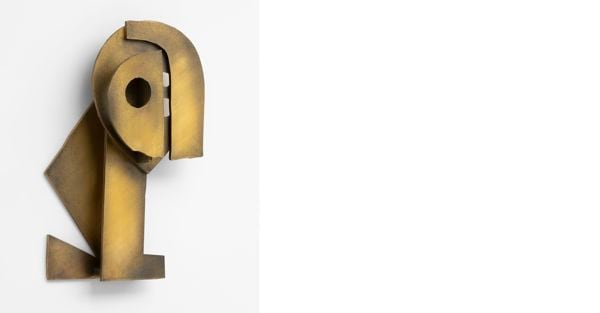
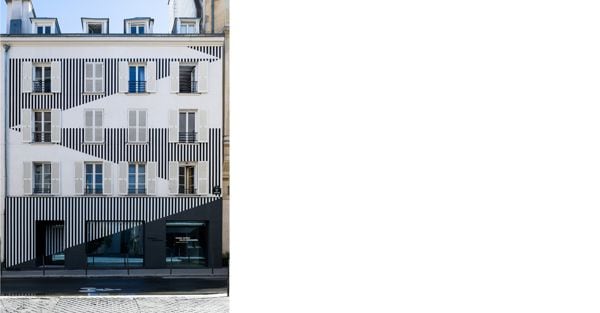
HOW AND WHEN DID YOU START COLLECTING? My passion is, at least in part, inherited. My grandfather was a collector, and growing up surrounded by art, learning to read the stories the works tell, left a deep impression on me. A collection is born from a series of moments of falling in love with a piece and grows by forging dialogues between different works. I started collecting when I was between 25 and 26. At first, I was driven above all by the desire to create a sort of cabinet de curiosités in my home. I was fortunate enough to meet François-Xavier and Claude Lalanne early on and, around the same time, began buying Surrealist paintings. Over the years, the collection has expanded, bringing together historical figures such as Daniel Buren, Pierre Soulages, Alexander Calder, Louise Bourgeois and Lucio Fontana with contemporary artists such as Christopher Wool, Rudolf Stingel, Wade Guyton, Anish Kapoor and Ugo Rondinone. I then became interested in African-American art, with artists such as Rashid Johnson, Glenn Ligon, Simone Leigh and David Hammons. Today, my focus is on the new generation of emerging artists.
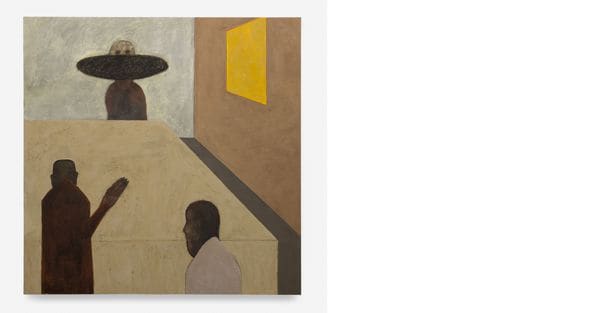
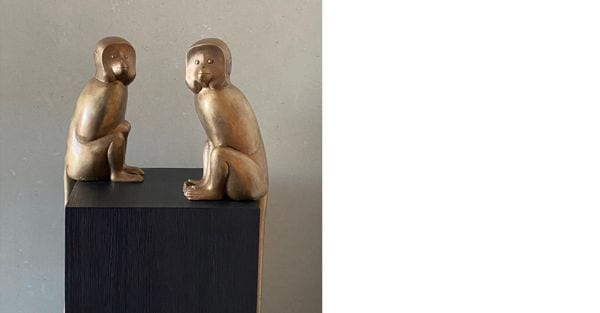
WHAT WAS YOUR FIRST ACQUISITION? AND YOUR MOST RECENT ONE? My first purchase was a sculpture of two monkeys by François-Xavier and Claude Lalanne: a sentimental choice, as it symbolically reminded me of the birth of my twins. I bought it directly from them, in their studio: a moment I still remember with great emotion. My most recent acquisitions, on the other hand, are a portrait by Yu Nishimura and a painting by Pol Taburet, which I saw at his exhibition at Villa Medici in Rome. I have great admiration for Taburet, a young French artist who won the Reiffers Art Prize in 2022. I firmly believe in the energy his work conveys: my collection already includes five of his pieces, comprising both paintings and sculptures.
HOW DO YOU CHOOSE THE WORKS FOR YOUR COLLECTION? DO YOU RELY ON GALLERY OWNERS OR CURATORS? I don’t have an official adviser. First and foremost, my choices are guided by emotion: I have to feel that a work has a soul. The relationships I’ve built up over time with galleries also matter. I’m very close to Hauser & Wirth and Mendes Wood, particularly when it comes to artists such as Pol Taburet and Lucas Arruda. Of course, I consult with people I trust who give me advice, but ultimately it’s always the connection with the artwork that makes the difference. I remember one evening, a few years ago, at Art Basel Miami: I was surrounded by extraordinary works, yet it was a small piece by Ed Ruscha that captured my full attention. It was a real gem and, on the last day of the fair, I decided it had to become part of my collection. For me, that’s what art is all about: an emotional connection that isn’t always easy to explain. You also need the courage to take a chance on artists when they’re still at the very beginning of their careers.
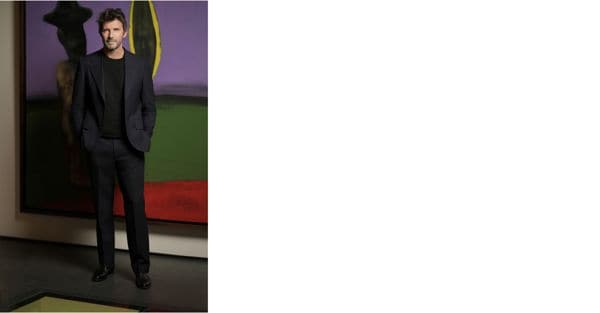
THREE EMERGING ARTISTS TO WATCH. Pol Taburet, Stanislava Kovalčíková and Eva Helene Pade.