
A calendar to celebrate our Constituent Mothers
The tribute of the National Association of Magistrates to the twenty-one women elected to the Constituent Assembly on the 80th anniversary

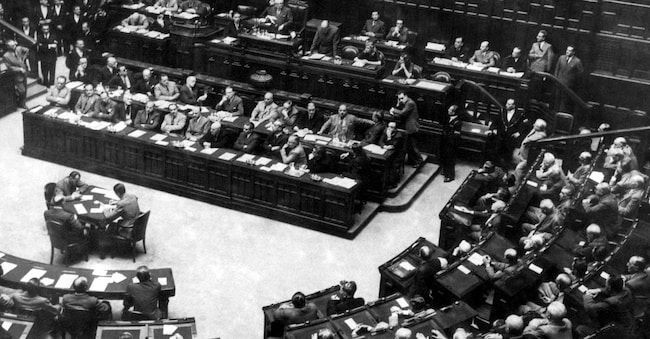
In January we find the veteran Lina Merlin, March is reserved for Teresa Noce, Nilde Iotti appears in May, while Teresa Mattei and Nadia Gallico Spano 'occupy' June and so on. It is a special calendar with a powerful symbolic meaning that the National Association of Magistrates (thanks to the work of the Education and Legality Commission chaired by Gaspare Sturzo) has dedicated to the twenty-one women elected to the Constituent Assembly on 2 June 1946. A tribute, on the 80th anniversary of that vote that marked the fate of Italia, available to all: the calendar can be downloaded and printed free of charge on the ANM website.
It is a useful tool for teachers and parents, more generally a meritorious initiative in a country that has always forgotten or neglected the important contribution of Italian women to the construction of democracy and - in this case - to the writing of the Constitutional Charter. Here, month by month, you will find the faces, biographical notes and concise descriptions of the battles conducted by the twenty-one protagonists, after two introductory pages that recount the historical context of those years, from the Resistance to the two-year constituent period. Not only: the succession of days in each month is punctuated by the main historical events that occurred in that month and the speeches in the Assembly. A true diary of the nascent Republic.
The very first page shows the faces of the protagonists, a glimpse of the whole: a tiny minority out of the total 556 called by the people of Italy to represent them on 2 June. They were nine Communists, nine Christian Democrats, two Socialists, one exponent of the Front of Everyman. The youngest, Teresa Mattei (PCI), was 25 years old, in the Resistance she had been the head of the brigade named after her brother Gianfranco (who committed suicide in the prison of Via Tasso in Rome so as not to risk speaking out under torture): Florence became free again, in the summer of 1944, also thanks to her courage. The oldest was 59-year-old socialist Lina Merlin: we remember her mainly for the law that ordered the closure of brothels (1958) but her experience and political awareness came from afar. It is no coincidence that she was part (along with only four other women) of the Commission of 75, charged with drafting the Charter. With her were Nilde Iotti, Maria Agamben Federici, Angela Gotelli and Teresa Noce. Their voice on the principle of equality (Article 3) then declined in relation to the moral and legal equality of spouses, education of children, equal rights at work, was decisive. Their modern outlook and ability to argue (just read the reports of the debates in the Assembly, available on the Chamber of Deputies website) made the difference in the presence of the Constituent Fathers, who were enlightened and prepared but not always able to rise above the deep-rooted cultural prejudices of the time. This can be seen, for example, on the issue of the entry of women into the judiciary: the twenty-one Mothers came out the losers, unable to overcome the resistance of their interlocutors, caged in stereotypes that are still hard to die for today. Blatantly disregarding Article 3 of the Constitution that was to come into force on 1 January 1948, the Assembly ensured that Italian women remained 'unequal' alongside Italians, preventing them from entering public offices until 1963.
However, the twenty-one elected women, again, forcefully posed the issue and opened a path. In that two-year term, they spoke out on family, school, peace and work, always with the common good as their crystal clear objective. Despite their different political colours and backgrounds, they managed to unite and find a synthesis in the name of a fairer and more advanced society.
That is why they must be known, studied, celebrated. As does this calendar which, after the meeting in Palermo last Saturday, will be presented tomorrow in Milan, at 5.30 p.m. at the Palazzo di Giustizia, and on 6 March at 5 p.m. in Rome, at the Istituto Sturzo.


