
A call to repopulate 32 Trentino villages
by Valentina Saini
 Aggiungi Il Sole 24 Ore
ai preferiti su Google
4' min read
4' min read
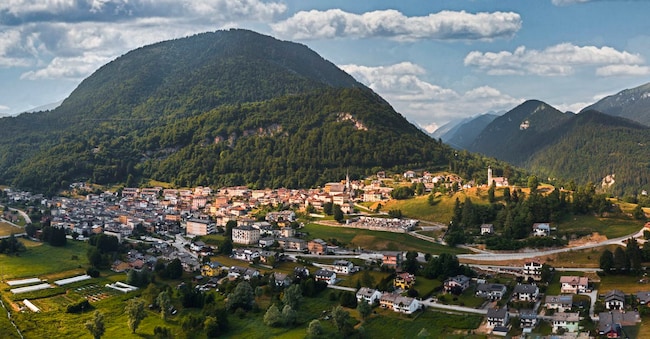
Thirty-two Trentino municipalities have been selected by the Autonomous Province of Trento for its latest initiative to revitalise areas at risk of depopulation, namely mountain areas. The call for applications will be issued on 19 May. From Bondone, a small village of just over 600 souls at an altitude of 720 metres, known for its beautiful view of Lake Idro, to Rabbi, 1095 metres above sea level and about 1360 inhabitants in the heart of the Stelvio National Park, these are villages surrounded by enchanting landscapes, but more popular as tourist destinations than as places to live.
The measure provides for a non-repayable contribution of up to 40% of the expenditure in historic centres and 35% in other areas for a maximum of EUR 80,000 in the case of renovation, and a maximum of EUR 20,000 for purchase, against a commitment to live in the property for at least ten years or rent it at a moderate rent. The aim is to attract new residents and convince young people to stay, in fact the under 45s are the only ones who can apply despite already having their residence in the municipalities. On the other hand, countering the trickle of residents in the so-called 'highlands' is strategic, also for very concrete reasons. There is the question of companies, for example, which also exist in the mountains and need people to work there. There is the housing emergency, whereby those looking for a house do not always find it at affordable prices. And there is land management, the benefits of which can also be seen on the valley floor. "With the absence of a population to care for mountain territories, there is a risk of catastrophic effects in the event of extreme weather phenomena. This is another fact not to be underestimated: we are all interconnected and interdependent,' explains Marta Villa, cultural anthropologist University of Trento. However, it is first and foremost local communities that are affected by depopulation. "The community loses its material and immaterial heritage, sociality, proactivity. If the threshold of no return is reached, there is progressive abandonment and the haemorrhaging no longer has any brake,' adds Villa.
Revitalising communities
Demographic decline is much more evident in small towns than in the city. And it is precisely the decline in births, added to the tendency to move to the city or even to emigrate that began as early as the middle of the last century, when not earlier, that leaves more and more houses empty in the mountains. An example of this are the three municipalities of the Tesino Plateau, all selected for the anti-depopulation plan. Castello Tesino, for example, now has about 1150 inhabitants compared to 2400 in 1961. In nearby Cinte Tesino, the population is little more than a third of what it was in 1921. Yet these are cohesive communities, which have been working more and more in synergy for some time, observes Silvia Fattore, employee at the Cassa Rurale Valsugana e Tesino and former municipal councillor for tourism in Castello Tesino. For example, the three centres, just a few minutes' drive from each other, have shared schools. In Cinte there is a nursery school, Pieve and Castello Tesino each have a kindergarten; the primary schools is in Pieve and the middle school in Castello. The province's initiative is 'an initiative to be welcomed with open arms,' according to Fattore, who lists the services present on the plateau: the bank, two rest homes, a general practitioner and pharmacy, two libraries, a small supermarket and a grocery shop, a Carabinieri station and three volunteer fire stations. "We also have a cinema, theatre, many activities for children and various associations. We have everything here. We only lack one thing, the people."
Low-cost housing
.But the non-repayable grant announced in March is not the only way in which an attempt is being made to counter depopulation in Trentino. For example, there is also the 'Vallarsa da vivere' (Vallarsa for living) project, which provides for the rental at a reduced rate of eight lodgings from Itea, the Trentino Institute for Housing, in exchange for a commitment to devote at least four hours a month to the community, for example by taking care of the green spaces. Six lodgings are in Anghebeni and two in Parrocchia, both hamlets in the municipality of Vallarsa, which borders Rovereto on one side and the upper Vicenza area on the other. To find essential services, from the bank to the post office, from the general practitioner and the pharmacy to the primary schools and the supermarket, it is enough to reach Raossi, three and four minutes' drive from Parrocchia and Anghebeni respectively. The mayor, Luca Costa, is keen to emphasise that it is not just a matter of making housing available at a favourable rent (40% below the market rate for housing in Anghebeni and 30% for that in Parrocchia) "to help young people and people in general to stay and live in the valley or to move here. It is also important to encourage their participation in social life. This will help them integrate into the community and become attached to these places'.

