Art

A David for the Swiss Alps

Klosters and Davos are hosting a rare, life-size marble replica of Michelangelo’s David

3' min read

Translated by AI
Versione italiana

3' min read

Translated by AI
Versione italiana

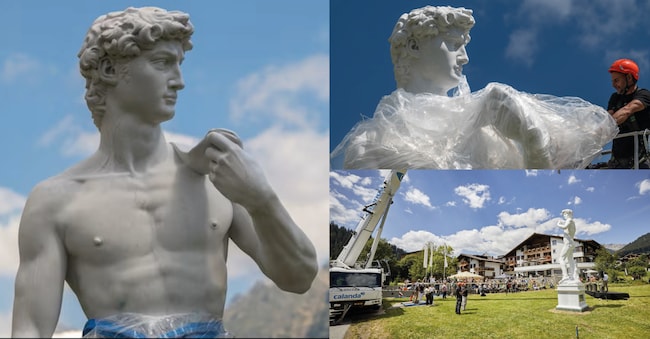
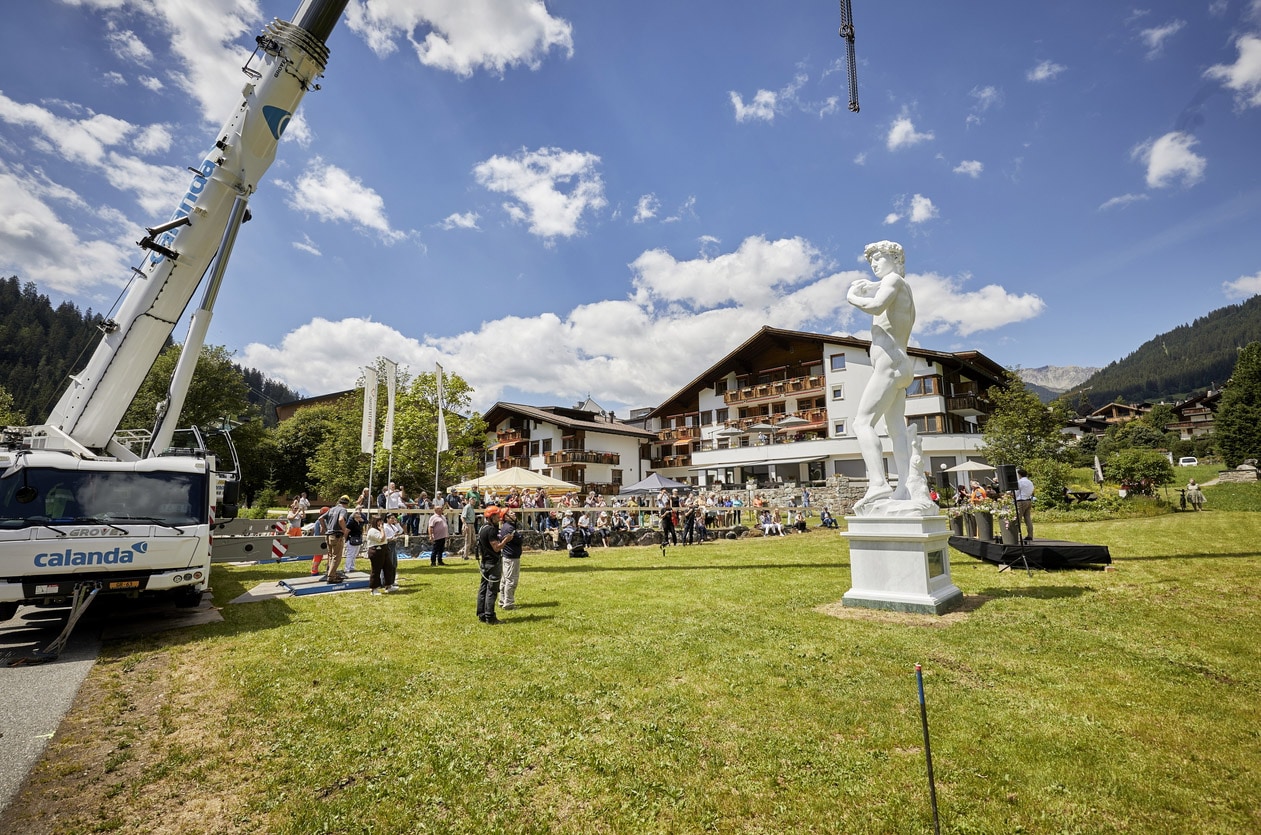
Its gaze has spanned centuries, conflicts and souls, and now a rare, life-size marble version of Michelangelo’s David has arrived in Klosters Davos. The emblem

Una copia del David di Michelangelo sulle Alpi Svizzere

Photogallery6 foto

Renaissance humanism thus enters a new cultural context, prompting reflection on identity, authorship and human presence.

Loading...

Florence Academy of Arts and Design

The project was carried out by Scultura Viva, a cultural initiative dedicated to revitalising the sculptural heritage through public installations, educational programmes and international collaborations. The platform serves as a space in which the significance of contemporary sculpture is redefined. Christian Bolt, founder of Scultura Viva and the first Swiss sculptor to be appointed to a chair at the Academy of Arts and Design in Florence, explains: ‘This project is not simply a reproduction of the David, but an exploration of its meaning in the contemporary context. By placing it in a new context and landscape, we ask ourselves what remains of its original power and what it can tell us today about identity, action and human presence.’

Developed in close collaboration with Klosters Town Council and Destination Davos Klosters, the project helps to position Klosters as a place where art, landscape and cultural reflection come together.
I copy, therefore I am

Michelangelo never had any direct pupils, but rather followers – imitators awestruck by his talent. Throughout the sixteenth century, the art world was divided between Raphael and Michelangelo; whilst the former seemed to enjoy greater admiration amongst his contemporaries, Buonarroti continued to revolutionise European figurative art, becoming the master most copied, studied and envied by the great artists of every age. In the nineteenth century, Romantic sculptors took Michelangelo’s classical style as their model; he was their father figure. They cited him and sought out the finer details of his work, as Rodin, for example, did. The David was their unattainable ideal.

Loading...

The Michelangelo copy

When the sculpture was unveiled in Florence at the beginning of the 16th century, the Florentine Republic immediately adopted it as a symbol of their resistance: the young shepherd stands defenceless yet proud in the face of his enemies. In Kolsters, David steps out of the urban setting and into nature. This copy of Michelangelo’s work is not intended as a substitute for the original but as a reflection on our complex historical period. The shepherd David poses this question to anyone who looks at him: ‘Who are the Goliaths of our time?’. The concept of a copy, now more than ever, is shrouded in an aura of unjustified suspicion. In music, the same piece composed by Bach, Chopin or Schubert can be performed by the same musician in different concerts, each time in a different manner. A copy of a masterpiece does not debase the ‘relic’, the original, but – if executed with the utmost respect – becomes a means of dissemination and reflection.

From the quarries of Carrara

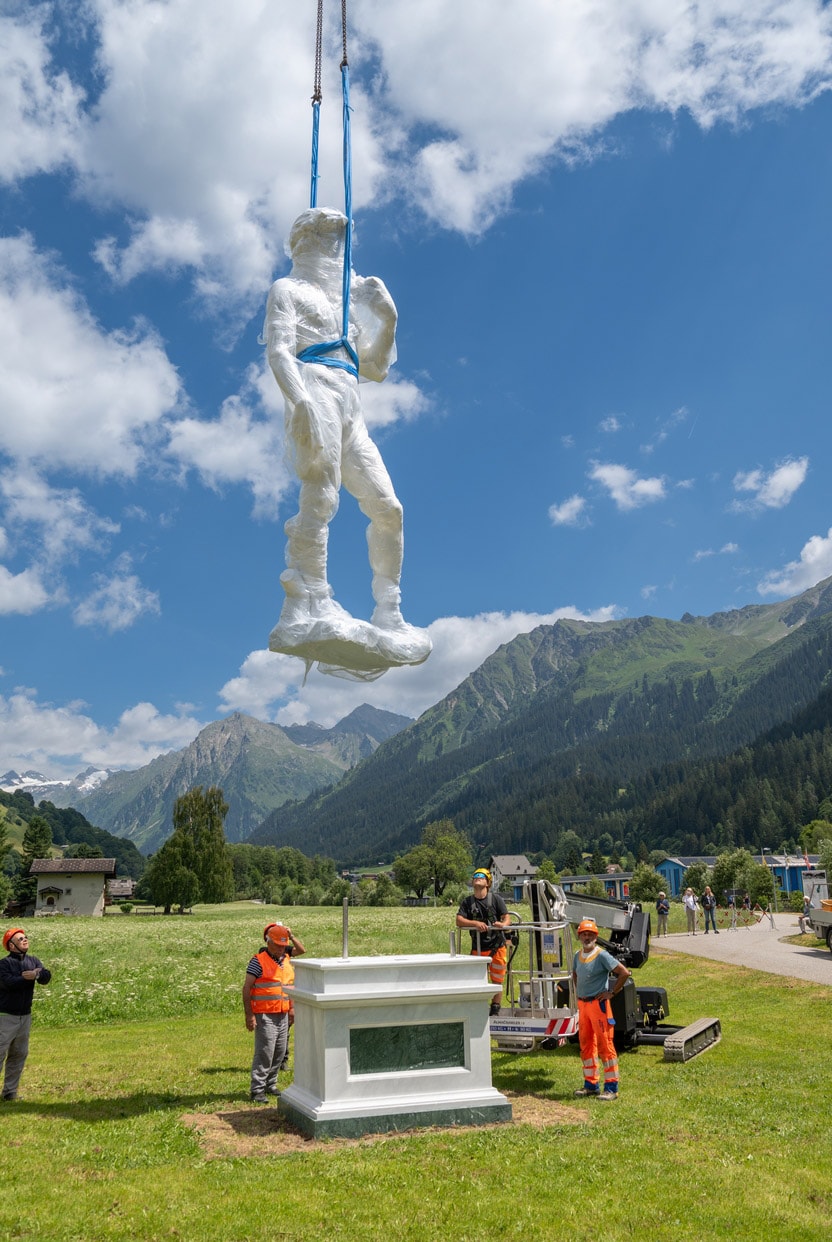
Created in 2017, the sculpture was carved from ‘Michelangelo white marble’, sourced from the Polvaccio quarries in Carrara, a historically documented site from which Michelangelo selected the marble for his works. It was created by Daniele Orsi for Studi d’Arte Cave Michelangelo, one of Carrara’s most renowned workshops, under the careful supervision of Franco Barattini. Weighing over nine tonnes, plus an eight-tonne plinth, the sculpture exudes a monumental presence that is the result of collective expertise. Life-size marble versions of the David are extremely rare: there are only a few in the world, estimated to number between six and eight. In this context, the project consciously situates itself within this tradition, placing materiality, authorship and place at the centre as key elements in the construction of meaning. The sculptor Christian Bolt – who uses the same marble for his own works – saw the piece at the Cave Michelangelo Art Studios and proposed it to Klosters, where he lives.

Copyright reserved ©
Loading...

Brand connect

Loading...

Newsletter

Notizie e approfondimenti sugli avvenimenti politici, economici e finanziari.

Iscriviti