
A dawn for women in the 1950s
Patrizia Gabrielli investigates Alba de Céspedes' activities within the magazine 'Epoca': her mail column mirrors the times and reveals the first signs of change in an often underestimated decade
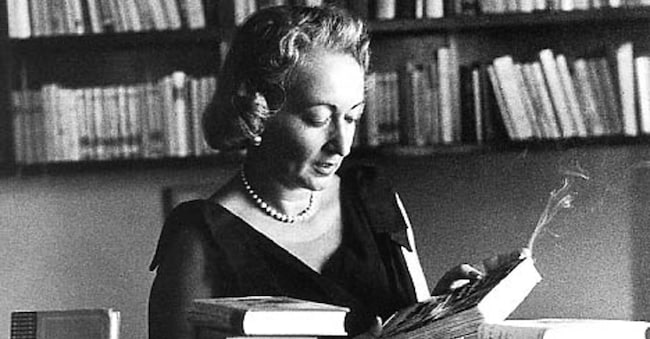
Alba de Céspedes' (1911-1997) extraordinarily modern outlook on the world of women and her tenacious commitment to democracy have finally re-emerged in recent years thanks to the meritorious republication of her writings, and now a further piece of knowledge comes from the work of Patrizia Gabrielli, a historian at the University of Siena who always knows how to offer readers valuable contributions on gender history.
The title - On her (and his) side - immediately makes the chosen theme explicit: it explores de Céspedes' correspondence with female readers of "Epoca" in the 1950s, a correspondence to which the writer gives the name of the book that consecrated her. That "of him" added by Gabrielli is meant to emphasise the attention also paid to the men who turned to de Céspedes in large numbers, in search of answers on the most varied issues. In short, it is not a female, exclusionary post, but a dialogue that aims to reflect on society, to stimulate curiosity, to generate debate. Marriage, work, family are at the centre of the missives, which arrived in their thousands between 1952 and 1958: a thermometer of customs and social life, an indicator of the changes taking place.
One of the merits of the essay is that it reminds us how the 1950s - considered a stalemate phase after the Constituent Assembly revolution and before the 1960s that heralded the reforms of the following phase - were in fact not so grey and devoid of innovative signs. Divided into two parts, Dalla parte di lei (e di lui) presents an excursus that photographs the Italy of the time and makes us understand how that decade, as far as the social and cultural dimension is concerned, paved the way: a slow transition, made up of small shocks, but necessary for the subsequent exploitation. The generational shift from mothers to daughters who rebelled against the destiny of angels of the hearth (to which the former, devoted to satisfying their husbands and raising children, were resigned) is matched by the evolution in taste in clothes and accessories. Access to consumption begins to expand, mobility - with the Vespa of Roman Holiday or the Fiat 600 launched in 1953 - is no longer the prerogative only of the elite.
The countryside emptied, cement spreads, the desperate search for work forces people to emigrate to the North. The women's shoulders continued to bear the brunt of the hard work in the fields (just think of the deplorable conditions of the "mondine" and olive pickers), but the battle to obtain dignified conditions took concrete form in the opposition to the Serpieri coefficient that legitimised wage inequality, a long struggle that began in the 1950s. While the profession of seamstress remained dominant (especially with the growth of the fashion industry), new opportunities arose for Italian women in the tertiary sector: clerks, shop assistants, social workers.
All this, Gabrielli recalls, was accompanied by legislative interventions with which the country finally left behind 'mediaeval' residues such as the ius corrigendi (cancelled in 1956) or the odious double NN on identity documents that forever branded 'no-one's children' (1955): steps that followed a fundamental measure for a State that wanted to call itself civilised, namely the maternity law (1950). The idea of rejecting the abomination of dismissing a woman 'in the event of marriage', on the other hand, was evidently too advanced for the times: Lina Merlin's bill (1951) did not pass the Senate.


