Campiello / The Chairwoman of the Management Committee

A double jury to promote autonomy and independence

Entrepreneur Mariacristina Gribaudi, for several years the chairwoman of the Campiello Prize Management Committee, explains how she tries to arrive at the selection of the best books

by Sunday Edition

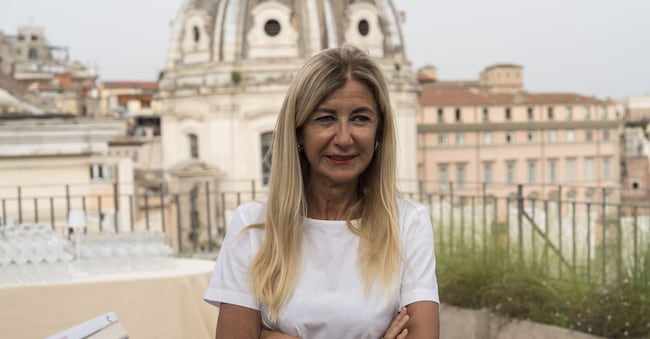
Mariacristina Gribaudi, Presidente Comitato di gestione del Premio Campiello. (Imagoeconomica)

3' min read

3' min read

Entrepreneur Mariacristina Gribaudi has been the chairwoman of the Campiello Prize Management Committee for several years and is responsible for the conception, organisation and development of all its activities.

What are the criteria by which you choose the members of the jury of literati?

Loading...

The Jury of Literati represents the heart of the Prize from a literary point of view, and its composition is fundamental to guarantee the authoritativeness that distinguishes us in the panorama of Italian prizes.

When we select the jurors, we look for prestigious figures in the country's cultural scene: literary critics, university professors, writers, journalists and connoisseurs of the subject who have demonstrated preparation and critical sensitivity. These are thoughtful choices that we make consciously and following an internal comparison between all the Award's governance components, because we know how important it is to combine technical expertise and independent judgement.

The criterion that guides us is professional competence combined with rigorous independence of judgement, a quality that we consider indispensable for the reputation of transparency and autonomy that the Prize considers essential and distinctive. The task we entrust to these literati is not an easy one: they must devote months to reading and evaluating the many works nominated, an intense task that requires dedication and passion. At the end of this process, they confront each other in a public debate to arrive at the selection of the five finalists, a fundamental moment that makes the entire selection process transparent.

Do you, the first selector, or the members of the literary jury receive pressure to select one book over another? Has this ever happened? And if so, how do you act? .

This is a question that touches on one of the most delicate aspects of our work, but the answer is already written in the very mechanism of the Prize, which was designed from the outset precisely to avoid external interference as much as possible.

The real strength of the Campiello is its dual jury, a system that guarantees autonomy and independence.

The mechanism is as simple as it is effective: the Jury of Literati selects a shortlist of five finalist works - from among all those entered for the Prize - during a public debate, thus ensuring a plural choice of literary quality. But the final decision is completely in the hands of a second jury: the Three Hundred Readers. And herein lies the key point: even if someone wanted to try to influence the first selection, they could never control the final verdict.

This second jury is made up of ordinary people, from completely different social categories, professions and ages, from all over Italy. They change completely every year and their anonymity is strictly protected until voting closes.

This system certainly makes the Prize very unpredictable and non-influential. It is our best guarantee of integrity, a principle we hold dear and which this system allows us to defend in a concrete way.

During the most acute phase of the pandemic, the Campiello was held at St Mark's, at another time at the Arsenale, then back at the Fenice. Is there the intention to keep it at La Fenice or are there plans to move it elsewhere? How much is the Prize linked to Venice and how much to the Veneto region?.

True, the pandemic forced us to reinvent ourselves and find alternative solutions that turned out to be extraordinary and very impressive. St. Mark's Square in 2020 and the Arsenal in 2021 were truly exceptional settings, which gave us and the audience unforgettable moments.

La Fenice is undoubtedly a historic venue for the final evening of the Campiello and, after Covid, represented a symbolic return to normality for all of us.

The Prize's link with Venice and the Veneto is certainly very strong. The Campiello was founded in Venice in 1962 by the far-sighted will of Venetian industrialists, and its very name already evokes those Venetian piazzas, those 'campielli' that have always been privileged places of encounter and cultural exchange. Venice is therefore its natural stage. But for many years the Cinquina Selection has been held in Padua. And the other prizes, Giovani and Junior, have their final moments in Verona and Vicenza. The Campiello has its roots in Veneto and it is only right that it returns to its territory the national literary culture that it selects and promotes.

Copyright reserved ©

Brand connect

Loading...

Newsletter

Notizie e approfondimenti sugli avvenimenti politici, economici e finanziari.

Iscriviti