

Tra emancipazione digitale e difesa dei diritti
di Paolo Benanti


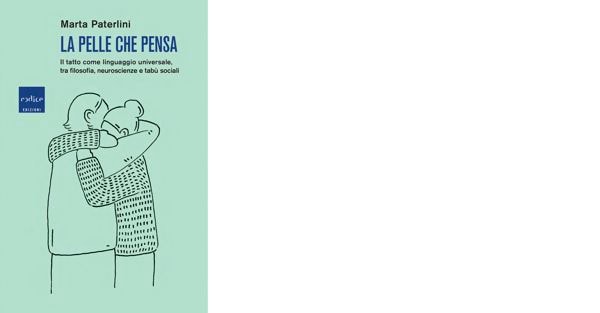
Deprived of tactile experience, our vital functions shut down. Think of infants, who need not only food, protection and care in order to grow into healthy, happy adults, but also care made up of physical presence, caresses and epidermal contact. This is just one example among many recounted in the fine essay that Marta Paterlini, neurobiologist and science journalist, has dedicated to the subject: La pelle che pensa (Codice Edizioni, 2025).
The title alone is enough to arouse curiosity: a clever lure that, this is the point, delivers on its promises. We are faced with a rigorous, compelling and truly multidisciplinary investigation into history, literature, philosophy, biology and social taboos. We start from the origins, from the Homeric myth that bestowed on touch a revelatory and life-giving power, and arrive at recent neurobiological research. The Thinking Skin is an adventurous journey in which Paterlini never loses his bearings and leads us, it has to be said, by the hand through the twists and turns of this story that is sensitive from every point of view.
As chance would have it, I have long been writing a story in which touch is at the centre of the action and reveals the characters. Much more important: my father is a retired internist. Let us start with him. Dad complains that today's doctors touch patients the bare minimum, sometimes never. He says: "They don't visit any more". It happens that he grabs his leather bag and runs to palpate the abdomen of an acquaintance for a second opinion. Until a few years ago, Dr Muratori's idea of touch in medical practice was essentially diagnostic; the man is eighty-one years old and comes from a school of hospital clinicians devoted to constant and meticulous observation of the sick bed, but a forthcoming and very painful experience has led him to reconsider the therapeutic aspect of touch as well. A caress is valuable in itself, touching heals, not only emotionally, the skin is not an inert mat, as it feels, it thinks. In short, it is an extension of the brain. So tactile communication is a language that allows us to know and help the other, but above all ourselves. Let's try never touching each other's face, one day, and we will understand how sight, hearing, smell, are not enough. Self-perception is provided by touch. And proprioception, i.e. knowing where we are without resorting to sight, has to do with balance, and survival. The boxer's first requirement in the ring is not strength, endurance, elasticity, but constant awareness of his position. Boxing matches are shows of proprioception.
During the isolation regime imposed on us by the Covid pandemic, what did we miss? On our devices we saw others, we listened to them, that sense of alienation we had never felt before came from the absence of contact, a physical and soul distancing. I do not have the competence to assess, except on an empirical and personal level, the repercussions that isolation has had on young people, on children, overwhelmed by the health emergency at a crucial time of growth and education for them, but I trust that those reading this know what we are talking about. By the way, there are thousands of studies, of articles, dedicated to the issue. There is literature, as they say.
We have experienced the discomfort caused by the lack of contact and at the same time today we cannot afford to touch anyone without consent. We have, rightly, claimed the right to establish boundaries between ourselves and others. Boundaries that must not become a prison, however, and the discourse would be long. Equally complex is to summarise the perceptual evolution in the age of the virtual. Which is real, because it exists. Finally, the issue of safety and prevention, corroborated by the unstoppable development of technology, raises further questions about the fate of, say, a hug. I repeat, it is not 'only' about finding emotional shelter, nor is it 'only' about empathy, by hugging someone, by touching something, we initiate cognitive pathways. Children touch everything to get an idea of the world, of themselves in relation to the world. Touch is a powerful antidote to fear.

