
A European Way to Negotiate Duties
Trumpian rhetoric is to blame the world for the decline in American manufacturing that is instead a consequence of globalisation

3' min read
3' min read
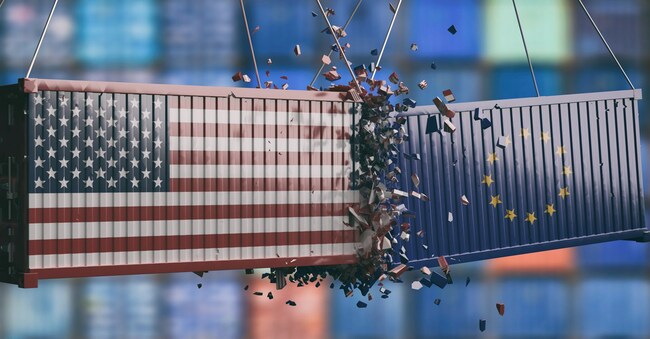
'Liberation day' is what Trump wanted to call his 'declaration of trade war' on the world, based on unfounded assumptions and dangerous and counterproductive policies that have resulted in the worst US stock market crash since 2020. It is therefore not surprising that in the face of the real danger of recession the entry into force of the duties was suspended for 90 days, even if only for those countries that had not adopted countermeasures and only for the part exceeding 10%. On the contrary, duties on Chinese goods were revised upwards to 145% in an escalation of retaliatory measures that led China to introduce duties of 125% on American goods.
But what are Trump's alleged and stated goals, and why won't tariff escalation help achieve them, while it will only cause the health of the US economy to worsen as well as slow global growth? Trumpian rhetoric is based on blaming the rest of the world for the decline in US manufacturing which is, in reality, the consequence of globalisation that has allowed multinational companies to reduce production costs by locating production facilities in emerging countries and the US to specialise in advanced and digital services. When China began to control even the highest value-added stages of production and challenge American technological leadership, the advantages of the international division of labour were called into question and nationalist rhetoric identified protectionism as the means to bring production and jobs back home. The growing interdependence between countries in value chains has certainly created imbalances and contributed to the growth of internal inequalities, but it has also reduced production costs as Trump himself had to recognise when he was forced to announce a Chinese tariff exemption for smartphones, laptops and other consumer electronics in order to prevent the prices paid by American consumers for these items from rising sharply. But the trade and manufacturing interdependence between countries is not limited to these goods when one considers that the sum of imports and exports on the world GDP has exceeded 60%, and in such an integrated economy without a serious tariff restraint agreement it will be difficult to avert a US recession and global economic slowdown. In some sectors, US tariffs are already in place, e.g. importing European-made cars into the US is already more expensive due to the 25% tariffs that came into effect on 3 April, as is producing cars in the US due to import duties on all those raw materials and components needed for production that are imported from countries affected to varying degrees by US tariffs, unless one assumes that trade restrictions will bring the entire value chain back to the US. Such a major reorganisation would not only take a very long time, but would drastically reduce efficiency by driving up production costs and prices. Similar considerations can be made about the cost of possible generalised retaliatory responses, such as the Chinese one which, it must be said, was accompanied by a legal action at the World Trade Organisation signalling the will to cooperate according to multilateral rules. The European negotiation will therefore have to be articulated, minimising the damage that all trade-restrictive policies cause to those who impose them, and maximising the benefits that can accrue from an acceleration towards an even more integrated internal market, from the realisation of the single capital market, and from the revival of domestic consumption and investment. These measures would not only help to rebalance international economic relations by reducing the flow of European savings to the US and dampening the EU trade surplus, but would also help to channel European savings towards the investments needed to achieve the indispensable goals of the green and digital transition and to strengthen Europe's strategic autonomy and security.
Professor of Economics, Luiss

