A delightful stroll through nature, art and good food in the Sibillini Mountains
From Norcia to Spoleto, travelling through the Marche and Umbria to rediscover historic sites, national parks and architectural wonders

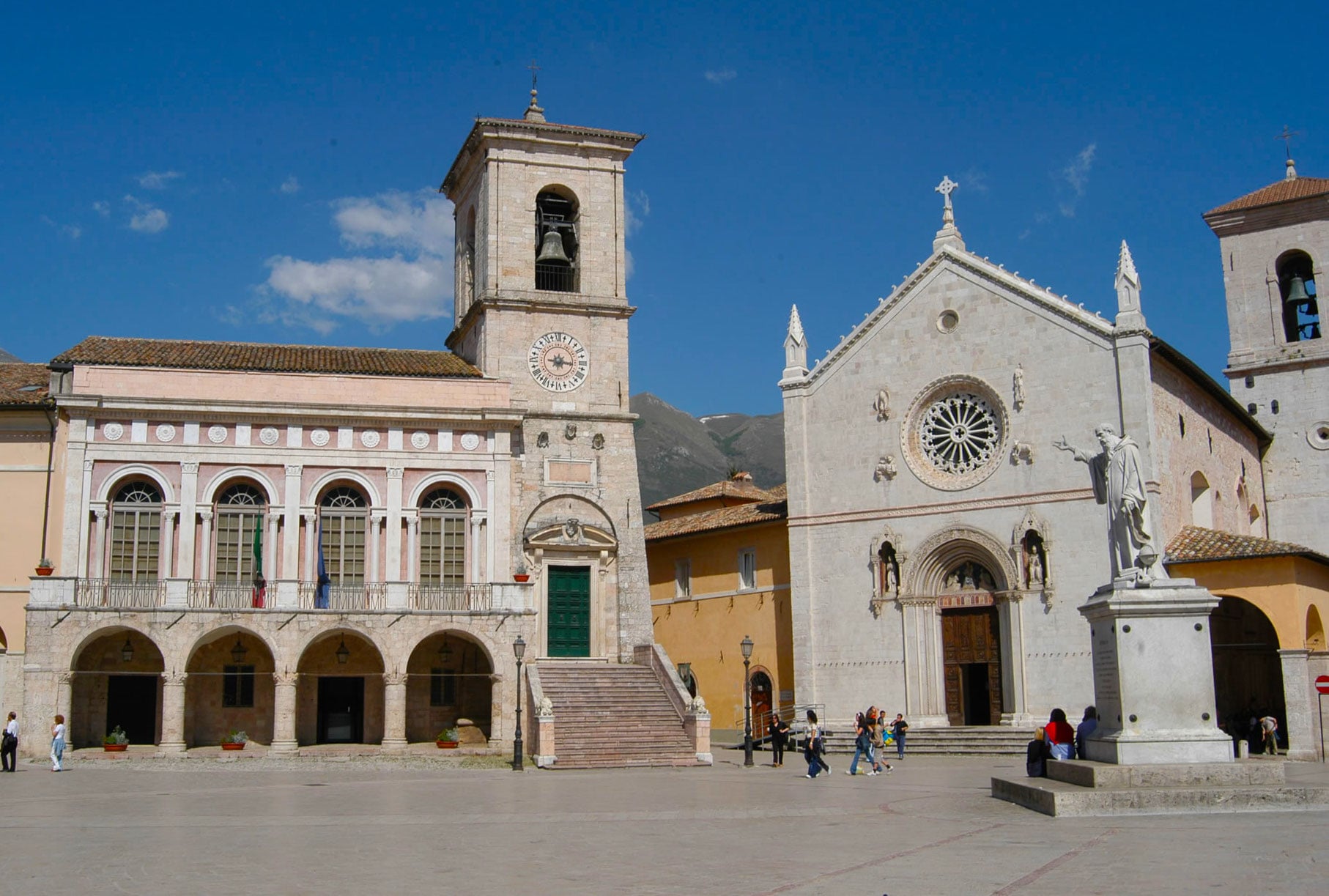
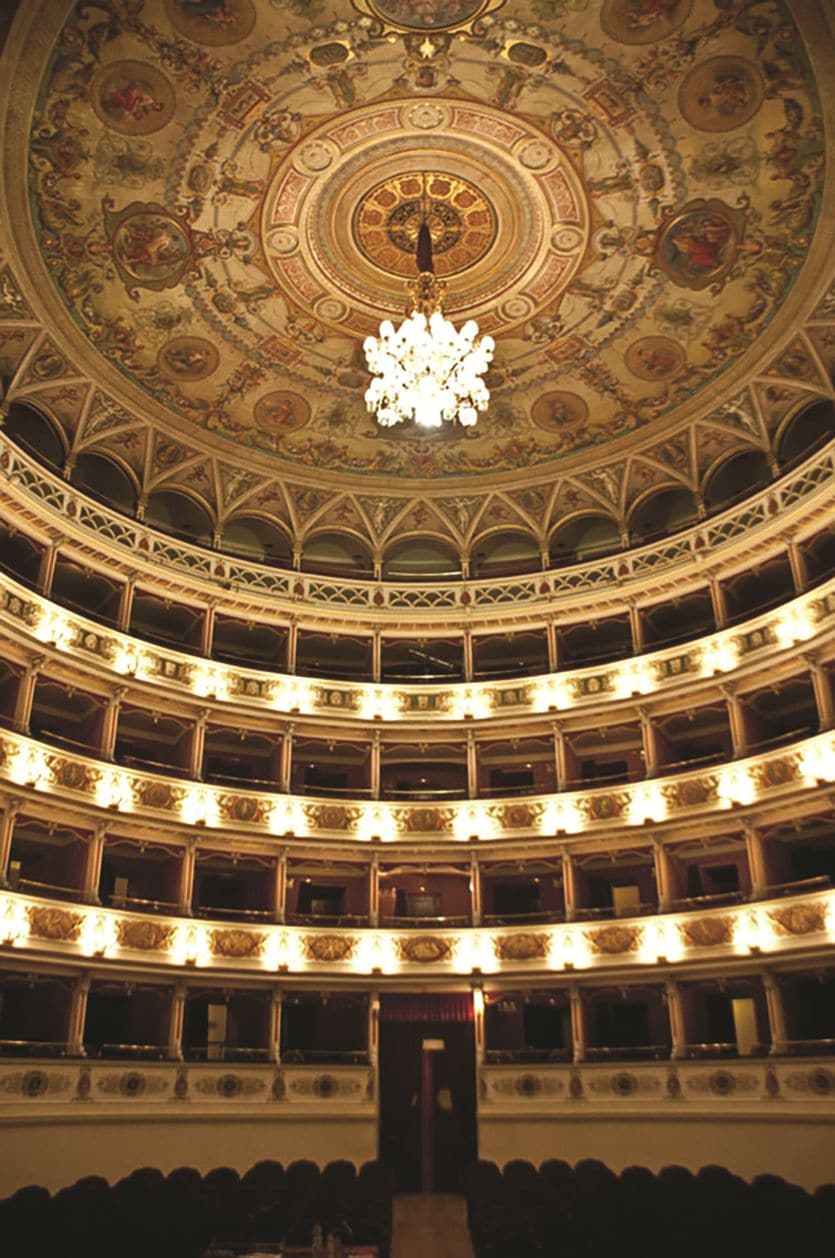
The most recent reopening was that of the Teatro Civico, built in 1876 by the Perugian architect Domenico Mollajoli. This followed the restoration of the Town Hall, with its loggia, bell tower, the Chapel of the Priors and the late-Gothic reliquary in the form of a small hexagonal temple containing the tooth of Saint Benedict. This coincided with the return to the city of the Basilica, with its famous Gothic portal, dedicated to the man of noble birth who was born in 480 alongside his twin sister, Saint Scholastica.
Norcia Rises Again
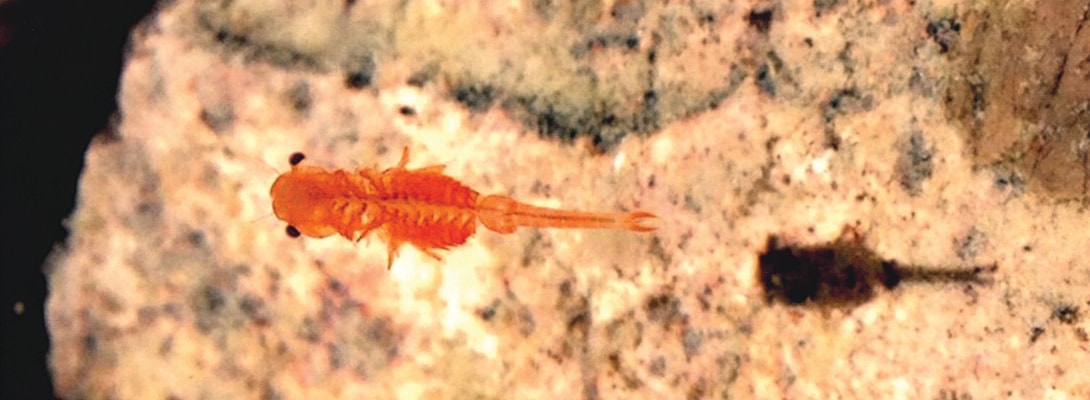
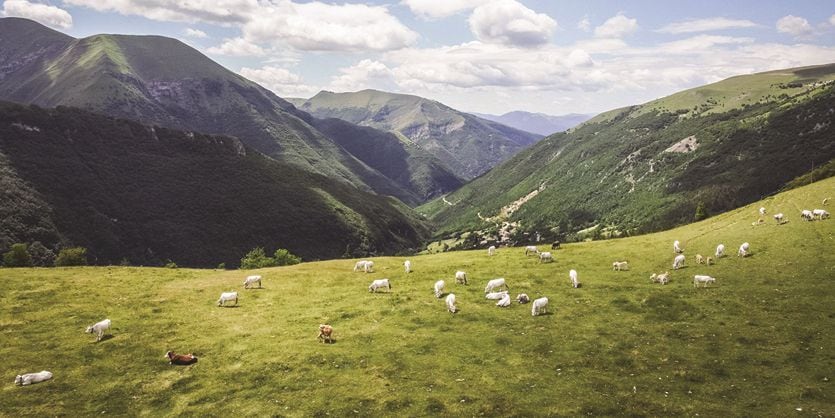
Norcia, almost ten years on from the earthquake of 30 October 2016, is once again the beating heart of the Sibillini Mountains. After lunch amidst coats of arms and fireplaces at the Granaro del Monte, the restaurant run by the Bianconi family since 1850, we gather the strength and cheerfulness to climb up to the alluvial karst plateau of the Piani di Castelluccio and thus begin our exploration of the Umbrian-Marche Apennines. From there, the crossing of the U-shaped valley of Lake Pilato – a glacial basin situated at an altitude of 1,941 metres – is a thrilling experience, following the paths that wind their way from Foce di Montemonaco and Forca Viola: you’ll need to tackle a few scree slopes to reach the lake, which takes its name from the legend that the body of the Roman prefect of Judea—guilty of condemning Jesus—was dragged on an ox-drawn cart was thrown by demons into this basin, surrounded by the highest peaks of the Sibillini Mountains, such as Vettore, Cima del Redentore, Pizzo del Diavolo and Cima del Lago. This lake of morainic origin resembles a pair of spectacles; its shores are carpeted with the Apennine edelweiss, whilst its waters are home exclusively to the Chirocephalus marchesonii, a tiny red crustacean, named in honour of Vittorio Marchesoni, director of the Institute of Botany at the University of Camerino, who first identified it in 1954 during one of his regular excursions in the Sibillini Mountains.
The Great Loop of the Sibillini Mountains
Below are some sections of the Great Sibillini Loop, the 124-kilometre hiking route, divided into nine stages, starting from Visso, home to the Monti Sibillini National Park, which follows sections of the ancient Via della Madonna di Macereta et Loreto, once trodden by pilgrims travelling from the Kingdom of Naples to the Sanctuary of Loreto: right from the very first day of the trek, one is struck by the Dolomite-like cliffs of Monte Bove, whilst above one’s head kestrels, buzzards and the majestic golden eagle soar. Continuing on, you will come across the ruins of the ancient Castrum Flastrae, now known as Castello dei Magalotti. In the Fiastrone valley, you’ll come across the ruins of Col di Pietra, dating back to the 13th century, the thousand-year-old Abbey of S. Salvatore in Monastero, and the rugged Grotta dei Frati, which looms sheer over the Fiastrone gorges. Accompanied by the song of the larks, the paths along the Piani di Ragnolo wind between the most rugged peaks of the Sibillini Mountains and the deep gorges of the valleys, which still boast Eugenia’s violets, sambucine orchids and cinquefoils, which remain in bloom alongside a few gentians and peonies.
The Chienti Valley
The Chienti Valley, on the other hand, starting from the village of Pievebovigliana after admiring the medieval crypt of the church of Santa Maria Assunta, is ideal for cycle tours through the woods at the foot of Mount San Savino and on the slopes of Mount Fiegni, where the church, also Romanesque, of San Giusto. The route continues to the edge of the Polverina reservoir, in which the 14th-century Beldiletto Castle is reflected; built by Giovanni da Varano, it was later conquered by Carlo Malatesta, Lord of Rimini: it is quadrangular in shape, whilst the courtyard, featuring a loggia and pointed arches in white and red stone, and above all the 15th-century frescoes depicting, amongst others, Robert Guiscard, his son Roger, King of Naples, and Tancredi d’Altavilla, all evoke the roar of chivalric battles.
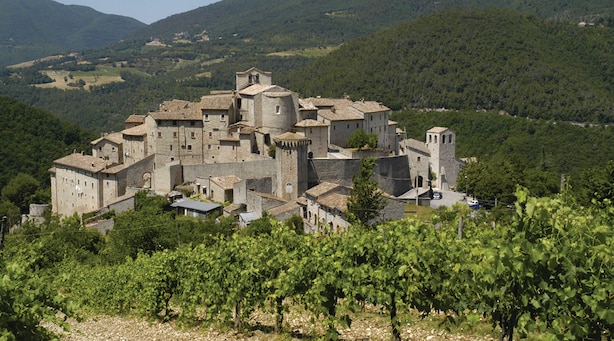
Back in Umbria, the silhouette of Vallo di Nera looms on the horizon, nestled on the winding banks of the River Nera, set between Mount Coscerno and Mount Maggiore, a settlement inhabited as far back as prehistoric times by the Umbrian Naharki people, and later a Lombard curtis under the rule of Spoleto before becoming part of the Papal States. Its double city walls, majestic towers, the Ranne and Portella gates and, above all, the Romanesque church of St John the Baptist and that of Santa Maria Assunta, with its frescoes from the Giotto school – with Pietro da Camerino’s ‘Cola’ having painted the highly expressive ‘Procession of the Bianchi’ – exude an irresistible charm that was once passed down orally: as attested by the Ecomuseum of the Umbrian Apennine Ridge and the stories one hears whilst sampling exquisite cheese at the tables of the Locanda Cacio Re, where one can stay amidst the songs of the birds.