
A star on the Hollywood Walk of Fame for Carlo Rambaldi, the visionary behind E.T.
The special effects maestro is the 18th Italian to receive a star on the Walk of Fame

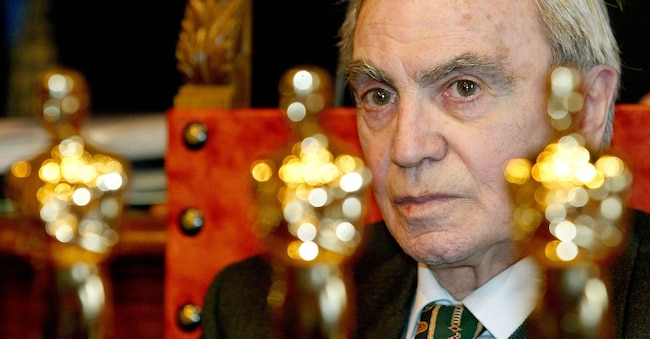
Steven Spielberg had dubbed him the ‘Geppetto of E.T.’. Carlo Rambaldi, a trained painter and sculptor, designed and created the alien protagonist of the 1982 film for the director.
Before Hollywood, Rambaldi had forged his own career in Italia, where he trained at the Academy of Fine Arts in Bologna. He made his debut in the film industry in the 1950s: among his early works was the dragon Fafner in Giacomo Gentilomo’s *Sigfrido* (1957). This was followed by collaborations with some of Italy’s most prominent directors, from Federico Fellini to Pier Paolo Pasolini and Dario Argento.
The move into cinema happened almost by chance, as his daughter Daniela, who was present at the ceremony in Los Angeles, explains: “A friend of his was making a documentary about sturgeons, but had started filming at a time of year when they weren’t in season. He then asked him if he could build an artificial sturgeon. My father replied that he would try to make one. That experiment opened the doors to the world of cinema for him.”
His international breakthrough came in 1976, when producer Dino De Laurentiis chose him for the remake of *King Kong*. Rambaldi had seen the original 1933 film as a child, at the cinema-theatre in Vigarano Mainarda, the village in the province of Ferrara where he was born. Years later, he worked on the creation of a huge mechanical model of the gorilla and also built a life-size arm for close-up shots with Jessica Lange. The project required a metal frame, hydraulic systems and a team of operators to control its movements. Rambaldi received his first Oscar for the film in 1977.
“Without Carlo Rambaldi’s King Kong, would Stan Winston’s T-Rex in *Jurassic Park* have existed? Probably not,” remarked Matt Winston, son of special effects specialist Stan Winston, during the Walk of Fame ceremony. His speech highlighted the influence that Rambaldi’s work had on subsequent generations of special effects artists.

