Wearable projects

A house that wears: when designers and architects design jewellery

Creatives grappling with project scales 'from the spoon to the city' design body sculptures. Conceived, as Ettore Sottsass used to say, for real and somewhat inexplicable women.
by Alba Cappellieri

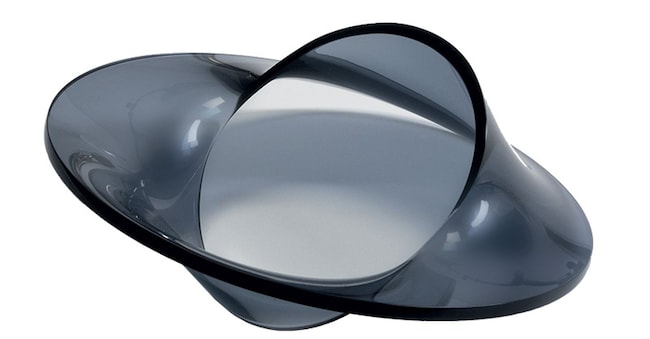
Bracciale Circle in Circle (design 1967, remake 1989) di Gijs Bakker in perspex fumé. ©Courtesy Museo del Gioiello

6' min read

6' min read

Among the objects of our material culture, jewellery is among the few that escapes closed definitions and conventional perimeters. There is no such thing as universal jewellery; there are different interpretations of jewellery, linked to the sensitivity of the times and women, to geographical and disciplinary contexts, to product sectors, to human history and, above all, to man's primordial need to decorate himself. In the wide variety of contemporary ornaments, the jewellery of architects and designers represents one of the most interesting areas, because it is here that value transcends material, and preciousness is entrusted to creativity.
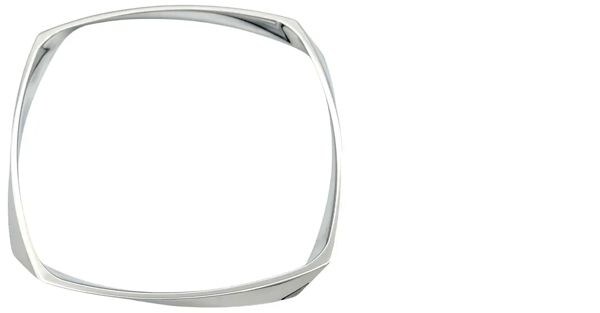
Bracciale a torsione quadrata in oro bianco 18 ct disegnato da Frank Gehry per TIFFANY & CO. (2.978,59 €, su 1stdibs.com).

If in traditional jewellery the noble metals, rare gems or savoir-faire are precious, in the ornaments of architects and designers the intangible aspects of design are precious. From the Latin 'pro gettare', meaning to throw forward, to plan - the founding activity of architecture and design - means to introduce new visions and values, in the form of materials, aesthetics, functions and meanings, looking so far ahead as to 'burst one's orbits', in the effective synthesis of the Dutch master Pieter Oud. In this value tension between the tangible and the intangible lies the interest and uniqueness of designed jewellery, which has introduced formal and material innovations, shifts in functions, meaning and techniques, despite the fact that it has rarely been considered by designers as a challenge to be grappled with.

Loading...
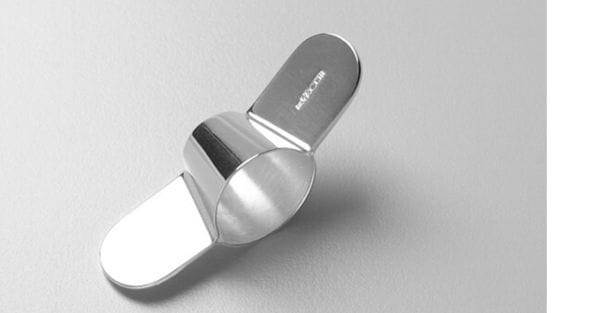
Anello da lettura Patch (2004), design Matteo Ragni per DE VECCHI MILANO 1935. ©Matteo Ragni Studio, Max Rommel

Among the many typologies that designers have tackled, including their sudden changes of scale between architecture, interiors, furniture, lighting and accessories, jewellery has always been conspicuously absent. With very few exceptions - Harry Bertoia had studied goldsmithing and Ettore Sottsass's Milanese beginnings were marked by jewellery projects -, jewellery has aroused little interest among architects, who were also designers at the time. Of course, the fathers of Italian design did design some jewellery, but this took place in the private sphere of affection, as gifts for family and friends, as evidenced by, among others, the engagement rings by Gio Ponti and Roberto Sambonet for their wives, the soft necklaces by Gianfranco Frattini for his daughter Emanuela, the colourful and free pieces by Ettore Sottsass for Fernanda Pivano and Barbara Radice, or the sinuous rings by Sergio Asti for his wife Mariangela Erba.
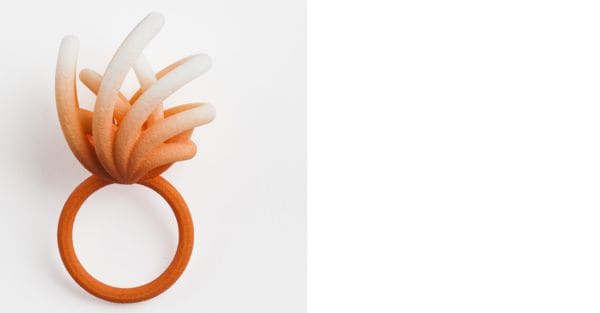
Anello Sydney in stampa 3D, design Odo Fioravanti per MAISON 203.

If, from the 1970s onwards, jewellery became a subject of experimentation for architects, this was thanks to producers and publishers such as Ciro Cacchione, Cleto Munari and Gijs Bakker. The first to break the ice was Ciro Cacchione in 1970 when, with San Lorenzo, he invited designers such as Franco Albini and Franca Helg, Massimo and Lella Vignelli, authors of the marvellous Senza Fine necklace, Afra and Tobia Scarpa, Antonio Piva, Maria Luisa Belgiojoso to design silver jewellery, conceived not as unique pieces, but as small, reproducible and accessible series. It was the first systematic Italian encounter between design and jewellery, disruptive for the few insiders, but shy and muted for most.
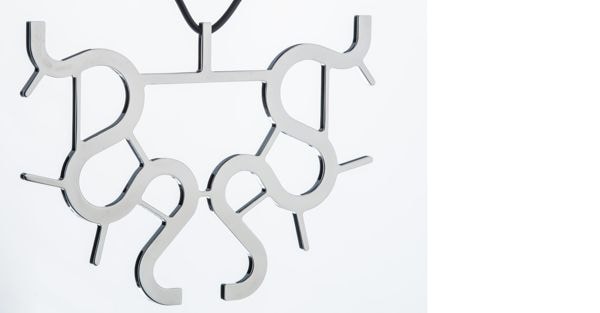
Pendente Spiritello (2013), di Alessandro Mendini, in argento.

Of a different sign was the collection of Cleto Munari who, between 1982 and 1986, produced limited editions of jewellery by leading international designers - Peter Eisenman, Michael Graves, Hans Hollein, Arata Isozaki, Richard Meier, Peter Shire, Stanley Tigerman, Oscar Tusquets, Robert Venturi, together with the Italians Mario Bellini, Michele De Lucchi, Alessandro Mendini, Paolo Portoghesi, Ettore Sottsass, Lella Vignelli and Marco Zanini. It was thanks to him that jewellery entered the empyrean of international design for the first time. In reality there was very little design, in the sense of industrial design, as these were exclusive limited collector's series.
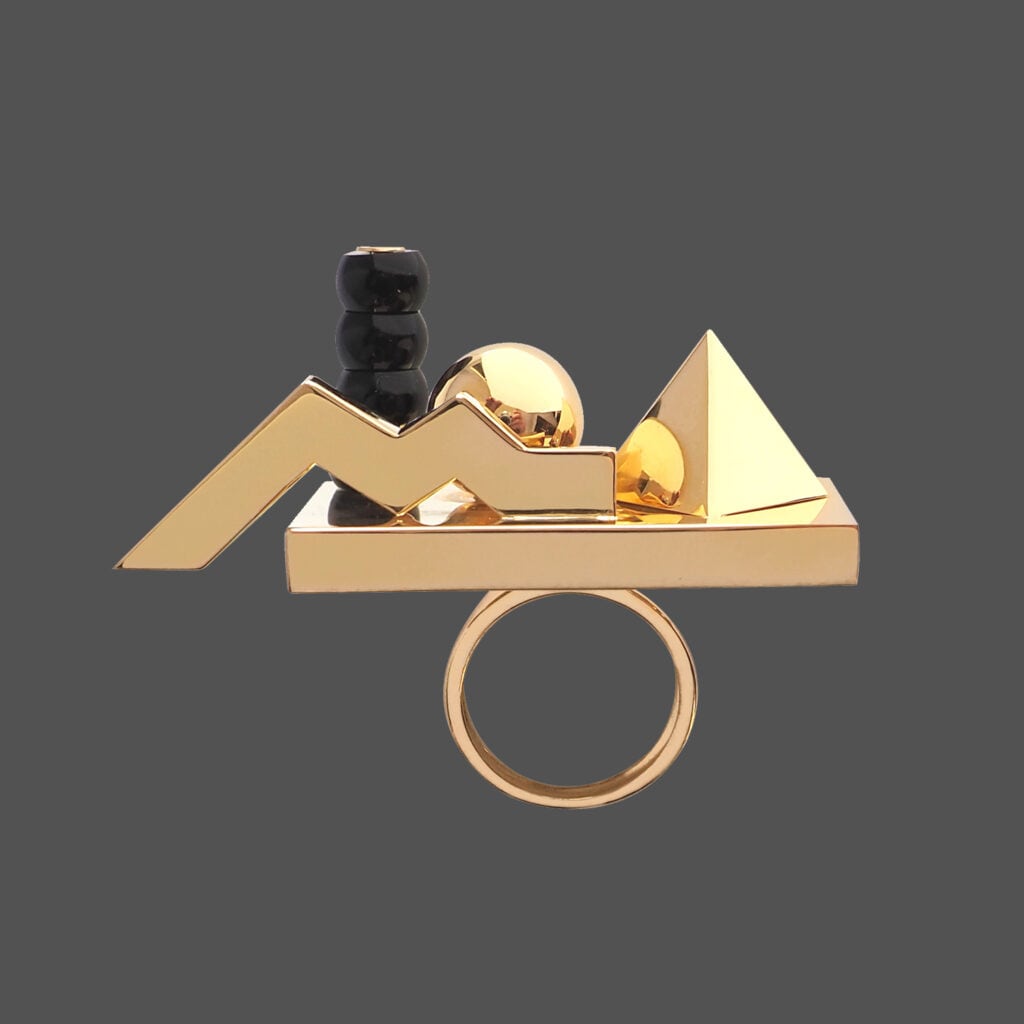

Anello Simboli (2021), di Cleto Munari, con i simboli universalmente riconosciuti dall’uomo: la piramide, la Torre di Babele, la sfera e il fulmine di Giove. Edizione limitata in oro e onice.

Like the artists, the designers invited by Cleto Munari transferred the sign of authorship to jewellery, leaving out those principles that had been a priority for the San Lorenzo collection, such as ergonomics, wearability, comfort, accessibility, and all those parameters that belong to the methods of design. In the jewellery for Cleto Munari, now the Rossella Colombari collection, designers accustomed to dealing with design scales 'from the spoon to the city' interpreted jewellery as micro-architectures for the body, wearable emblems of their design sign. For jewellery it was a 'liberation': no longer forced to display carats and metals as symbols of status, but finally free to choose its own reference values, starting with that of design.

Collana Kalikon con anelli in stampa 3D, design Giulio Iacchetti per MAISON 203 (175 €). ©Federico Marin

It is interesting to note that Ettore Sottsass, the Italian design genius who designed jewellery from the very beginning, said: 'I have always designed with the idea that the object you design is a bit of a tool for life. An instrument that makes the person using it or the person looking at it realise that they are living. It is the opposite of the concept of consumerism, which wants us to forget that we are living and dying because the important thing is to consume, because life is in the act of consuming, of using, of looking, of buying, etc. I am not really interested in this kind of definition of life. I think that all the things we design, the architecture, the objects, must help people to be aware that they are living'. For Sottsass, design is a way of discussing life and jewellery animates deep discussions and conversations, from the body to decoration, from function to social symbolism, thanks to the contribution of designers.

Bracciale Orgone (1994), di Marc Newson, in argento 925 e smalto rosso. ©Courtesy Museo del Gioiello

In the history of jewellery, design-driven innovation is owed to Gijs Bakker and his brand Who's Afraid...? in 1996, when the Dutch master, founder of Droog Design, launched an online collection of designer jewellery. The invited designers - from Ron Arad to Marc Newson, from Marcel Wanders to Rolf Sachs, Hannes Wettstein, Alberto Meda, Paolo Ulian, Konstantin Grcic, Tjep, Tord Boontje, Studio Job, the Campana brothers, as well as Bakker himself - interpreted jewellery in terms of innovation. Here then are Newson's die-castings, Bakker's acrylic, silicone, fabric, Grcic's PVC, Ron Arad's sintering, the Campana brothers' leather scraps, giving jewellery new meanings and, above all, a new semantics. The distribution medium was also decidedly innovative: an online collection, the first ever, which, for the time, was nothing short of a novelty, anticipating the contemporary rituals of e-commerce by a decade.

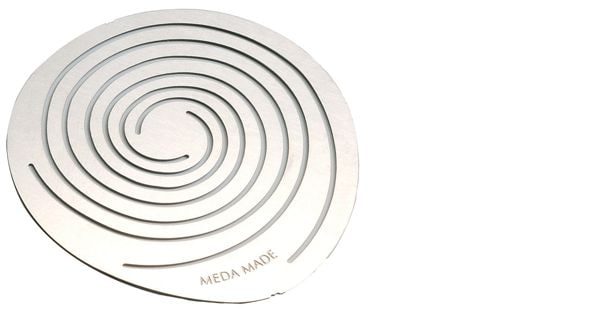
Orecchino e spilla Meda made (1997), di Alberto Meda, in acciaio placcato oro o acciaio inossidabile. ©Courtesy Museo del Gioiello

The breach opened by Gijs Bakker was then crossed without hesitation by the many designers who interpreted jewellery as a testing ground for new materials and new technologies: this is the case, among others, of Gaetano Pesce and his Fish Design resin jewellery collection, Alessandro Guerriero and his aluminium bracelets from the 1980s for Atelier Alchimia, Fulvia Mendini's micromosaic jewellery, or those in edible materials by Iv Design and GumDesign, the marble crosses by Paolo Ulian and those by Giulio Iacchetti, the glass bracelets by Cristian Visentin, up to the pluriball of the surprising RosAria, a rosary necklace by JoeVelluto, or the poetic silver bookmark ring by Matteo Ragni for De Vecchi Milano 1935.

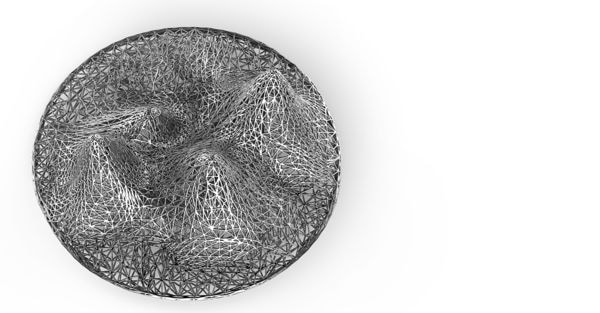
Spilla Lace in acciaio inox, modellata in 3D e sinterizzata in metallo, design Cristian Visentin Studio Design (su richiesta, 300 €)

There has been no lack of fruitful collaborations between designers and the great jewellery houses such as Frank Gehry for Tiffany & Co., Zaha Hadid for Swarovski and Bulgari, the Campana brothers for Stern, or even with small innovative companies that have introduced digital technologies such as 3D printing into jewellery. This is the case of the Trentino company .bijouets which, under the creative direction of Selvaggia Armani and, later, with the collaboration of designers such as Federico Angi, Filippo Mambretti or Maria Jennifer Carew, introduced 3D jewellery, together with Maison 203, founded in Treviso by designers Orlando Fernandez Flores and Lucia De Conti, whose jewellery was designed by the best Italian designers, Odoardo Fioravanti, Giorgio Biscaro and Giulio Iacchetti.

Collana Saturno stampata in 3D e rifinita a mano, design Federico Angi per .BIJOUETS (160 €).

Of course, there was no shortage of jewellery in precious metals designed by designers, such as the elegant bracelets by Marco Romanelli and Marta Laudani, Piero Lissoni, Emanuela Frattini Magnusson and Giorgio Bonaguro, or the knuckle ring by Fabio Novembre, who demonstrated that even traditional materials such as gold and silver can express a contemporary aesthetic thanks to the contribution of designers.

Bracciale in argento Andromeda, design Marta Laudani & Marco Romanelli con Filippo Francescangeli per LOVATO EUGENIO.

The designers' jewellery innovated the meaning and forms of jewellery, with the irony and creativity of design but, above all, they emphasised the emotional sense rather than the functional one, with ornaments designed for women, in the words of Sottsass, "true, crazy, inexplicable, asocial, lost and lonely, lovers within loves that change into madness or within loves gone wrong, who knows: the ornaments must end up somewhere there: a bit like a sign of love, love, love in earnest, the cosmic kind, a bit like an offering for a passionate journey of life...".

Gioiello infradito Tau (2019), design Giulio Iacchetti per DANESE MILANO. ©Federico Villa

CONVERGENCE FEDERICO ANGI. GIJS BAKKER. .BIJOUETS. CRISTIAN VISENTIN STUDIO DESIGN. DANESE MILANO. DE VECCHI MILANO 1935. LAUDANI & ROMANELLI. ODO FIORAVANTI. FRANK GEHRY. ZAHA HADID. GIULIO IACCHETTI. MAISON 203. ALBERTO MEDA. ALESSANDRO MENDINI. CLETO MUNARI. MARC NEWSON. TIFFANY & CO. Jewellery Museum..

Copyright reserved ©
Loading...
Loading...

Newsletter

Notizie e approfondimenti sugli avvenimenti politici, economici e finanziari.

Iscriviti