
Between data centres and talent the common route for Como, Lecco and Sondrio
Emphasis on technology and innovation, attracting young people and revitalising tourism
by Luca Orlando
 Aggiungi Il Sole 24 Ore
ai preferiti su Google
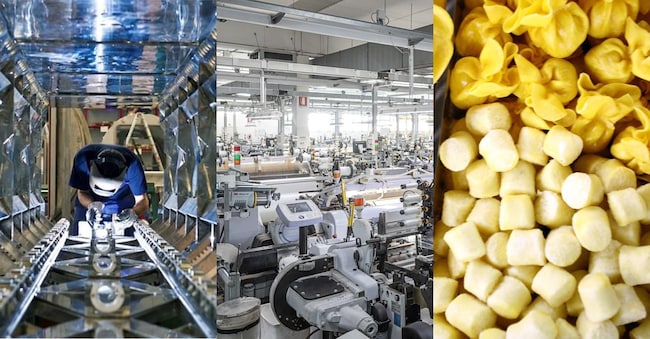
Ottantamila imprese, capaci di generare nove miliardi di euro di valore aggiunto manifatturiero e oltre 13 miliardi di export. Sono i numeri delle province di Como, Lecco e Sondrio, territori che le Confindustrie locali provano a mettere a sistema attraverso un piano strategico di lungo termine. Analisi affidata a Teha che serve anzitutto per dare una quantificazione puntuale della forza produttiva locale. Territorio che può contare su più specializzazioni, incardinate su sei filiere-chiave: metallurgia (4,2 miliardi di Euro di fatturato), meccatronica (oltre 4.400 imprese), moda (2,1 miliardi di Euro di fatturato, per il 20% riconducibile alla produzione serica), arredo (25% delle imprese attive in Lombardia nella fabbricazione di mobili), agroalimentare (1 miliardo di Euro di export, pari al 9,7% del totale regionale, con un ruolo di traino della Valtellina) e turismo (7,3 milioni di presenze). Le competenze maturate in queste specializzazioni - si legge nello studio - sono alla base della competitività
However, what is the starting point? In the Teha analysis, the analysis grid covers more than 60 indicators to investigate several dimensions, including economic well-being and employment, sustainability and training, and productivity. The analysis shows that the area is able to grow more than the Lombardy average in two of the three macro-indicators of the system: added value per inhabitant and labour productivity. This is accompanied by a significant improvement in the labour market, with positive signals on employment, including female employment, a reduction in youth unemployment and growth in youth entrepreneurship. The dimension of training and innovation is also strengthened, thanks to the increase in the population with tertiary education, the decrease in NEETs, participation in continuous training, and the extension of ultra-wideband. Overall, the three provinces rank in the Lombardy Top 3 in more than 60% of the indicators analysed, with excellence in key areas such as manufacturing, tourism, and the environment.
Significant structural challenges remain, however. In particular, the demographic and social dimension is a critical point: the decline in the young population, low birth rate and negative migratory balance signal the risk of a weakening of generational turnover. Added to this are fragilities in the production system (manufacturing and exports), in tourism (hotel admissions and accommodation capacity) and in the environment (dispersion of the water network).
The operational lines of development look in several directions. A first proposal is to set up a Manufacturing Innovation Hub in the vast area, so as to support the competitiveness and energy and digital transition of the key industrial sectors, fostering synergies between research centres, the start-up ecosystem and SMEs. In this scenario, the construction of a data centre in Upper Lombardy would represent a strategic opportunity to strengthen digital connectivity, guarantee the resilience and security of systems (backup and disaster recovery), attract innovative companies and start-ups, make public services more efficient and decongest the Milanese metropolitan area. A project that could act as a regional innovation hub, with an economic multiplier of 2.2 times the investment and significant employment benefits both in the construction and management phases.
Looking at the presence of more energy-intensive companies, the operational proposal envisages the creation of supra-provincial Renewable and Solidarity Energy Communities, the revamping of hydroelectric plants, the spread of district heating, investment in storage and demand-response systems, common consumption monitoring protocols, and training programmes for the development of a green energy industrial chain. The expected benefits include incentives that can be used for social and industrial projects, the possibility of exploiting up to 880 MW of new hydroelectric capacity in Lombardy, and a more than threefold increase in recovered thermal energy in the Como and Lecco areas by 2029.

