
Managers returning to the fold: does the past really offer a guarantee for the future?
Successful leaders must demonstrate growth and learning beyond past achievements

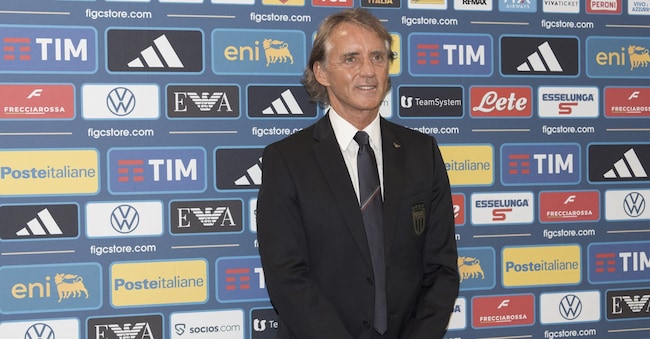
In football, as in business, when things aren’t going to plan, the temptation to retrace one’s steps is strong. A manager who has already won trophies, a director who knows the environment, the people and the market: relying on a tried-and-tested figure can seem like the most natural shortcut when you need to quickly regain direction and results. Roberto Mancini’s return as manager of the national team, with his ‘debut’ scheduled for Friday 25 September in the match against Belgium in the group stage of the 2026–2027 UEFA Nations League, provides an opportunity to reflect on a phenomenon that extends far beyond the pitch: what happens when a leader returns to lead a team he has previously managed?
The parallel between sport and business is particularly interesting because both are contexts in which leadership decisions are made under pressure, with high expectations and results often used as the main yardstick for judgement. But choosing a leader also means deciding who will lead people, set priorities and shape the way an organisation works. This is the starting point for our reflection on so-called ‘returning managers’: how do businesses select, assess and retain their leaders? And when might the return of a manager be a strategic management decision rather than a gamble on past success? Football, with its media exposure and the speed with which it turns a victory or a defeat into a verdict on the manager, makes these dynamics particularly visible. In business, these dynamics play out in a less spectacular way, but they are no less significant for that. We discussed this with Allison Howell, CEO of Hogan Assessments.
In football, it can happen that a successful manager is brought back after a previous spell that ended on a sour note. In a company, how risky is it to entrust a top-level position to a manager who has already achieved great results within the same organisation but who left it under problematic circumstances?
A return is neither positive nor risky in itself. The key question is whether the factors that led to the previous departure have genuinely changed. In the case of Roberto Mancini at the helm of the Italian national team, the issue is particularly interesting because his first spell in charge brought one of the greatest successes in recent Italian football – the 2021 European Championship – but it also ended in the disappointment of Italia failing to qualify for the 2022 World Cup and with a departure that sparked considerable debate and a degree of frustration. These memories do not simply disappear just because a leader returns.
What, then, should a board of directors consider before deciding on a ‘return’?
Boards of Directors should look beyond past successes: has the leader learnt from experience? Have relationships been rebuilt? Has the organisation evolved? If the underlying issues have not been resolved, a return may simply rekindle old tensions. The most successful comebacks occur when both the leader and the organisation view the second term as a new chapter, rather than as an attempt to relive the past.
What signs indicate whether a ‘second term’ represents a genuine opportunity for a fresh start or, on the contrary, an obstacle to changing what did not work in the past?
One of the most significant indicators is a leader’s ability to demonstrate that they have learnt from experience and know how to adapt, applying the lessons from past successes to a different environment, a different team and a different set of challenges. Effective leaders are able to reflect on past events, identify what worked and adjust what did not. If the narrative focuses primarily on restoring past glories, this can be a warning sign; conversely, successful second terms generally involve evolution, not repetition. Football offers examples of both outcomes. Luiz Felipe Scolari’s return as Brazil’s manager is often cited as a prime example – albeit a negative one. Felipe Scolari had led Brazil to World Cup victory in 2002, but when he returned to the dugout ahead of the 2014 World Cup, held on home soil, expectations were heavily influenced by past successes. Brazil’s historic 7–1 defeat by Germany in the semi-finals demonstrated that past successes do not automatically provide the answers to new challenges.

