
One in three Milanese is ‘new’: 400,000 have moved in since 2014
The demographic shift in the regional capital is unprecedented: young adults aged between 19 and 34 are the main group moving in, whilst a proportion of the population aged between 35 and 64 tends to move out of the city

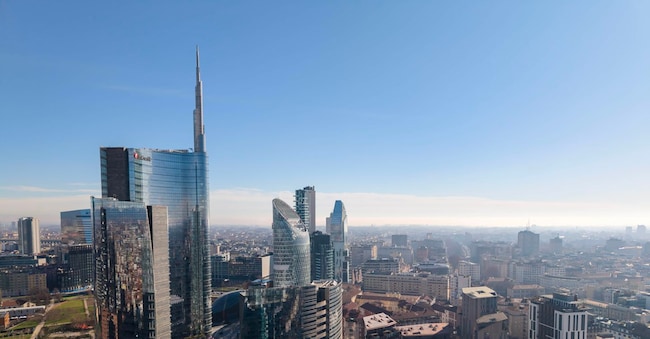
Milan remains one of Italia’s most attractive cities, but the official figures paint a more nuanced picture than the narrative of the ‘growing city’.
Over the last ten years, according to statistics from the Municipality of Milan, there has been a population shift in the city involving 888,000 people: 488,000 new residents compared with 400,000 ‘departures’ (excluding births and deaths). In practice, adding up those arriving and those leaving, between 6 and 9 per cent of the population has been renewed every 12 months. Put simply: a third of today’s Milanese were not living in Milan ten years ago. And if we take a broader view, over half of the current inhabitants have moved to the city in the last 15 years.
The point, therefore, is not merely how many residents Milan has (at the end of 2025, the number of residents stood at 1,399,079, up 4 per cent on 2014), but how its population is renewing itself. In other words, who is arriving, who is leaving, and at what stage of life they are doing so. Leaving births and deaths aside, demographic turnover in the city is unprecedented: it is mainly young adults aged between 19 and 34 who are moving in (accounting for 49 per cent of new registrations over the last ten years), whilst a proportion of the population aged between 35 and 64 tends to move out of the city (accounting for 42 per cent of deregistrations).
68 per cent of those who have left Milan since 2014 are Italian and 32 per cent are foreign nationals. The main destinations are, for 31 per cent, municipalities in the province of Milan, 25 per cent to other Italian municipalities outside the region, 20 per cent to other areas of Lombardy, and finally 13 per cent abroad (a residual proportion relates to unspecified cancellations, due to administrative measures, persons being untraceable or post-census revisions to the register).
Meanwhile, the outflow has been largely offset by the inflow of students and workers arriving from the rest of Italia and, above all, from abroad. This represents an unprecedented demographic turnover, at a rate of 50,000 new residents a year. Only 27.5 per cent of new Milanese residents come from Lombardy and the province; 35.5 per cent come from outside Lombardy; a further 31 per cent come from abroad.

