
A national plan for the electrification of freight transport

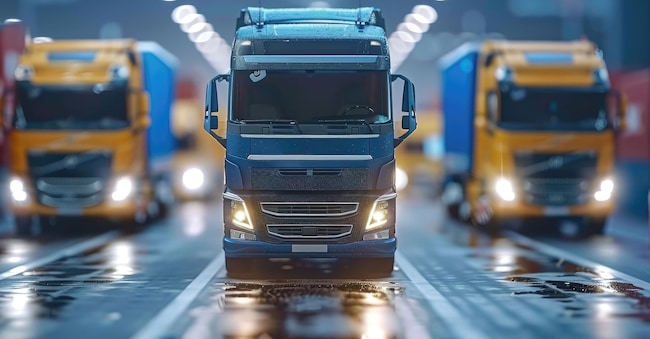
The electrification of heavy-duty vehicles (HDVs) plays a far from marginal role in the transition towards decarbonisation of the transport sector. In this regard, it is therefore essential that the development of the electric lorry market is accompanied by the creation of an extensive charging network designed for lorries, along the main trans-European transport networks and at key hubs for national logistics.
Today, in Italia, the charging infrastructure dedicated to heavy-duty trucks is in full development, with 16 sites already operational and 9 under development, all of very high power and equipped with CCS2 (Combined Charging System) connectors. Thanks to the high power levels involved, electric lorries can recharge their batteries in a time comparable to breaks taken for drivers’ rest and short-duration logistics operations, without disrupting operations, given an average range of around 430 km.
In Italia, around 75–85 per cent of heavy goods vehicle journeys involve stops of at least 10 minutes within the first 100 km, whilst journeys without stops between 100 and 300 km account for around 20 per cent on weekdays and 8–10 per cent at weekends. Journeys of over 300 km without stops are marginal for heavy goods road transport.
The most advanced site in terms of power capacity at present is in Bolzano, where Italia’s first Megawatt Charging System has been installed, capable of delivering up to 1,000 kW, with charging times of less than 20 minutes. Over the next 2–3 years, plans are in place to build further sites, funded under the European CEF-AFIF (Alternative Fuels Infrastructure Facility) programme, which will ensure the creation of a network – comprising motorways and near-motorway routes – a bridge between northern and southern Europe, within a ‘Digital Green Corridor’.
The situation in Italia, on the whole, still lags behind when viewed within the context of the national road transport sector. In Italia, in fact, over one billion tonnes of goods are transported annually, with around 84 per cent of this taking place on roads, and primarily on motorways. This ‘traffic’ is handled by 988,165 heavy goods vehicles (>3.5t) in circulation, which, by the end of 2024, will have an average age of 19 years. Of these, over 70% are fitted with pre-Euro 4 engines, with less than 3% being zero-emission vehicles. This situation also highlights a significant and difficult-to-bridge gap compared with European decarbonisation targets for road freight transport, which is responsible for over 28 per cent of greenhouse gas emissions from road transport in the EU and over 6 per cent of the EU’s total greenhouse gas emissions. For this reason, Brussels has stipulated that by 2030, one in three lorries sold must be zero-emission.
It is against this backdrop that a study carried out by Motus-E has been conducted. By analysing the data and journeys of over 100,000 lorries operating on the Italian peninsula, and by interpolating variables such as traffic flows, journey times and recharging times, has identified the ideal locations for 40 Recharging Areas (RAs) dedicated to heavy goods vehicles: 20 on the TEN-T network (which includes the most strategic links such as ports, airports and borders with high standards of interoperability and multimodal integration) and 20 outside it: these areas would potentially see a daily average of 15 vehicles charging on the TEN-T network and 5 on the non-TEN-T network. The average charging time would be around 50 minutes per vehicle, and the average distance to be recharged just under 300 km.
The study highlights that the development of an efficient charging infrastructure requires particular attention to site selection, as well as synergistic collaboration between all stakeholders, such as the GSE – which contributed to the study – electricity distribution system operators (DSOs) and local authorities. The aim is to optimise integration with the electricity grid and ensure a balanced geographical distribution, enabling transport companies to consider switching to electric vehicles where this already offers a tangible economic benefit.
In parallel with the development of the charging network, it would be very important for Italia to introduce pilot schemes offering exemptions from motorway tolls on the optimal routes identified for zero-emission vehicles, in accordance with European Directive 2022/362, the transposition of which Italia is significantly behind schedule.
A further boost could come from stimulating demand on the client side as well, to ensure that transport operators receive sufficient rates to support decarbonisation, by focusing on tax relief for clients who reduce emissions, tender periods of an appropriate length and bonus criteria linked to CO₂ reduction. Finally, it might be useful to issue binding guidelines for industrial estates, stipulating adequate space for lorries and integrated charging infrastructure as a standard requirement.

