
In Cervinia, the new cable car will reach the Plateau Rosa in 17 minutes – an investment of 200 million euros
The hourly capacity is 3,000 passengers per hour

Key points
- It is an investment of 200 million euros
- Leitner has been commissioned to build the plant
- It will be possible to get to Zermatt even without skis on your feet
It is called Cervino The One, an acronym for “Our New Elevation”. It is a construction site in Breuil-Cervinia, but above all a project worth around 200 million euros that will reshape transport in the Alps and is one of the largest investments in the Italian cable car sector. The project will reshape the link between the village of Cervinia and Plan Maison and Plateau Rosa. It will complement the new lift on the Swiss side, in Zermatt. Once work is complete, the Alpine Crossing will be accessible not only on skis. In other words, it will offer non-skiers the chance to reach Zermatt too.
The start of the works coincides with an anniversary: the 90th anniversary of the first ski lift, which was inaugurated in 1936 thanks to the entrepreneurial vision of Aldo and Dino Lora Totino, together with other Piedmontese entrepreneurs and Luigi Bich from the Aosta Valley. That first cable car gave rise to one of the world’s best-known ski resorts. It boasts a predominantly international clientele, accounting for 85 per cent of the total, with visitors coming from Scandinavia, the UK, the US and Asia.
The construction of the facility has been entrusted to a temporary consortium led by Leitner, a South Tyrolean company and leader in the cableway sector, alongside local firms specialising in civil engineering and infrastructure works (Ivies, Cogeis and IGF).
Mauro Joyeusaz, an engineer and technical manager at Cervino Spa, explains the technical features: “Two separate but interconnected systems. One runs from Breuil to Plan Maison, the other from Plan Maison to Plateau Rosa. The 3S system consists of three cables: two load-bearing cables, which act as rails, and one haul cable. It is 6 kilometres long (1,850 metres on the first section and over 4,000 metres on the second), with a vertical rise of almost 1,500 metres and an operating speed of 8 metres per second (around 29 kilometres per hour).’ The journey time is record-breaking: “Less than 17 minutes (four and a half minutes to reach Plan Maison and around 12 minutes from Plan Maison to Plateau). With a capacity of 3,000 passengers per hour.”
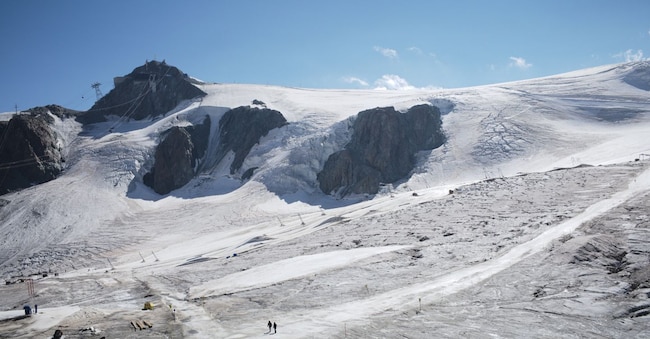
A complex construction project from an environmental, weather and logistical point of view. “The highest station is situated at an altitude of over 3,400 metres,” explains Giorgio Pilotti, Leitner’s Sales Director for Italia. “One of the distinctive features of the 3S system is its high wind resistance. It is a technology that is well suited to extreme weather conditions, whilst also ensuring rapid transport speeds.”

