
A new economy of responses generated by the interfaces of the future
Carlo Noseda, ceo of M&C Saatchi Europe and president of Iab Italia: 'We need a new digital literacy in order not to lose authenticity and critical sense'

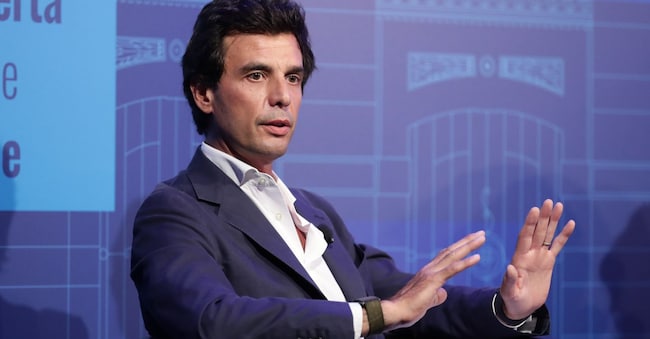
The immense wealth of information that can be accessed with the Internet continues to grow. The amount of people and organisations contributing to it has long since exceeded half the human population. And the share of information stored digitally has exceeded 98 per cent for at least ten years, according to Martin Hilbert of the University of California, Davis. But the most profound changes concern how that information is used. The interface may seem less important than the content, but it has the power to shape knowledge. The conversational interfaces of artificial intelligence have already radically changed the way available information is used. The first answers offered by Google's search engine are generated by AI. And the release of OpenAI's Atlas browser is a further step in the direction of a radical change in what used to be called online 'navigation'. Il Sole 24 Ore spoke about this with Carlo Noseda, ceo of M&C Saatchi Europe and president of Iab Italia.
In fact, the transformation introduced by artificial intelligence is paradigmatic. "We grew up looking for information," Noseda recalls. "We used to go to the library. We would leave the house to consult books, knowing what we wanted to find. And choosing the best sources. Even with the advent of the internet, search engines have allowed us to follow the same path. But artificial intelligence is dramatically different: we do not search but ask'. Because AI is so eloquent, it feels like talking to an expert on everything. "The prompt is a question. It is no longer necessary to know how to search. It is strategic to know how to ask the question. And when you get the answer it is one, very elaborate and seemingly so complete that it seems like an absolute truth. Many are unprepared".
Change is only just beginning. "Every day 13.7 billion searches are made on Google's search engine, according to Digital Information World, up 4.5% year on year. Only one billion are made on ChatGPT, but these are growing by 100 per cent per year'. If this continues, searches on ChatGPT will overtake Google in four years. "And so companies will ask themselves: how do I get found by people using artificial intelligence? What is ChatGPT thinking about? How do I fit into its choices? It used to be that 'seo', optimisation of online presence for search engines, was enough. Then there was 'geo', or 'generative engine optimisation'. Finally we need 'aeo': 'answer engine optimisation', i.e. the optimisation of the digital presence for the machines that produce answers to the public's questions. This is not easy, as we do not know exactly what path information takes in the neural networks of generative models.
This ignorance leads the public to cautiously trust searches made with AI. For example, only 19% use them to access news and 12% to find health-related information, according to Adsby, and 24% to learn something practical. According to McKinsey, more than 60 per cent of consumers, on the other hand, have no particular problem trusting the information that AI offers on products. Users are, however, more willing to believe it if they see citations supporting the claims, according to AllAboutAI, at least 66% of the time, even though only 27% then click on links leading to the documents cited by the AI. These behaviours produce consequences that are already visible. "In general, publishers report a drop in visits to their platforms that is also significant. This is understandable. Artificial intelligences are convincing and eloquent enough to reduce the need to click on links. After all, the hours of the day are limited,' Noseda observes. 'For companies, it is a matter of learning how to relate to these models. There is certainly no going back. "It may well be true that it was a gamble to make this technology available to everyone. But it is now done. The Americans will not stop in order not to lose ground in the competition with China. And the damage will not be avoided by laws. Polarisation, energy and water consumption, are consequences that are difficult to limit. A very strong strategy is needed to educate everyone. Also because the benefits are important anyway'
In the creative world, generative artificial intelligence is now a companion. "We amplify the quality of work. We understand faster whether an idea is good or bad. We change advertising content in relation to contexts easily and effectively. What counts is relevance. In the past we took months to make the strategies, months to implement the campaigns, months to evaluate the results. Today we do it much faster. But are we doing better?".


