Face to face

A new joie de vivre. The Blazy effect: change with a smile

Chanel's artistic director reinterprets the maison's codes far from intellectualism and pleonastic citations. As agile as a tightrope walker between the need to innovate and the imposing attraction of heritage.

by Jo Ellison

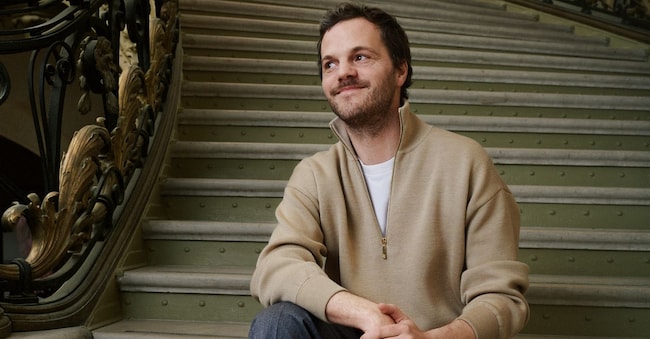
Il direttore artistico di Chanel, Matthieu Blazy, al Grand Palais di Parigi, dove sfila la maison. ©Indigo Lewin

11' min read

Translated by AI
Versione italiana

11' min read

Translated by AI
Versione italiana

If anything has characterised Matthieu Blazy's tenure at Chanel so far, it is certainly the smile. Starting with the one on the face of model Awar Odhiang, who concluded the designer's debut show last October: walking lightly among the colourful planets suspended in the Grand Palais, in a white silk T-shirt and a piña colada model skirt, she flashed her broadest smile and, treading that catwalk with her cosmic energy, can be said to have ushered in a complete change of mood.

It was what is called momentum in the fashion industry and the climax of a season that saw the debut of more than a dozen designers. The anticipation for Blazy's vision had reached a crescendo long before the revelation of his show among the planets. Then it was magic again, in December, with the presentation of Métiers d'art in New York in an abandoned underground station. The collection - striking and elegant that even included a Superman jumper - combined savoir-faire and humour.
Loading...

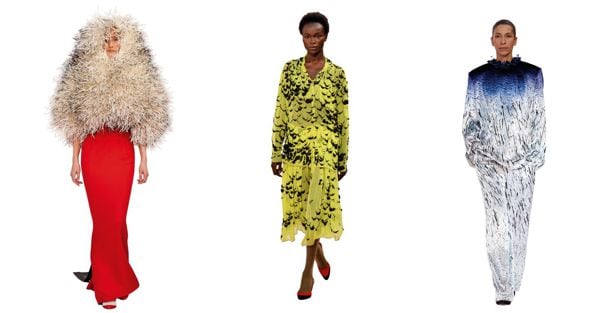
Da sinistra, giacca ricamata di piume con cappuccio, abito in crêpe; blusa e gonna in chiffon con piume e 170mila perline in vetro (ricami Atelier Montex, applicati a moduli); top e pantaloni in velluto a colore degradante con ricamo di Lemarié a treccia di piume. Tutti i capi di questo articolo sono CHANEL Haute Couture P/E 26 e i prezzi sono su richiesta

The French-Belgian designer, 41, did not initially seem the favourite in the race to head the maison, founded in Paris by Gabrielle Chanel in 1910, but according to Bruno Pavlovsky, president of Chanel haute couture and fashion, there was no competition. "From the first meeting, the way he talked about the brand, about Coco and what Chanel could mean, left us in no doubt," he explains. Blazy's role as artistic director is not in the area of beauty, jewellery and watches, but as the main figure of reference for the public, his influence is also strong in this world. Chanel is a maison still privately owned by the Wertheimer brothers, a large empire with revenues of $18.7 billion in 2024. For 36 years the creative leadership was in the hands of Karl Lagerfeld: now Blazy has been given the task of writing a new chapter and redefining the codes, deeply respecting the brand's heritage, as Pavlovsky points out.
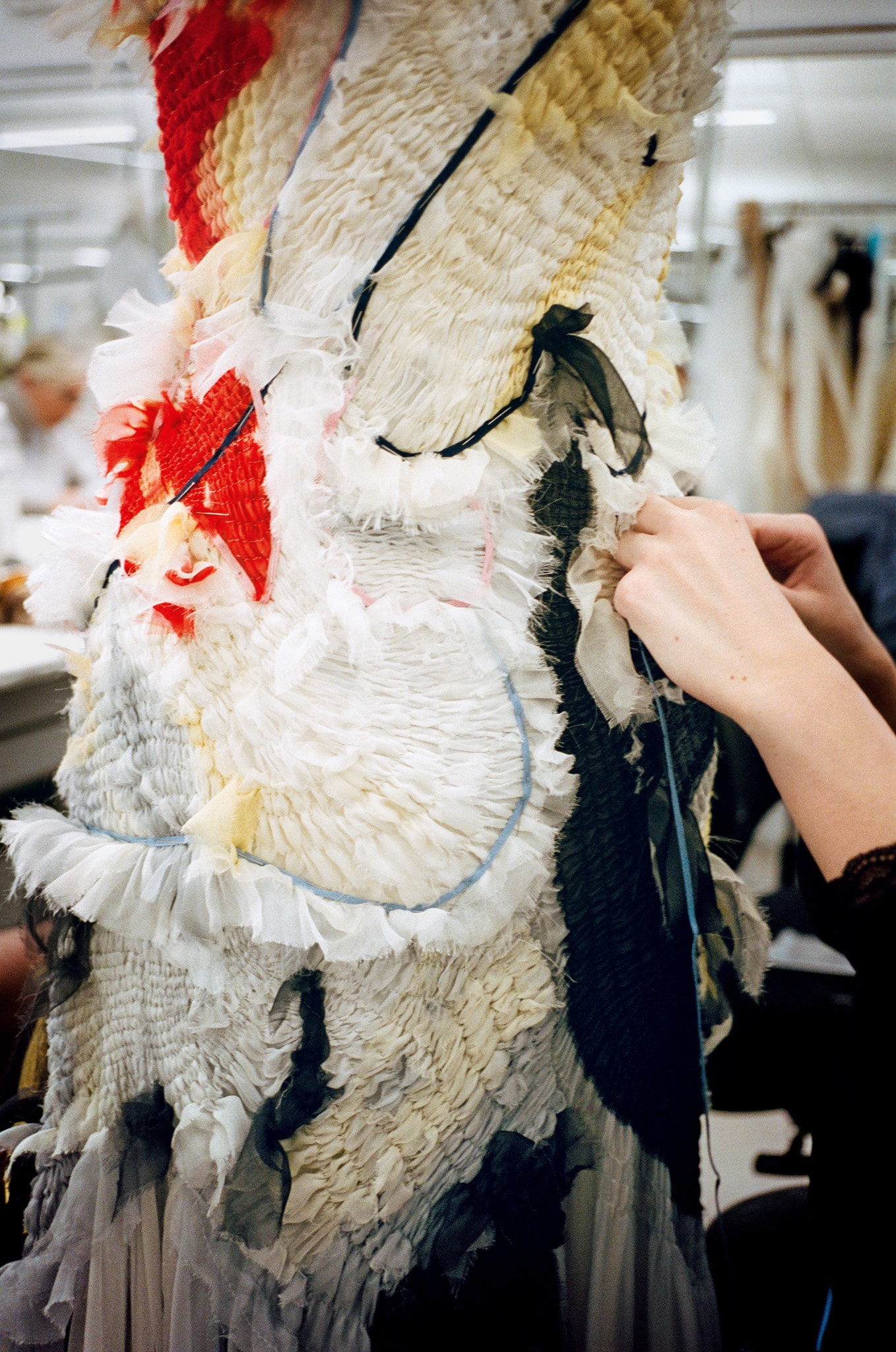
Nel backstage della sfilata, un dettaglio dell’abito di chiffon a sette strati applicati a punto. ©Indigo Lewin

In January, the designer also debuted with his first haute couture show - amidst creations of impalpable muslins in shades of pink, mushroom motifs and lots of romanticism, all to the tune of Nelly Furtado with a few cartoon birds here and there. "Matthieu's work is marvellous and his designs are incredible: from the fabrics to the silhouettes, it is divine," comments Nicole Kidman, who since 2004 - initially as the face of the N°5 perfume - has been linked to the maison. "Light, free, natural, vital, essential and joyful," echoes Tilda Swinton who, almost diaphanous, wore a gold-spun bouclé suit at the fashion show, with the hem finished in raw raffia. "There's humour and energy in these clothes, there's something magnetic about them," she said. Could it be that after seasons of austere, cerebral and silent luxury, fashion has now rediscovered joy?

I meet Blazy in his studio a few days before the haute couture debut. Calm, charming, looking perhaps a little tired, he wears his personal designer uniform: jeans, trainers and a navy blue jumper he designed himself. The jumper also opened his Métiers d'art collection, an extremely simple garment that one would not expect to find at Chanel. "I love it," she explains, smoothing the seams on the sides with her hands. "I wear it every day."
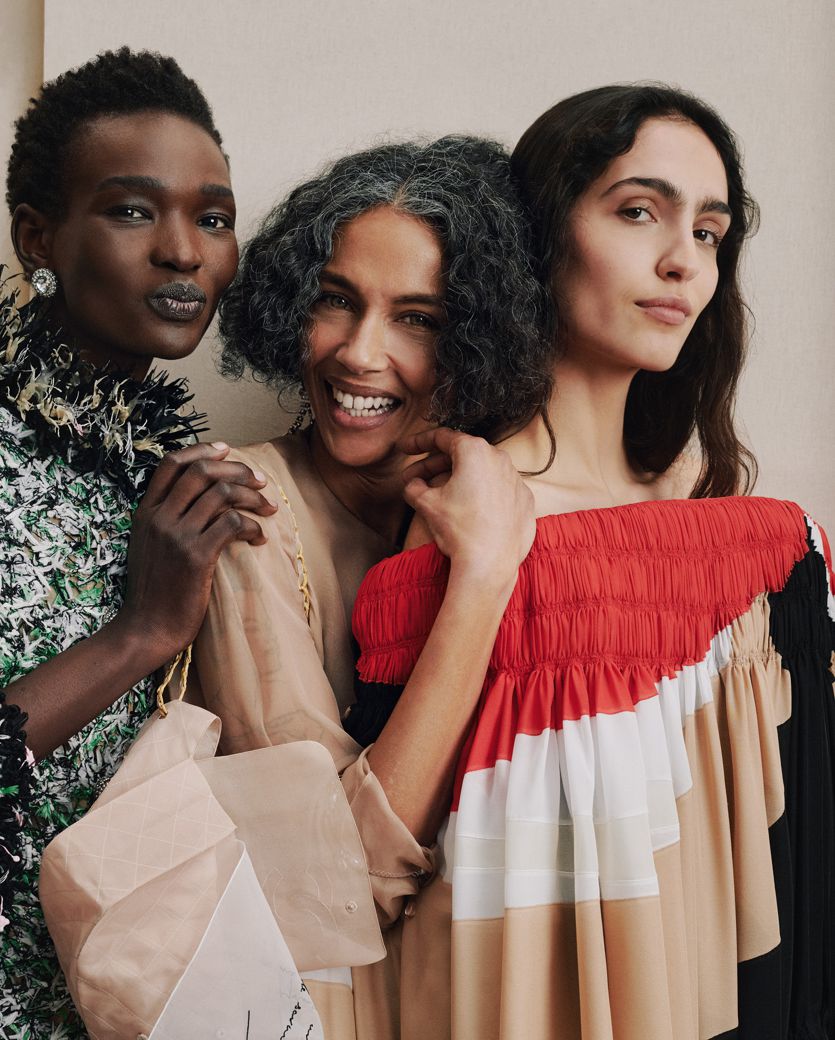
Da sinistra, cappotto intrecciato a tre colori con filati fantasy in garza di lana; abito in chiffon di seta con profilo a catena e perle, borsa morbida nello stesso tessuto effetto trapuntato; mantella in charmeuse di seta con motivo arricciato punto smock. ©Indigo Lewin

Even if he was responsible for the new serotonin spike in fashion, he is too modest to take credit for it, but he seems happy to have introduced a little levity into a rather gloomy world. "It all started when I watched a documentary on Fred Astaire," he explains. "I thought it was incredible to see someone so full of joy - really able to entertain the audience - and at the same time so knowledgeable. Often the modern is in danger of becoming a bit cerebral, but I think you can say something funny and be very serious at the same time."

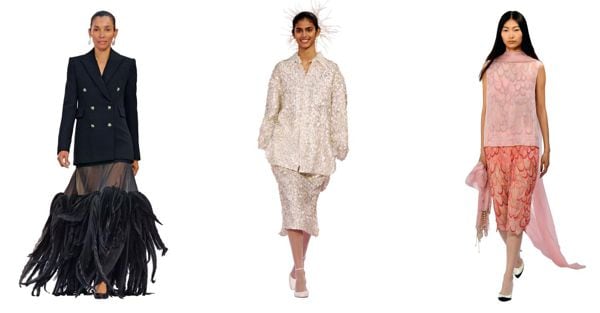
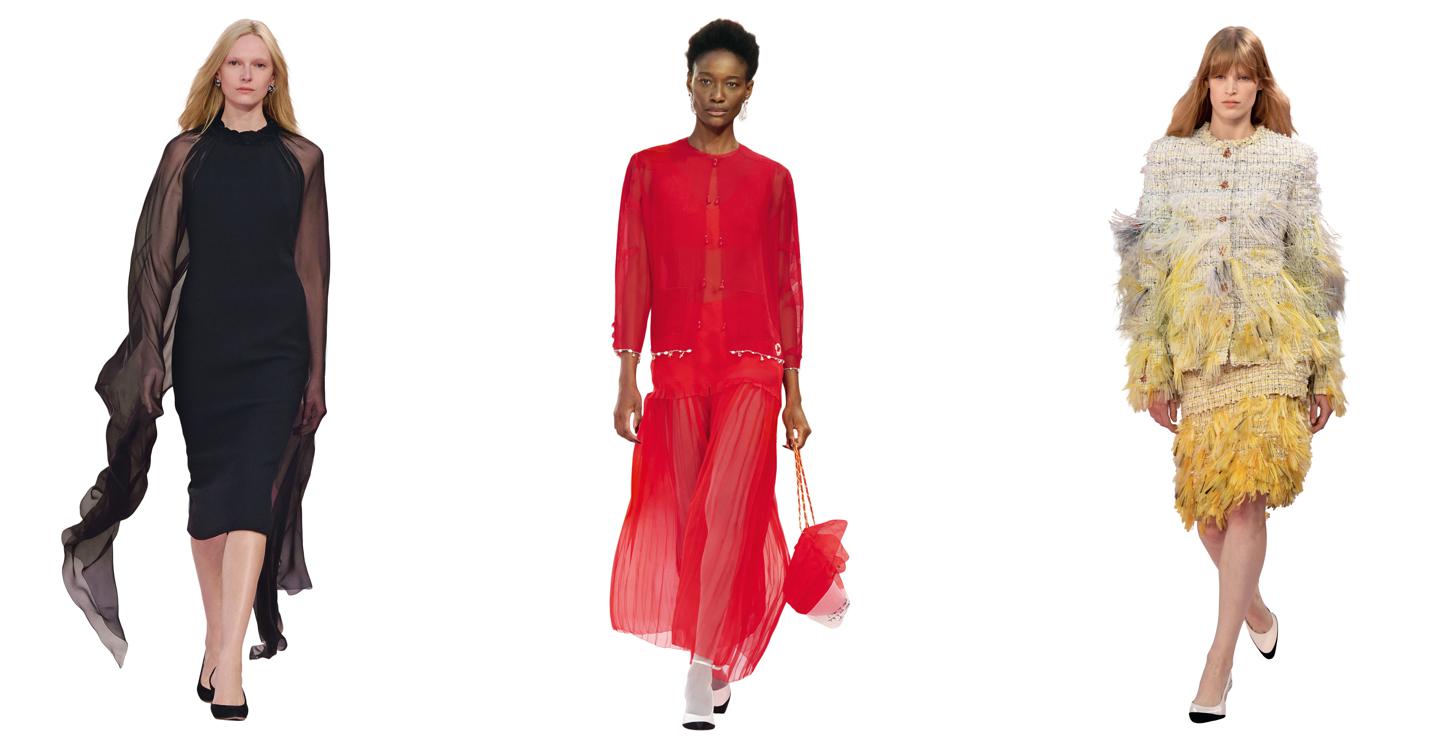
Da sinistra, abito in crêpe di lana con un tulle impalpabile, orecchini con strass e slingback in pelle scamosciata; giacca profilata di perle e cristalli su abito in chiffon con pieghe ispirate ai dipinti ottocenteschi di Watteau, realizzate da Lognon, e borsa coordinata morbida; tailleur in tweed con bottoni gioiello e frange sfumate, intarsiate a mano da Lesage.

Certain words - funny, playful, cute - are used with caution in fashion, especially when it comes to matters of contemporary style. Blazy uses them all with a disarming confidence devoid of intellectual smugness. "I like the idea of doing something cute," he says for example, showing me a glittering earring depicting a little bird suspended on a bar (a reference, perhaps, to Jean-Paul Goude's famous 1991 Coco perfume advertisement). "It has become almost a vulgar term in fashion, but I like to say cute, as well as playful and even gracious. I also use the word nostalgia, because I am an incurable nostalgic."

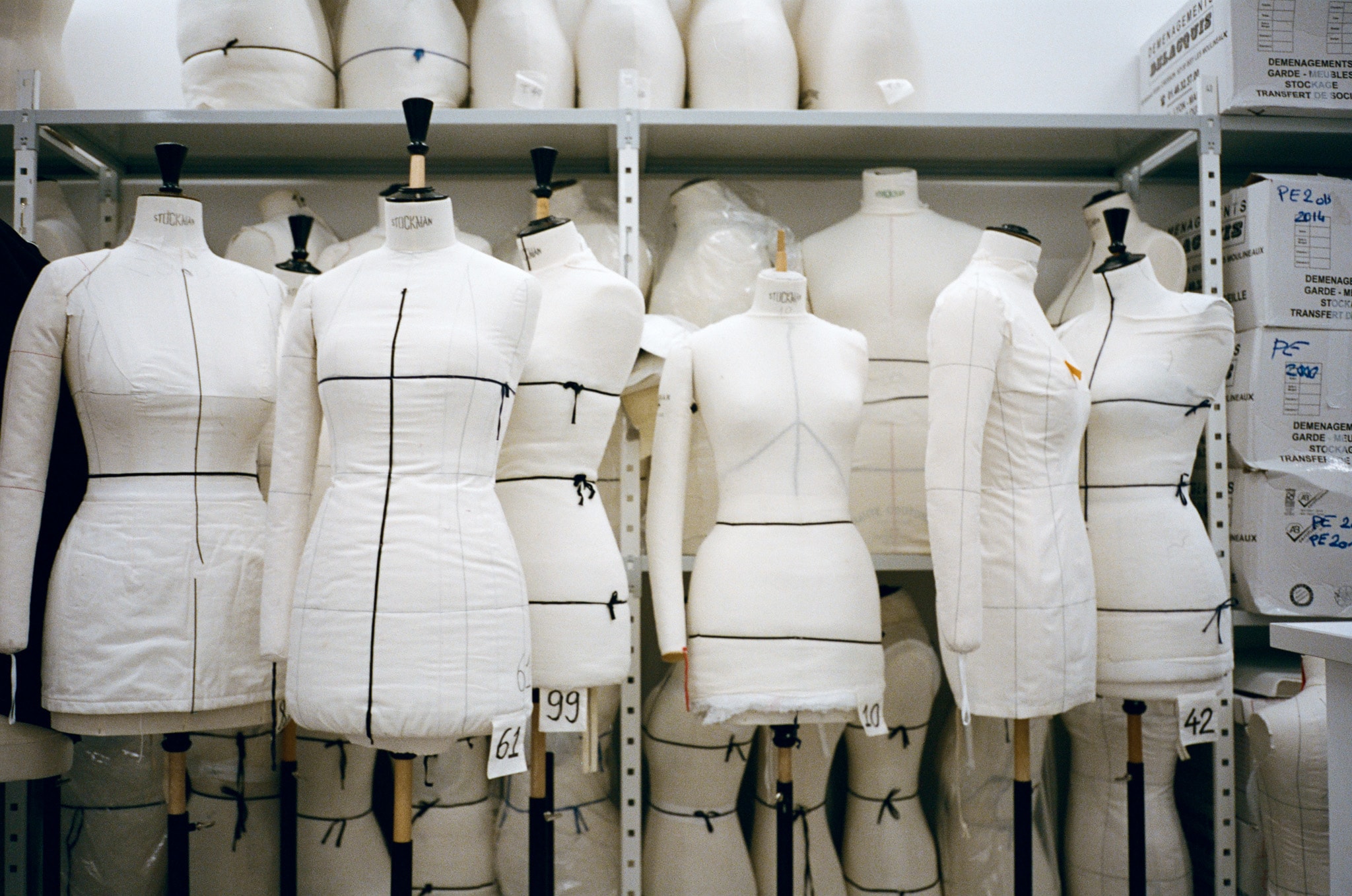
Manichini usati nell’atelier, numerati con le singole silhouette. ©Indigo Lewin

Blazy was born in Paris in 1984. His father is an expert in pre-Columbian art and his mother an anthropologist. He has an older brother and a twin sister. The family travelled a lot and the Blazys were always encouraged to love art as children. "Not in a didactic way, we had a lot of choice. I remember when we used to go to museums, we were free to wander around on our own,' she says thinking back on family trips.

He studied at the prestigious La Cambre in Brussels and worked at Maison Margiela, at Celine, under the direction of Phoebe Philo, and with Raf Simons at Calvin Klein. He became creative director of Bottega Veneta in 2021, where he earned a reputation for his exceptional craftsmanship and his predilection for trompe l'œil. He often proposes garments that are seemingly ordinary but actually extraordinary, provoking a moment's hesitation, such as a nappa flannel shirt or silk denim. "I am Belgian, I have made Magritte's adage This is not a pipe my own: I think it succeeds in engaging people, I like the idea that they take a second look at things".

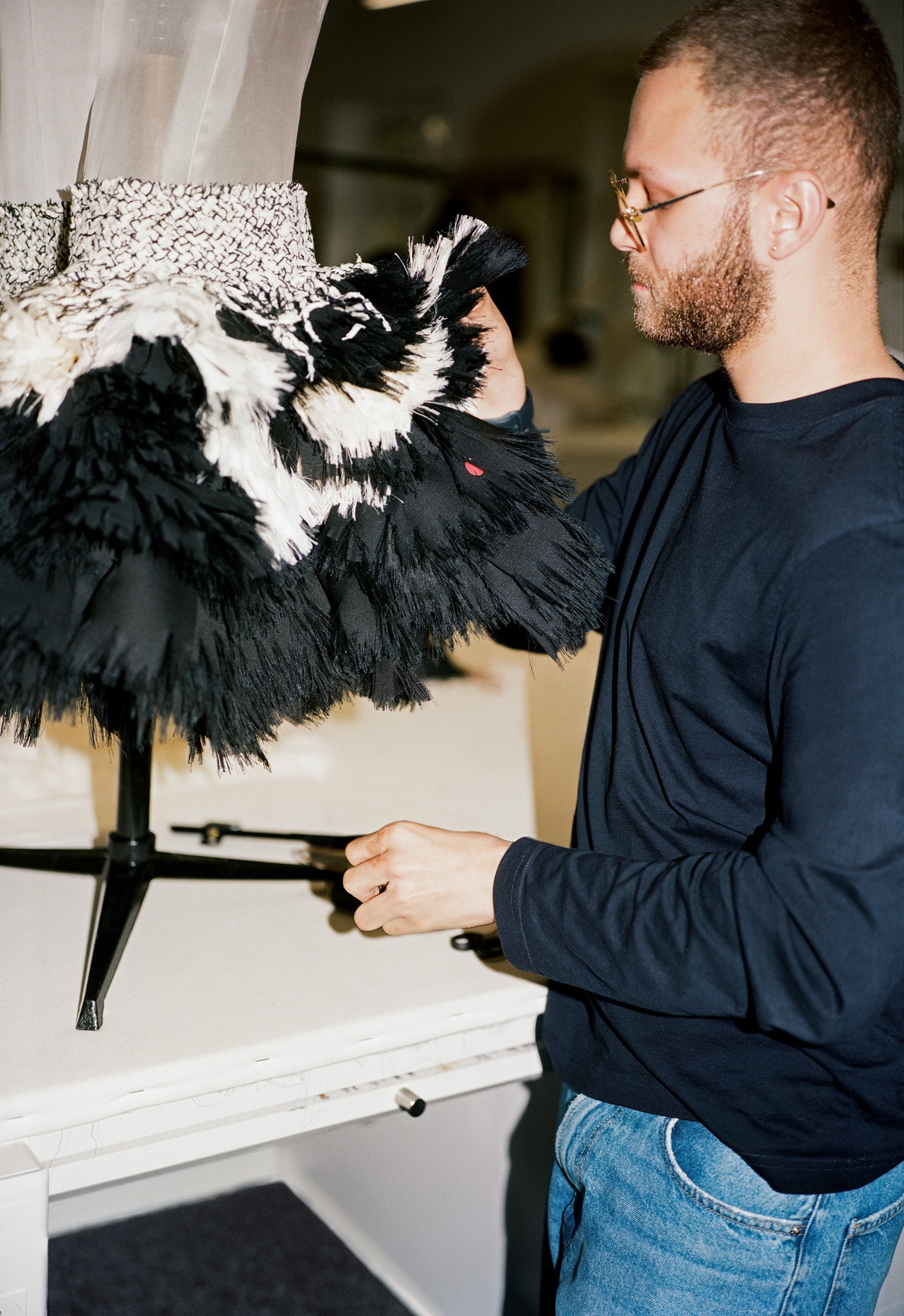
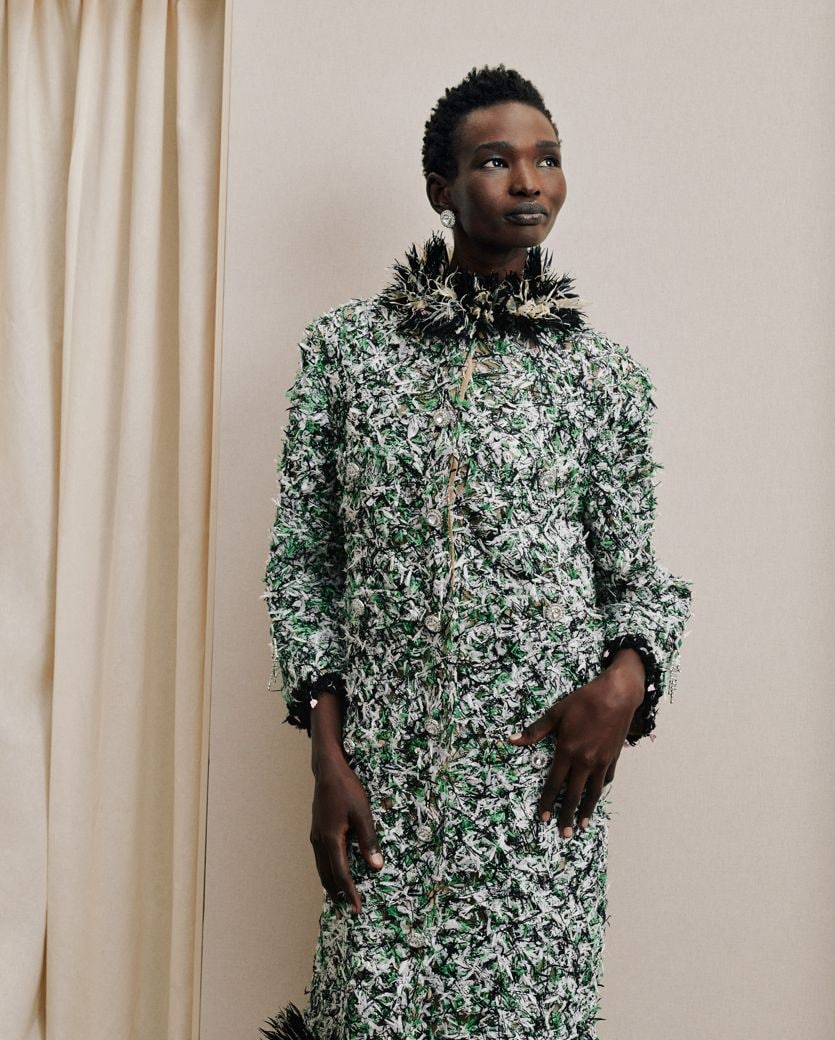
Un particolare del fondo bicolore della gonna in tweed intrecciato in gazar di seta, con intarsi effetto piuma sfrangiati irregolarmente a mano. ©Indigo Lewin

Today, his studio is set up for fittings of haute couture dresses. Five or six looks are arranged on mannequins, there are shelves overflowing with jewellery, a few pieces of lingerie in sorbet colours and shelves full of shoes. Unlike many other collections, this one was created without sketches: "We arrange the clothes directly on the models who will have to wear them," explains the designer, at his first ever haute couture show. "It is an extraordinary process, but the magic only happens at the end".

An expression of exclusivity among Chanel's collections, haute couture serves only a few hundred customers and showcases the skills of the atelier, along with the 60 Maisons d'art and manufacturers - including Lesage and Atelier Montex (embroidery), Lemarié (feathers and flowers) and Massaro (shoes) - all with specialist knowledge that the brand intends to preserve and protect. They may seem niche, but their cultural value is enormous, the creative apex of the brand.

Parte della lavorazione del mantello con arricciature a punto smock. ©Indigo Lewin

In this scenario, Blazy has to walk a tightrope, respecting the traditional codes on which the house has built its fortune, but at the same time infusing them with something new. "The first time I consulted the archive, I felt overwhelmed," he says. "There were so many interesting pieces that I was paralysed. Then I took a step back and started reading books that talked about certain aspects of Gabrielle's personality that have not yet been part of the myth promoted by Chanel to this day. For example, I discovered that she loved animal prints'. This knowledge gave him the confidence to explore some new territory, and so now Blazy is playing with proportions to make them softer and expanding the colour spectrum outside the traditional black, white and beige.

"You don't need to reinvent the classic slingback or the iconic 2.55 bag," he says, referring to how daring he can be. "But maybe we can look at everything from a different perspective: being modern doesn't have to mean being disruptive and crazy. All it takes is a small gesture, a small change of direction'. Maybe cut the legendary Chanel jacket down the middle line, as she did for her opening look at the ready-to-wear show? It seemed like a grand gesture. He smiles. 'But it was a simple idea. It's very easy to make clothes that provoke a screaming wow! It's quick and you win right away. I'm interested in clothes that don't scream, but are absolutely well made,' he says, lowering his voice, as if Coco could hear him.

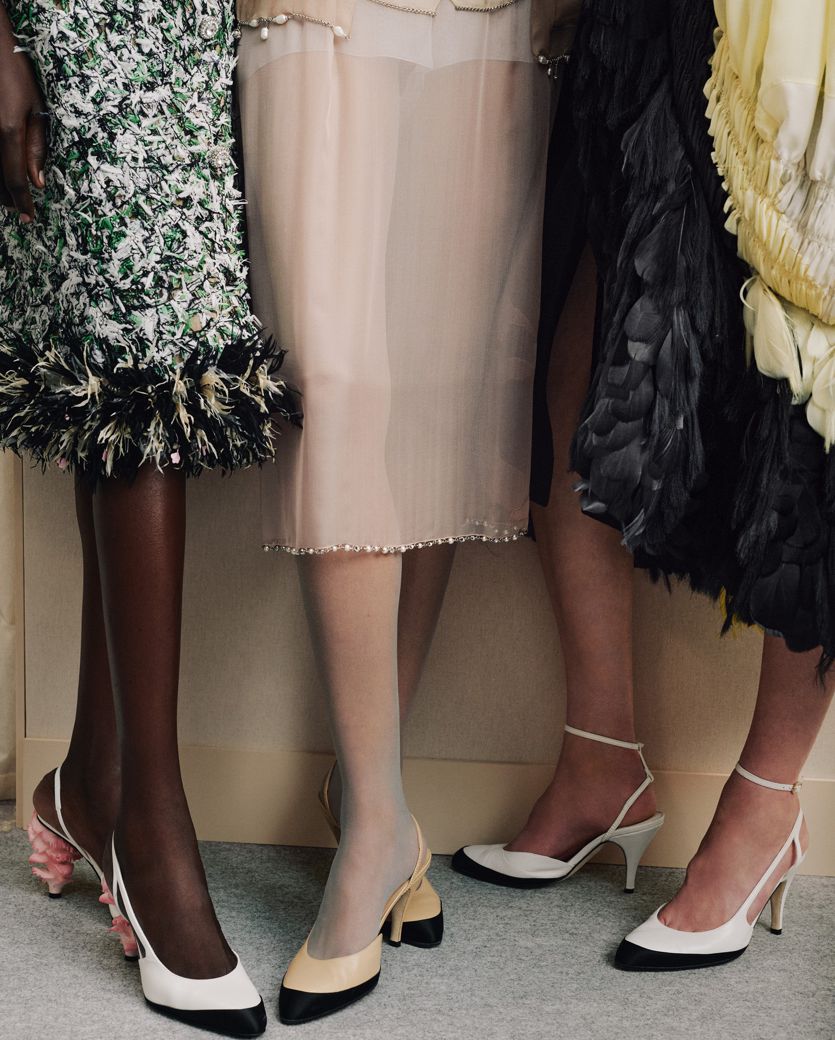
Le slingback bicolore in pelle e camoscio. ©Indigo Lewin

The haute couture show at the Grand Palais began with a vision of a bird perched on a mushroom, an apparition Blazy had had during a trip to the Pyrenees and which refers to his idea of Chanel women as a global flock. "Birds are free, they have a different point of view, I thought it was a good metaphor to talk about Chanel fashion in general. I wanted to create something that was truly universal and could be understood by everyone." He was concerned about how to render the airy lightness of birds: "I challenged the atelier, 'Can we make Chanel in muslin?' Muslin was not considered a sophisticated fabric until Chanel itself gave it prominence in the 1920s. Blazy wanted to go further. "Can we do everything, even suits?" she recoiled. Her first look was the classic Chanel skirt suit, reinterpreted in a powder pink weave, embellished with pearls and accompanied by a 2.55 muslin bag with a gold thread braided shoulder strap. In the bag were muslin letter bags, each embroidered with personal messages from the women who walked the runway. The idea was nostalgic, romantic, but it also demonstrates an infallible commercial instinct: it picks up on the custom whereby haute couture customers are invited to choose from a 'repertoire of symbols' so that they can embroider their own story within the looks. A gesture that reduces the icons of the maison to their most essential elements, at the same time recognising them as presences that support and, at the same time, inhabit the house like spirits.

There were also bolder gestures. In the studio, Blazy points out to me a jacket and skirt composed of tiny ovoid panels, similar to a bird's plumage, in a weave of pale arsenic yellow and grey. "I love it. All the pieces are hand-dyed and then hand-cut. The aim is to make them look like a beautiful pigeon. I also like the colour. It looks a bit sick, but in a good way."

That of the sick pigeon may not be the kind of image Chanel would use in sales, but this piece represents Blazy's desire to shift the parameters of taste. 'One can act prudently, following the code, the Chanel guidelines, which are very clear. Or one can dare, sometimes fail and then reflect. Without risks there would not even be a creative process, it would be a recipe. I like challenges: I prefer to pursue an idea and explore. And, if it doesn't work, at least we tried".

Despite the great hype that accompanied his first releases, it is difficult to quantify the Blazy effect. Its first collection has just arrived in boutiques. In 2024, Chanel's revenues fell by 4.3 per cent, in a period of rather weak sales felt by the entire fashion industry, but Pavlovsky reported that the numbers improved in the second half of 2025, after the ups and downs of the previous year: 'We don't live in a normal world: as everything is unpredictable, you have to adapt, but what we can observe is certainly a return of many customers to boutiques, including in the US and China. Recently, we organised a retail summit with half of our top boutique managers and sales teams. I was asked to say a word to conclude the conference and I chose confidently. Yes, we must, despite everything, be confident,' Pavlovsky points out.

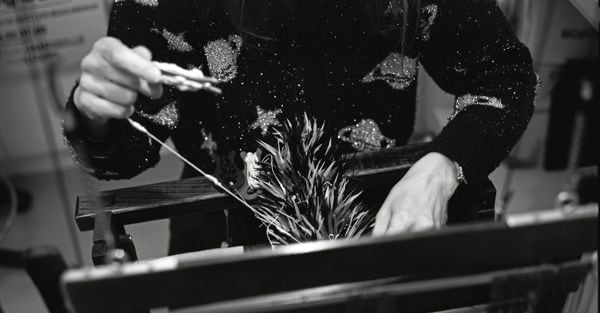
Telaio dell’atelier Chanel. ©Indigo Lewin

Another topic: the brand has been criticised for becoming too expensive, with the price of bags having more than doubled since 2016. "We are working hard with Matthieu to build the right assortment for the boutique. It's not about being expensive or cheap, it's about finding the right price for each product. Chanel is not cheap, it will never be cheap, but we don't have to be super expensive either,' Pavlovsky comments.

The Blazy effect is on the rise and many of her outfits have ended up on the red carpets: according to Launchmetrics, which measures the performance of different brands, her dress for Selena Gomez at the Golden Globes was worth $7.2 million due to the media impact, both for the actress and the brand, outperforming all the other extras at the event. Michelle Obama wore a Chanel jacket and balloon earrings to promote her book The Look. And the fact that A$AP Rocky is one of the brand's most recent ambassadors gives hope that (perhaps, one day) a menswear line will also be created.

"In the last four months Chanel has seen a 47 per cent growth in the search rate on Re See," explains designer and co-founder of the vintage platform, Sabrina Marshall. "This is a huge figure in the second-hand market: Matthieu Blazy has awakened a new desire for the brand." Tami Kern, founder of Kern1, an online shop that resells rare Chanel jackets, also pre-loved, has noticed a similar spike in growth: 'It's not just that customers are suddenly buying more, it's more specific: I see both new buyers following Matthieu Blazy and what he stands for in general, and historic customers looking for items that echo his style cues. For example, Blazy introduced grey as a new shade, as if mixing the fashion house's historical black and white codes, and customers responded immediately. I saw the same effect with the Métiers d'art show: they asked if I had vintage Chanel models with animal motifs. The red jackets, which had been in stock for some time, suddenly disappeared from the shelves. Lately, then, I notice interest in buying total looks: Blazy has made the suit important again'.

Cappotto multicolore in tessuto lavorato con fili a treccia e bottoni in cristallo. ©Indigo Lewin

The designer's day with his team starts at 9.30 am. "First I do my research and printing, then it's all about clothes, shoes, bags: from 9.30 am to 7.30 pm I work on the product. At 7.30 pm there is the last meeting, and then I have time to myself,' he explains. What does he do in his spare time? 'I travel to southern Italia, where my partner (an artist whose name he prefers not to say, ndr) lives. In my first year here, I actually didn't go very often, but if I'm not working, I generally like to travel out of town. Or I go to galleries and museums, or walk in the park. I relax watching my partner do gardening, just as I enjoy going dancing. I am busy, but when I am not creating, I go back to places that give me stability: I like to visit my grandchildren, for example'.

If the weight of expectations upsets him, he hides it well, but he admits to feeling the pressure: 'Especially when I am not at work, at night for example, I feel it: it is enormous,' he confesses.

Da sinistra, doppiopetto in crêpe di lana con bottoni gioiello e abito coordinato con pieghe in organza e chiffon effetto piuma realizzate da Lemarié; camicia e gonna in organza ricamata con paillettes e foglie perlate (920 ore di lavoro e circa 10.680 elementi ricamati), spilla a forma di uccello con strass e perle; top e abito in chiffon con motivi ricamati a catenella da Lesage e ricami di Lunéville, stola in chiffon.

On the other hand, Pavlovsky is extremely convinced that he has to give Blazy enough creative oxygen. The designer oversees ten collections a year and the manager wants to give him the space he needs. Chanel seems rather considerate towards him, especially at a time when designers' careers are more precarious than ever before in history.

"I have worked in a lot of fashion houses, but here there is a culture that I find extraordinary and this certainly depends on the people who run the brand. It's a reality where I don't feel alone at all, we can talk about everything, about what works and what doesn't. The day-to-day relationships are pleasant and I can definitely say that ours is really good teamwork. I lead, but there are many of us on this journey'. Pavlovsky confirms: 'Our conversations are concrete, direct. What he is doing now is helping Blazy address the 'gap between creating a collection and earning billions from that collection: you don't achieve certain financial results if you don't have a certain direct impact in the boutique. We talk a lot about creation, because it is the beginning and the impetus of everything, but we have 270 stores around the world to think about. I have faith in Blazy, he is a good student'. And while he does not feel directly responsible for the final impact, he is still 'a very active part of the dialogue every day'. Success can be scary, as much as failure, when you have to meet and exceed expectations. Blazy's career is soaring, he has opened doors and let in a breath of fresh air: his Chanel is joyful and unexpected. This absolute master of technique may be the Fred Astaire of fashion, but his is a complicated choreography. 'I feel the pressure,' he repeats, then nods to indicate his entire studio. "But there's good news: I love my job."

Copyright reserved ©
Loading...
Loading...

Newsletter

Notizie e approfondimenti sugli avvenimenti politici, economici e finanziari.

Iscriviti