
A new Urban Renewable Energy Community is born in Turin
The objective is to make the governance processes of the energy transition more inclusive, with particular attention to the territory of the Piedmontese capital and its metropolitan area
3' min read
3' min read
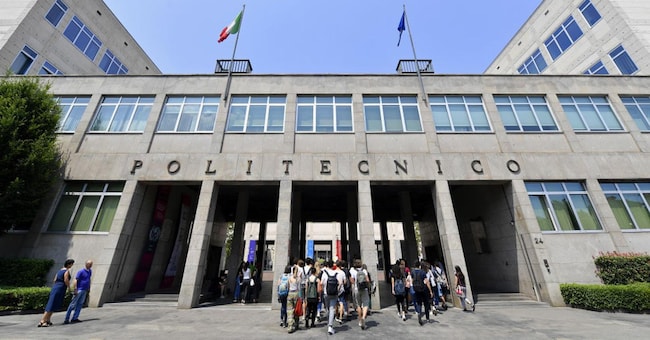
Politecnico di Torino and OGR Torino will set up a Renewable Energy Community (REC) that will be born in the heart of the city, between the buildings of the Politecnico di Torino campus and the former Officine Grandi Riparazioni. The initiative will promote the exchange of energy between the Politecnico campus, the OGR complex and the surrounding utilities and buildings. The aim is to make the governance processes of the energy transition more inclusive, with a focus on the territory of Turin and its metropolitan area. The ambition, starting with the city's public and private institutions attentive to the issues of energy and digital transition, is to involve other players in the area and, above all, citizenship, including the student population and companies residing at OGR Tech, the OGR Turin hub dedicated to innovation.
Ok to CERs
.With the approval of the GSE's Operating Rules at the beginning of 2024, the transposition process of the European RED-II Directive was completed and CERs can now be concretely realised, thanks to incentives for shared energy within the perimeter of primary distribution substations and - for municipalities with less than 5,000 inhabitants - a non-repayable contribution of 40 per cent of the investment in renewable energy plants. These measures allow new renewable energy plants to be built in a cost-effective way, especially if the plant enters a well-balanced CER.
The requirements
.Building an ERC also requires multidisciplinary skills and adequate technical management capabilities. The CERs will then have to be managed using digital systems, even complex ones that include, for example, Artificial Intelligence, especially as of 2025, when the rules of the electricity market will begin to change in an increasingly dynamic perspective and with greater inclusiveness of individual and small consumers and producers who will be able, for example, to aggregate to provide services to the grid. The area occupied by the Campus of the Politecnico di Torino and the OGR therefore represents an ideal territorial ecosystem for the establishment of a CER, since significant electricity consumption (teaching facilities, laboratories, student residences, commercial activities, cultural initiatives, and housing) coexist with surfaces capable of hosting photovoltaic systems. Moreover, it is also an ecosystem of competences with an active community of lecturers, researchers, students, innovative start-ups, SMEs and large enterprises, coordinated by the Politecnico and OGR Turin, and which will contribute to ensuring the dynamic management of the CER system, also developing new services and experimenting new technologies, especially storage, in the field.
In September the constitution
The 'POLITO/OGR Torino' ERC, which will be set up in September, will be fully inclusive of municipalities, businesses and citizens who wish to set up CAUs (Configurations of Self-consumption) in the area, and synergies and collaborations will be possible and desired with other ERC initiatives in the process of being established. "In line with the strategy of this rectoral mandate, the establishment of CER together with the OGRs enhances, on the one hand, our excellence in research and innovation on energy transition issues," said the Rector of the Politecnico di Torino Stefano Corgnati. "On the other, with this initiative, in full synergy with OGR and with the coordination of our Energy Centre, we will offer a concrete example to our territory of how energy communities can contribute to a greener, sustainable and inclusive future.
For Professor Romano Borchiellini, the Rector's contact person for the Energy Center, "the economic benefits generated by the CERs, in addition to remunerating the energy producers, will be partly allocated to energy consumers, thus alleviating their energy expenditure, and partly to actions in the social sphere also through the provision of services to members of the community".
Brand connect


Newsletter Scuola+
La newsletter premium dedicata al mondo della scuola con approfondimenti normativi, analisi e guide operative
Abbonati