
A password isn’t enough – you need a dedicated adviser
In 2025, bank fraud resulted in losses of 269 million euros, 17.4 per cent more than the previous year.

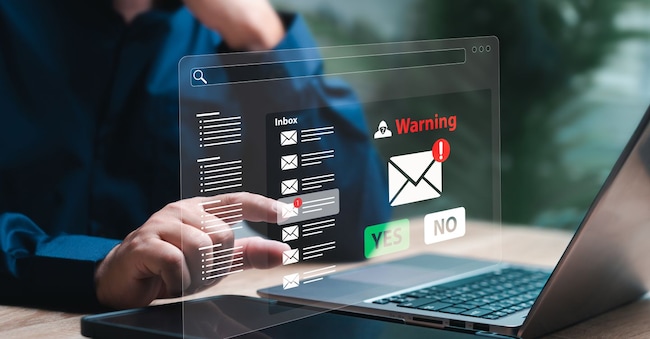
Phishing, smishing, vishing, spoofing: it sounds like a magic spell. It’s just a pity that the only magic involved is making money vanish from bank accounts. These digital traps have now woven an ever-tighter web into which a growing number of people are falling, regardless of age, gender or educational background.
The level of sophistication achieved by fraudsters is now such that it is sometimes virtually impossible to tell who is really on the other end of the smartphone or who is writing a seemingly credible email. Even phoning to verify the other person’s identity is not a safe bet because, to make everything seem more credible, they have even gone so far as to falsify the number that appears on the display.
The paradox is that, after years spent persuading customers to do everything themselves and avoid the counter, the need for security might bring them right back there – provided, of course, that the branch has remained open in the meantime. In short, having learnt to make a bank transfer in a matter of seconds, we must now be wary of anyone who asks us to do so just as quickly. It would undoubtedly be safer to revert to the old habit of meeting and speaking to someone whose identity we can verify without first having to obtain a master’s degree in cyber security.
And it is precisely the statistics on fraud that help us understand why the temptation to return to the past is sometimes so strong: according to an analysis by Fabi based on data from the Postal Police, in 2025 bank fraud resulted in losses of 269 million euros, 17.4 per cent more than the previous year.
Banks, for their part, have invested heavily in making transactions ever faster and more accessible, and have long been advising account holders on the precautions to take; yet this is clearly not enough. It must be made just as easy to quickly verify the identity of anyone contacting us, even without having to visit a branch. For example, when the bank calls (toll-free numbers never ring, anyway) or writes to report a problem with an account, it could immediately leave a record of the communication in the secure area of the online banking portal. The customer would simply need to log in as usual to check in real time whether that phone call or email actually came from the bank.


