
A perfect troublemaker shaking up Turin's sluggish economy
"Collectors keep the world in order. Some have almost philosophical pretensions and interpretations of reality through the catalogue of things possessed and things desired. All, however, have a natural instinct to respond to chaos.

6' min read
6' min read
"Collectors keep the world in order. Some have almost philosophical pretensions and interpretations of reality through the catalogue of things possessed and things desired. All, however, have a natural instinct to respond to chaos. Grain by grain. Like facing the sea of time. With the sand of yesterday, today and tomorrow. It happens to me with motorbikes. Which are beauty, technology, history. And, to understand the experience of those who have gone before us, I choose to ride the same roads as a hundred years ago, dressed in the same clothes as a hundred years ago. To experience the same poetry of discomfort and adventure'.
Chiara Grom Negro - in the universe of those who love engines and antique art, design and numismatics - is one of the world's largest collectors of vintage motorbikes. In Italy, she is the only woman to have a collection with a considerable number of pieces and a considerable overall cultural and financial value. Today she has about fifty examples, including a Vincent Black Shadow (about a hundred remain in the world, hers is from 1948), a Delage (three in the world, hers is from 1917) and a 1959 BSA Gold Star Catalina (ten in all).
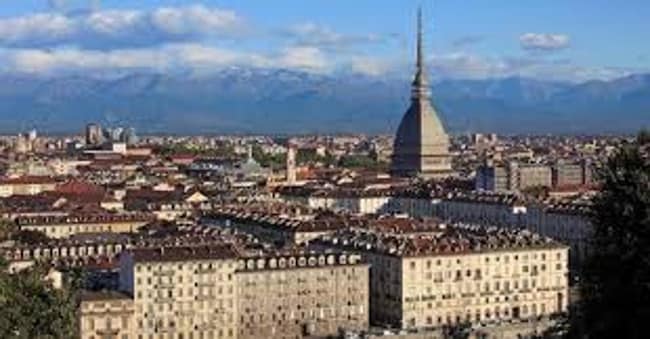
We are in his house in the Sassi district of Turin, which for centuries was the city's most forward point towards the plain and the hills. The house, built in 1645, was the hunting lodge of the Savoy family. The park around it is beautiful and neat. There is nothing regal or ostentatious about the house; any French ancestry in the Savoy is tempered, even in a place of pleasure, by the military nature of the lineage.
From time immemorial, peasants and, at certain times of the year, nobles and merchants have lived on these lanes and slopes. Chiara spreads the white tablecloth on the table, on which she and her artist friend Filippo Bragatt have painted a colourful, phantasmagorical reimagining of the criminal epic of Colombian drug trafficker Pablo Escobar. "I cooked something," she says as she goes back and forth between the dining room and the kitchen to set the table. Chiara thus seems to express her diversity from a Turin that - like and more than Genoa and Milan - has considered (and continues to consider) the liveried service staff of patrician houses the symbolic and patrimonial equivalent of the worker owned in and by the family factory, even when the family no longer has a factory for a long time, in a city now without kings and without Agnelli, without banks and without insurance companies, without real power but still with a lot of old money.
The salon has a magnificent window overlooking the city, the Po river and the woods. His father Gianfranco was an executive at Fiat-Iveco: 'As a child, when they asked me at school what I wanted to do, I answered truck driver. When I was eighteen, I got my driving licence and worked as a truck driver. I drove on the track, here near Balocco, the first Iveco Turbostars, the behemoths put on the road by Fiat to counter the giant Scanias'. His mother Laura was employed at the Cassa di Risparmio di Torino. Her maternal grandparents, Laura and Francesco, had the farmstead here in Sassi, after the Second World War precisely a country district in the most industrial city in Italy: 'We had cows, rabbits and chickens. Not pigs. Our family was matriarchal. My grandmother Paola had four sisters with whom I grew up: Teresa, Maria, Giovanna and Angioletta. They had been partisan relay girls. All four of them no longer had fingernails. The Italians and the Germans had captured and tortured them. None of them ever married'.


