
A pest is threatening Pantelleria’s capers
A research project to combat the Bagrada hilaris bug, funded by the European Biological Control Laboratory and coordinated by the BBCA (Biotechnology and Biological Control Agency), with the participation of researchers from ENEA

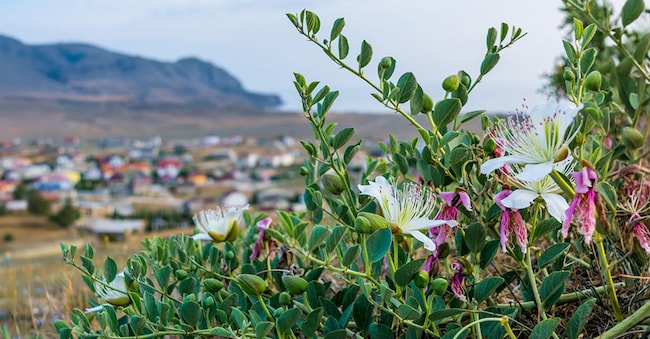
Gamma rays to sterilise the bug Bagrada Hilaris, which affects Pantelleria’s IGP capers. This ‘highly destructive insect is capable of causing serious damage to many other food crops’ as well, from wheat to pulses, and from broccoli to cauliflowers, with severe economic consequences for farmers.
This is the aim of a research project funded by the European Biological Control Laboratory and coordinated by the BBCA (Biotechnology and Biological Control Agency), in which researchers from ENEA are participating.
This is a real problem for producers in Pantelleria, as Rosario Cappadona, a member of the board of directors of the Cooperativa Agricola Produttori Capperi di Pantelleria, points out: ‘It has been known since 1988, and the University of Palermo was asked to intervene.’
This is also because the total annual production of capers on Pantelleria stands at between 3,000 and 4,000 quintals. “Production certified under the PGI label,” ENEA points out, “is much more limited, ranging between 1,200 and 1,300 quintals, with some years seeing certified production drop to 500 quintals.” Not only that, but the production regulations stipulate that the maximum yield is set at 30 quintali per hectare and that harvesting must take place exclusively by hand in stages from 1 May to 1 October.
As for crop losses, as Sergio Musumeci – a biologist specialising in agricultural entomology at ENEA’s Agricoltura 4.0 laboratory – points out, “potential yields of 120 quintali per hectare in intensive cultivation can drop to half that, around 60–70 quintali”. “It does, however, depend on the growing season – those with a climate more favourable to Bagrada hilaris, that is, those characterised by mild winters,” he adds. “In such cases, losses can be even more severe and may reach as high as 100 per cent in some growing areas. In fact, there have recently been areas with 100 per cent losses in heavily infested organically farmed areas.”
The researchers tested the effect of gamma rays on the insect’s fecundity, fertility and longevity at two stages of its life cycle: as a juvenile, when it is not yet able to reproduce, and as a two-week-old adult. “Irradiation drastically reduced female fecundity, bringing the number of eggs down to almost zero,” Enea points out. Similarly, female fertility was completely suppressed when untreated females mated with irradiated males. In general, irradiation resulted in almost complete sterility (over 95 per cent) across all life stages of the insect.”
To validate the results obtained in previous laboratory experiments, a second phase is planned which will involve the Pantelleria National Park: a key element will be estimating the ratio between the sterile males released and the fertile males present on the island. “These are important initiatives,” concludes Cappadona, “crucial both in terms of quality and for the local economy.”

