
A phone against the digital divide: what does the generation cut off from the touchscreen demand?
Emporia Smart 7 lite is not intended to be a different product from the others, just more accessible. Much more accessible.

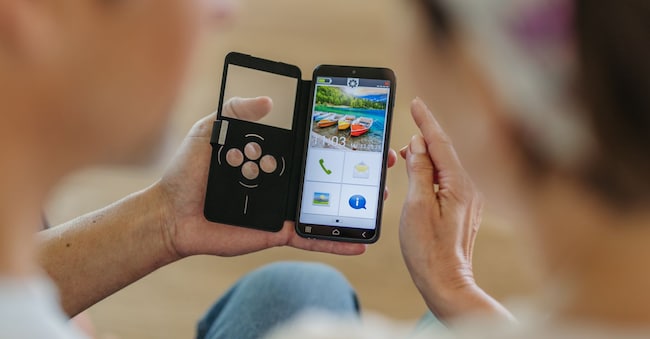
There is a generation that has suffered more than others from the digital divide, from progress, from smartphones. The one that has learned to use the remote control, the grandfathers and grandmothers over 70 to be precise, who are forced to negotiate with small screens, passwords and access codes. For them, the smartphone is often the main form of contact with grandchildren, with children, sometimes with the outside world. For many of them, it is an access that becomes increasingly complicated as time goes by. That is why there are manufacturers who have started to address the needs of what is increasingly a niche market. Emporia, for example, is an Austrian company specialising in user-friendly mobile phones and electronic devices for a senior audience that struggles with new technologies. It debuted in Italy last year and is now coming out with the 7 series.
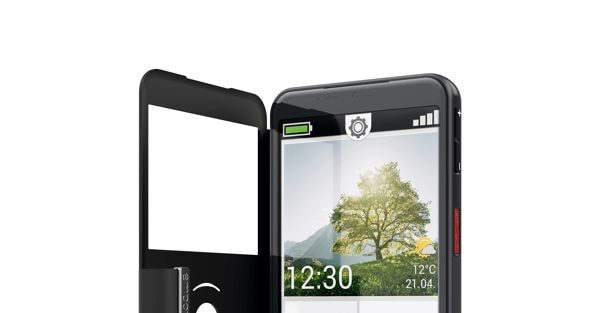
I gave it on trial to an over-80s addict who was addicted to likes for his grandchildren on Facebook, photos shared on WhatsApp and video calls. Emporia Smart 7 lite is not meant to be a different product from the others, just more accessible. Much more accessible. Starting with the interface: it doesn't have a thousand apps on the display, you don't have to customise parts with photos, phone and WhatsApp. Big numbers, big icons, obvious eye path and no distractions. The simplified interface hides the advanced configuration a bit too much, but for a senior user it is an advantage, not a limitation. It feels like a toy phone because of how spartan it is. The feeling for an over-80s person at first is an acknowledgement that time is passing. But it quickly passes as soon as they start using it.
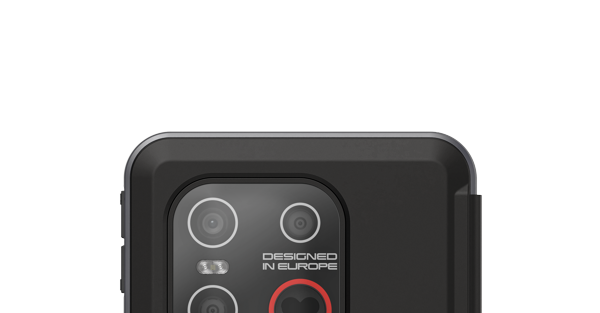
On security, the phone is surprisingly modern: NFC, fingerprint sensor, Android patches updated automatically, all without having to enter complicated menus. The physical 'No Panic' button can call for help or initiate a quick action such as activating the voice assistant. Having a physical 'No Panic' button certifies that you are officially not young. And more. But awareness is sometimes a must. 'Among the features we think are necessary,' Mauro Invernizzi, CEO of Emporia, explained to Il Sole 24 Ore, 'is the alarm button, which, according to our research at Emporia, is also increasingly necessary to protect their safety. This need is also borne out by our recent research, according to which 25% of the over-70s in Italy require a device that offers above all greater security and ease of use, in addition to the need for more memory or an upgraded battery, and clearer and more intuitive voice functions".
In terms of hardware, then, the 5.45″ screen is a compact size that compared to top-of-the-range phones may not convince. On the other hand, the replaceable battery with a standby time of almost ten days and cycles tested up to a thousand, and the promise of long updates - five Android generations and seven years of spare parts - are definitely convincing. These last two aspects make it almost a 'Fairphone for seniors'. The real gem, however, is an interactive tutorial that really teaches how to use the phone: it works like a little 'digital literacy course in your pocket' and is likely to be one of the most useful tools for anyone switching from an old phone to a modern smartphone. It is reminiscent of paper guides. For a digital native it is a conceptual nightmare but for an over-80s person something useful and familiar. The price is 249 euros, which is not low if we look at the technical specifications, but it is fair for what it offers a senior.
But the real question is what will happen to smartphones with the advent of artificial intelligence? "AI tools applied to devices for seniors certainly represent a good resource as they can facilitate the relationship between the elderly user and technology, from the simplest to the most complex tasks by providing them with support. Despite this,' observes Emporia's CEO, 'the over-70s in Italy are doing well in the field of technology. Suffice it to say that, again according to our research, 52 per cent are able to manage online practices and payments such as bills, bank transactions and public administration services. Speaking of digital payments, Emporia smartphones have always included the possibility of making online payments".


