
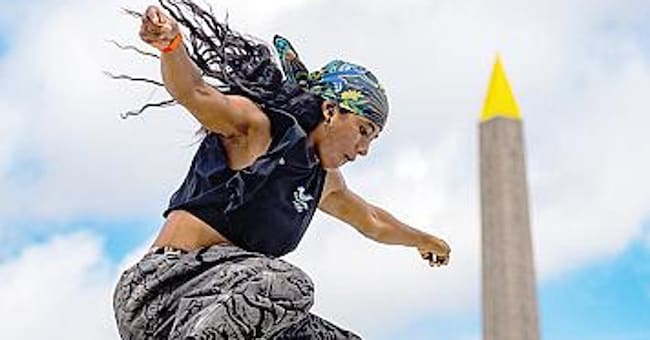
Break dance battles at Place de la Concorde

2' min read
2' min read
Among the commandments of Thomas Bach's IOC, alongside those of sustainability, gender equality and inclusion, there is certainly that of rejuvenating Olympic sport. For some editions of the Games, therefore, new disciplines have been included in the programme with the aim of increasing the social and television appeal of the event and attracting a younger audience.
In the Japanese Summer Olympics, baseball, sport climbing, skateboarding, karate and surfing were selected as additional disciplines. In Paris, sport climbing, surfing and skateboarding have been confirmed, and for the first time medals will be awarded in break dancing. The 'battles', as the one-on-one challenges of the dancer-athletes are called, will be held at the Place de la Concorde chosen to host all street sports, such as 3-on-3 basketball, BMX and skateboarding. Italy will be represented by Antilai Sandrini.
Break dancing falls under the aegis of the former Sports Dance Federation, which has recently changed its name to Fisdem (Federazione Italiana Danza sportiva e Sport Musicali) and is chaired by Laura Lunetta. As Coni president Giovanni Malagò pointed out a few weeks ago at the first council meeting of the new organisation, 'the potential to make break dance an Olympic discipline was there. I saw the strength that the movement had and it is only the beginning of a long story. Already in Los Angeles the medals could be doubled. Now all this must be exploited and I believe that uniting musical sports can give extra appeal to work on marketing and communication'.
Meanwhile, in October 2023, the IOC made official the five additional sports that will be included in the programme of the Los Angeles Games in four years' time (since surfing, climbing and skateboarding will be promoted to the official programme in 2028): cricket, squash, lacrosse, flag football (a light version of American football that limits physical contact) and baseball/softball.
For cricket, which has more than two billion fans mainly in Commonwealth countries, it will be a return after more than a century, considering that its only presence at the Olympics dates back to 1900 and will be played in the T-20 version, the 'short' version, which involves matches of around three hours.


