One ring at a time: the made-to-measure dream address is Verneuil-en-Halatte
Defining the shape of the dream is a gradual process. In the factory north of Paris, there are 180 steps and 60 hands working on it simultaneously. Experts who work the softest lambskin. Transforming it, for over 40 years, into a name that is an identity card: the 11.12.
by Silvia Paoli
7' min read
7' min read
Somewhere in the world there is a Chanel 11.12 handbag whose shoulder chain I braided. Exclusively two links, let me be clear, into which I passed the thin black leather strip that distinguishes it. It happened under the watchful eye and skilful hands of Sylvie, 38 years of experience ('passionate, proud') in the factory where dreams are born, in Verneuil-en-Halatte, 60 kilometres north of Paris, where I am at the moment. The shoulder strap stage is the last of 180 operations carried out by 30 artisans to create this bag: 60 hands pass the baton, assessing, cutting, stamping letters, turning and sculpting this model - created in 1983 by Karl Lagerfeld - which like the most classic of classics (the 2.55 bag created by Mademoiselle) is made exclusively in France, here and in the Ateliers de May in L'Ormeau, Aulnay, an hour from La Rochelle.
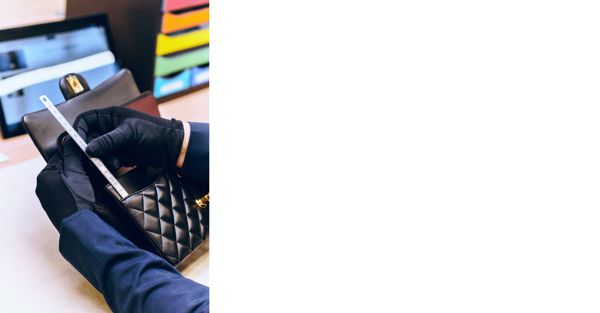
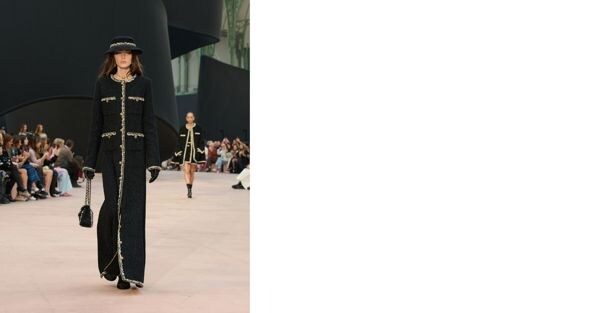
The 11.12 was created in the 1980s to refresh and revise the model created by Coco Chanel as an object of desire (there is an original 1950s one in Yerneuil-en-Halatte, but only authorised people can touch it, and while wearing gloves). The shape is rectangular, the leather is lambskin, a material used until then only for gloves (chosen precisely for the very delicate hand, to be touched), 6 inside pockets, one of which is a secret pocket for storing love letters and a tubular one, for lipstick (the dream has practical, very feminine implications). On the outside, a pocket in the shape of a smile and, to keep your hands free, a jewel-strap. Karl Lagerfeld revises the model with a few touches: the strip of leather interlaced with the chain, the buckle with the golden double C. From that moment on, the seasonal mutations of the 11.12, within the codes just mentioned, are many and potentially infinite ("We can do anything", say the design & development department): silver finishes, tota! black, tweed, denim, leather.
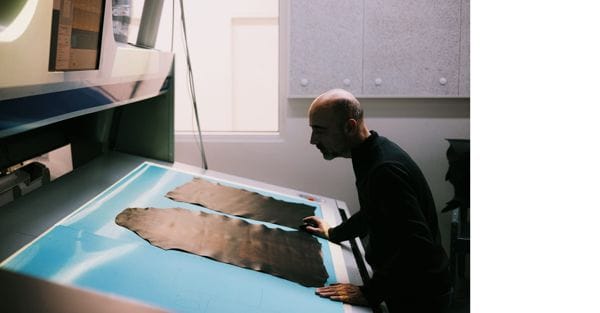
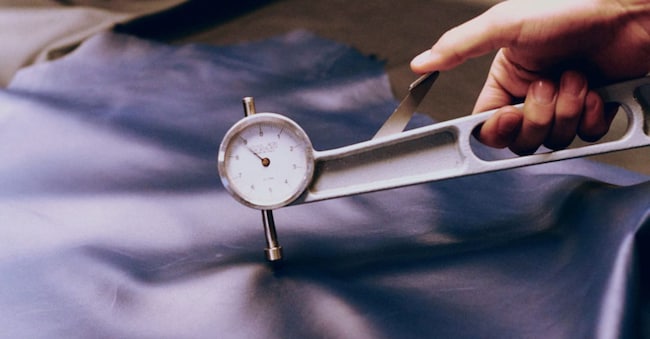
Phase one starts in the materials department, where we meet Elyes, who has learnt from the retired, but still mentor, Bertrand the art of assessing the quality of lambskin: the grain, thickness (it must be between 0.5 and 0.7 millimetres), colour, uniformity, tightness, which are also checked by measuring them with special instruments, but must still pass the examination of the eyes and hands, educated by at least four years of training. Each individual skin stops here, the evaluation lasts 30 or 40 seconds made up of observation and touch and, if the quality test is passed, one can proceed and go to Alexancler, the cutter. In his room, the leather is placed on a table where the image of the different pieces of which the bag is composed is projected: the green-yellow light reproduces exactly the individual elements, the back with the pocket, the holes through which the chain passes and also the quilted pattern: a ray of light that materialises the bag when it does not yet exist. The skill of the cutter is to position the different pieces in such a way as to make the best use of the leather, so that there is as little waste as possible.
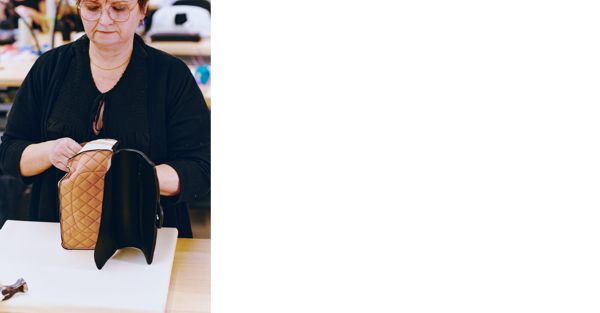
Once the perfect fit is found, the moving arm that cuts it is activated in one pass. Alexander sifts the pieces one by one. If all goes well, the scraps fly into a container next to the cutting machine: from there they go to cover the heels of the two-tone Chanel shoes. Everything is precious here and circularity is not an abstract concept, but a very concrete one. In the Atelier Grand Pòle, the bag takes on a three-dimensionality: to work the leather, an artisan needs at least 18 months of training; to access all the stages of production, it takes 4 or 5 years during which the new recruits learn from someone who has been in the trade for 30 or 40 years and who passes it on to them, following them step by step. "There is no school where you can learn how to make the Chanel bag," says Christine, head of the atelier of classic bags, 3 8 years of experience. "It is probably one of the most difficult products to make in the world. Schools train people in traditional leather goods techniques, but our know-how is specific and can only be found here in our workshops'. Essential qualities for those who want to start out? "Lots of passion and dexterity in the hands'.
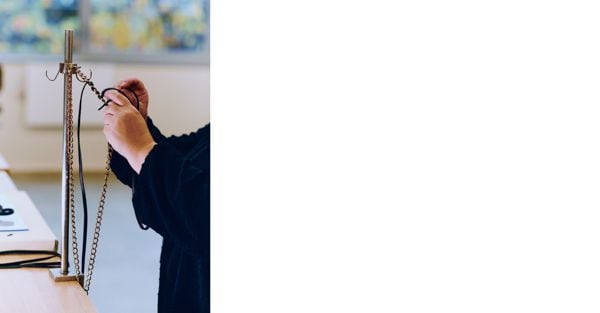
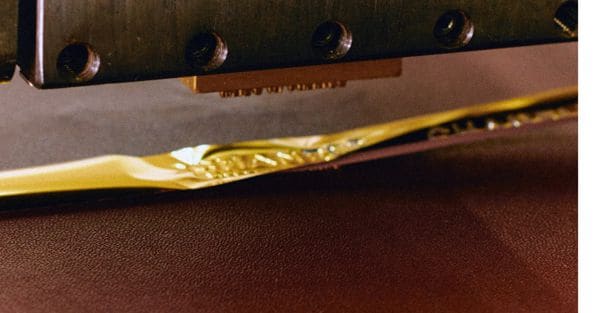
The cut leather is quilted with a machine that creates the signature stitching pattern. Each individual piece is first stopped in a frame and then passed under the machine. It is crucial that the diamond is positioned so that, once the metal clasp is placed in the centre, the pattern is perfectly symmetrical on one side and the other: one mistake and the bag would pass as counterfeit. The needle moves quickly over the leather. The latticework is perfectly positioned. Now, on the burgundy-coloured back, the double C can be engraved, and the gold lettering of the brand can be transferred from a ribbon that is pressed and releases those unmistakable characters that will only shimmer inside the bag. Now it is time to shape it. The edges of the pocket are worked with a small bone tool, and the outer pocket is machine-stitched. From here on, the bag will be sewn entirely from the inside out, like a garment, and the very delicate and crucial moment will come to turn it inside out (exactly like a glove), an operation to be carried out in a few safe and quick moves so as not to make the leather take on conformations that would ruin its volumes and features. Flipping the bag, turning the bag inside out, is Christine's speciality. Confident movements to turn first one side, then the other and, once the bag has come to the surface, firm blows with a hammer - wrapped so as not to ruin the leather - to fix the inside and shape the outside permanently. Last stitches and here comes the passage of the chain.