
A scholar of the Italian spirit, a politician and a rebel

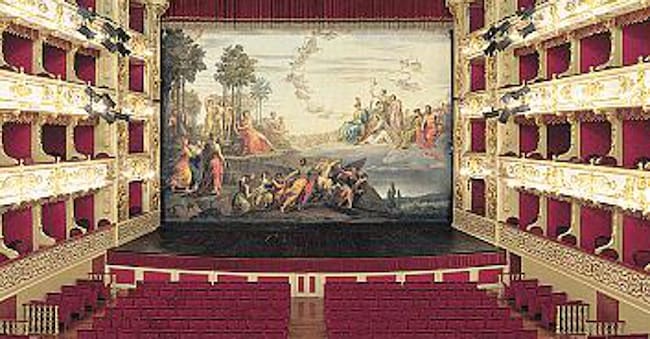
Giuseppe Verdi was not merely a great composer and connoisseur of the human soul. He was also a thinker whose musical and dramatic choices reflected his conception of ethical values – values which were, for the most part, taken for granted by a large section of his audience: honour, shame, fate, and even patriotism. He always displayed a refined, nuanced and at times scathing critical eye towards the prevailing attitudes of his era, as well as in political life. On 5 October (at 11.00 am) at the Teatro Regio in Parma, the anthropologist Michael Herzfeld, professor emeritus at Harvard University, will deliver a lecture entitled ‘Giuseppe Verdi: Anthropologist of the Mediterranean’, in collaboration with the University of Parma and the Accademia Verdiana.
Herzfeld, who has conducted extensive research into the anthropology of southern Europe and is himself a critic of the conventional portrayal of ‘Mediterranean cultures’, will reflect, from both an autobiographical and comparative perspective, on the portrayal of ethics in Verdi’s works (particularly those from his early years as a composer) and in anthropology, offering an interpretation that diverges significantly from the literal one, which often obscures the rebellious spirit that animates so many of Verdi’s works.
Of these, the least well-known is probably *Stiffelio*, the subject matter of which, however, could turn conventional interpretations of *Ernani*, *Nabucco* and *La Forza del Destino* on their head. The speaker will also consider how that music, often seen as an expression of Italian identity, can also move people who do not share that national identity, nor even the underlying political ideology, and will conclude with a reflection on the historical distortions of the significance of both Giuseppe Verdi and the Neapolitan philosopher Giambattista Vico, who is also often regarded as a champion of Italian identity.

